
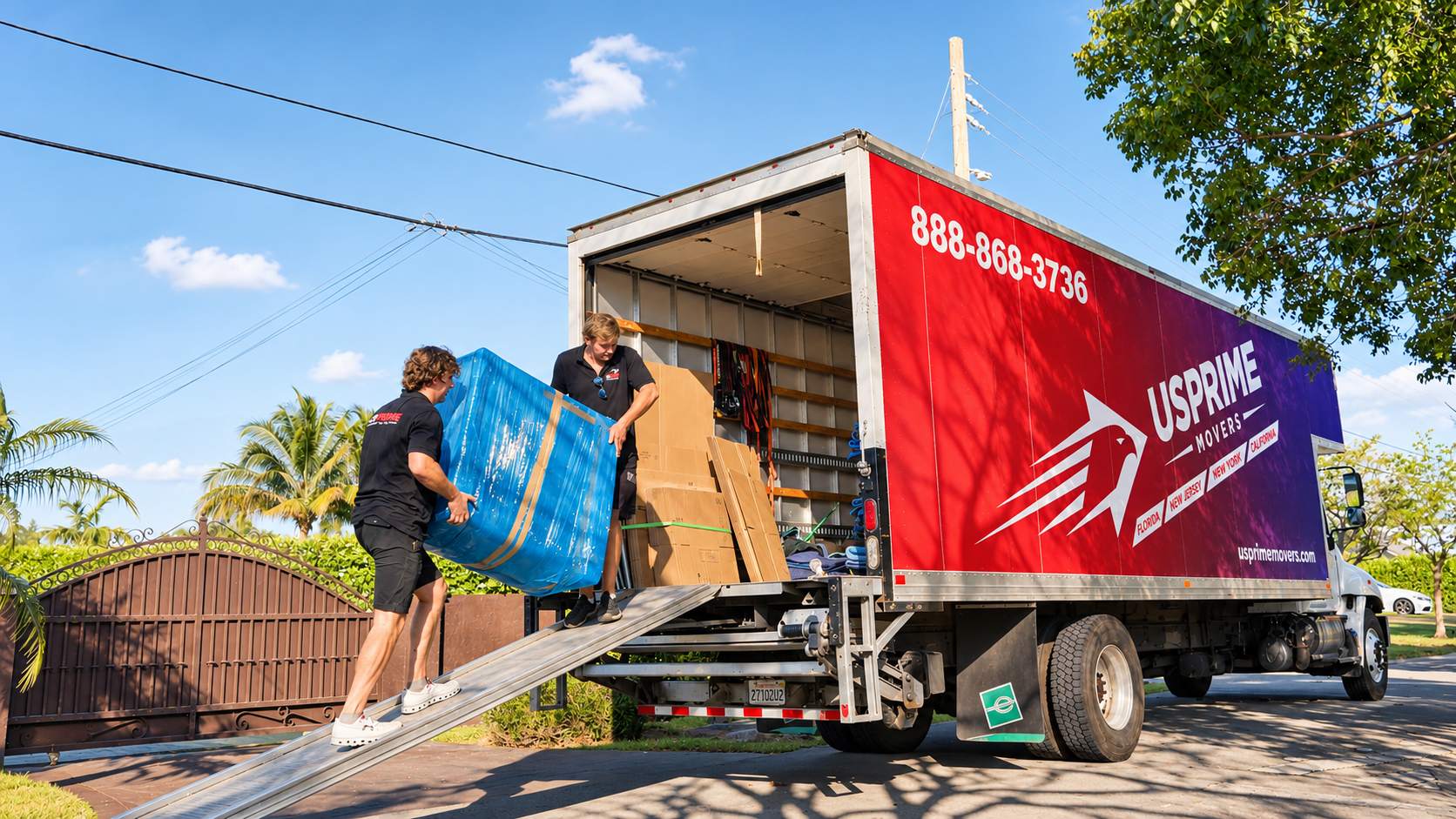
You need storage during a long-distance move when your move-out and move-in dates don't line up, and it works by holding your boxed and wrapped belongings in a secure warehouse until your new home is ready. It comes down to timing, a clear inventory and knowing how long the gap will last. This guide walks through each part in plain terms.
When do you actually need storage on a long-distance move?
You need storage when your belongings have to be somewhere other than your old home or your new one for a stretch of time. The most common reasons are simple:
- Closing dates that don't match. You sell your home on the 10th, but your new lease starts on the 28th.
- A new home that isn't ready. The apartment is being painted, or the house you bought still has repairs to finish.
- A job or military timeline. You start work in another state first and find housing later. Military families on PCS orders often report to a new base before housing is assigned.
- Downsizing. Seniors moving to a smaller place may not have room for everything on day one.
- Staging a home for sale. Fewer items out means a cleaner showing.
If your dates line up, you may not need storage at all. The truck loads, drives and unloads. Storage is for the gaps.
A good test is to write down two dates: the day you must be out and the day you can move in. If there is a real gap between them, plan for storage. If you're still sorting out the bigger picture, our step-by-step look at how a long-distance move works shows where storage fits in the timeline.
How does storage work during a long-distance move?
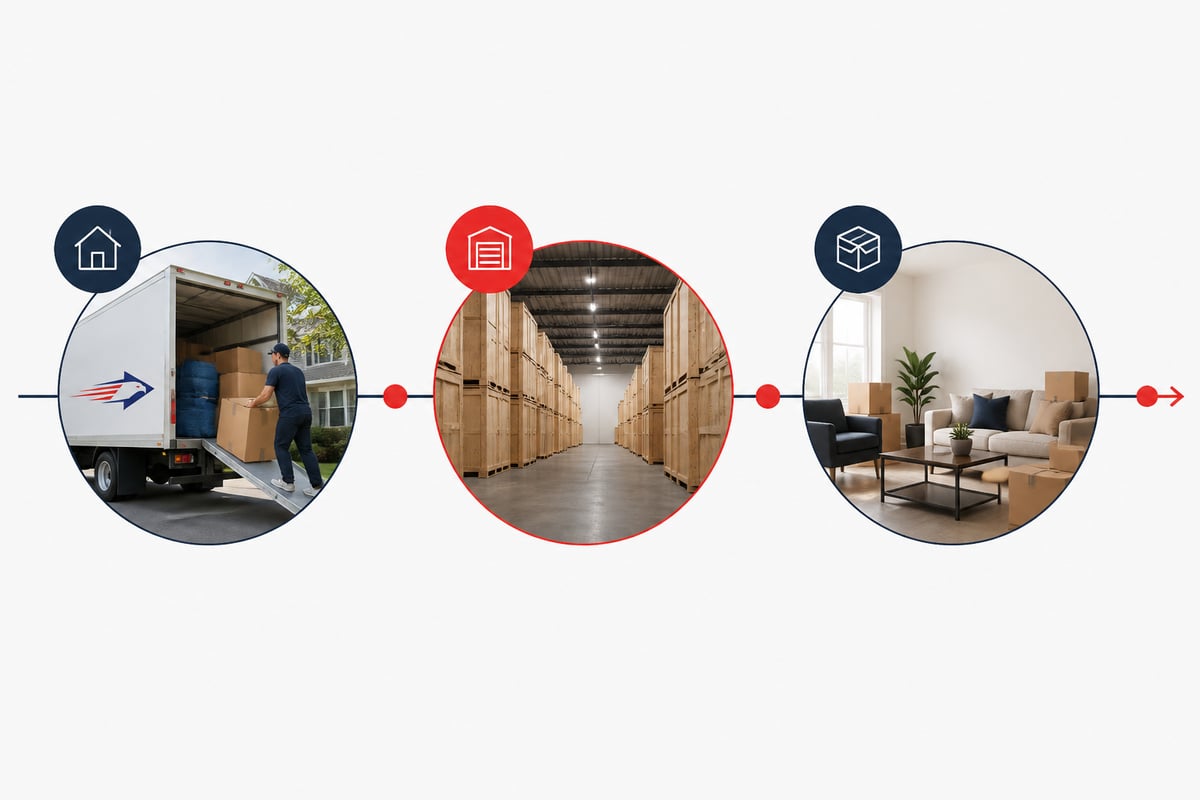
Storage works as one extra stop between pickup and delivery. Your movers load the truck, take your things to a warehouse instead of your new address, and later bring them out for final delivery.
Here is the usual order of events:
- Inventory and quote. You list what you're moving, and the mover prices it by volume.
- Packing and loading. Furniture is wrapped and boxes are labeled, so you can tell what is what later.
- Move into the warehouse. Your items are unloaded and held in a storage area.
- A hold period. Your belongings wait until your new home is ready.
- Delivery. The crew loads the truck again and delivers to your new address, setting up room by room.
Some movers keep your shipment on the truck or in a shared trailer. Others unload into a warehouse. Ask which one applies to you, because it affects how easy it is to reach an item later. For most families, nothing needs to come out during storage, which keeps things simple.
What are your storage options?
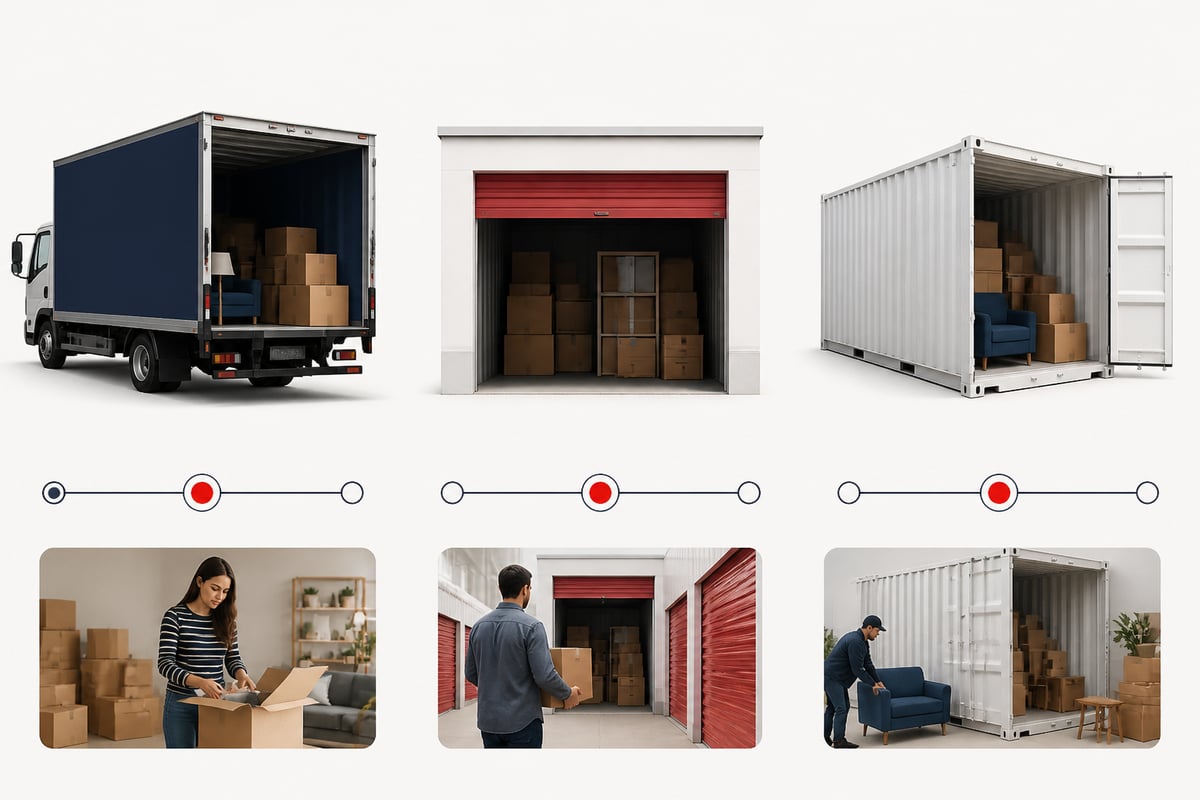
You have three main choices, and each suits a different situation.
| Option | How it works | Good fit for |
|---|---|---|
| Storage through your mover | Your mover stores your items in its warehouse, then delivers | Short gaps, one team handling the whole move |
| Self-storage unit | You rent a unit, and you or a crew move items in and out | Long gaps, or when you need frequent access |
| Portable container | A container is dropped at your home, filled, then stored or shipped | DIY packers who want to load at their own pace |
Storage through your mover is usually the least work. One company handles pickup, storage and delivery, so there is less to coordinate and no second move from a rented unit into a truck. Self-storage gives you control and access but adds a step, since someone has to move your items out later. If you're weighing containers against full service, our breakdown of portable storage costs shows how the numbers compare.
US Prime Movers offers moving and storage for customers who need flexible delivery dates or a temporary hold during a long-distance relocation.
How long can your belongings stay in storage?
The length of storage is set by your gap, and most long-distance moves need a few weeks, not months. A common case is a closing date that slips, or a lease that starts a few weeks later than planned.
At US Prime Movers, every long-distance move includes 30 days of free storage. Local moves are not included. If you need more time, you can ask, and storage after the free 30 days is $0.50 per cubic foot per month. That rate applies to the volume of your shipment, so a smaller load costs less to hold.
Here is a simple example. A typical 2-bedroom household is around 500 to 1,000 cubic feet. At $0.50 per cubic foot per month, holding 800 cubic feet past the free period would be about $400 a month. Your own number depends on your inventory, so treat this as an example, not a quote.
Many people plan for the shortest gap and add a cushion. Dates slip. If you think you need three weeks, ask what happens if it becomes five.
How much storage space will you need?
You can size your storage by the size of your home. Self-storage units are sold by floor size, such as 5×10, 10×10 or 10×20 feet, and rental companies publish charts that match each size to a home size.
Movers measure in cubic feet instead. Typical volumes are:
- 1-bedroom: about 300 to 700 cubic feet
- 2-bedroom: about 500 to 1,000 cubic feet
- 3-bedroom: about 1,000 to 2,000 cubic feet
If your mover prices by cubic feet from your inventory, you don't have to guess at a unit size. You list what you own, and the volume follows. That is also why trimming your inventory before the move lowers both the moving and the storage cost. Our guide to downsizing before a long-distance move covers how to decide what stays and what goes.
Why does climate control matter for stored belongings?
Climate control matters because heat, cold and damp can warp wood, grow mold and damage electronics, and a few weeks in a bad space is enough for some of it to show up.
The Self Storage Association recommends keeping storage areas below 50% relative humidity, and notes that mold and corrosion risks rise sharply above 50 to 55%. Big temperature swings matter too, especially for wood, leather and electronics.
Some items need extra care:
- Wood furniture and instruments
- Leather and upholstered pieces
- Electronics and appliances
- Photos, documents and books
- Mattresses and rugs
US Prime Movers' storage is climate-controlled. Whichever provider you choose, ask about the temperature and humidity of the actual space, not just whether the building has a roof. Pianos need particular care, and our post on piano storage explains why.
How should you prepare your belongings for storage?
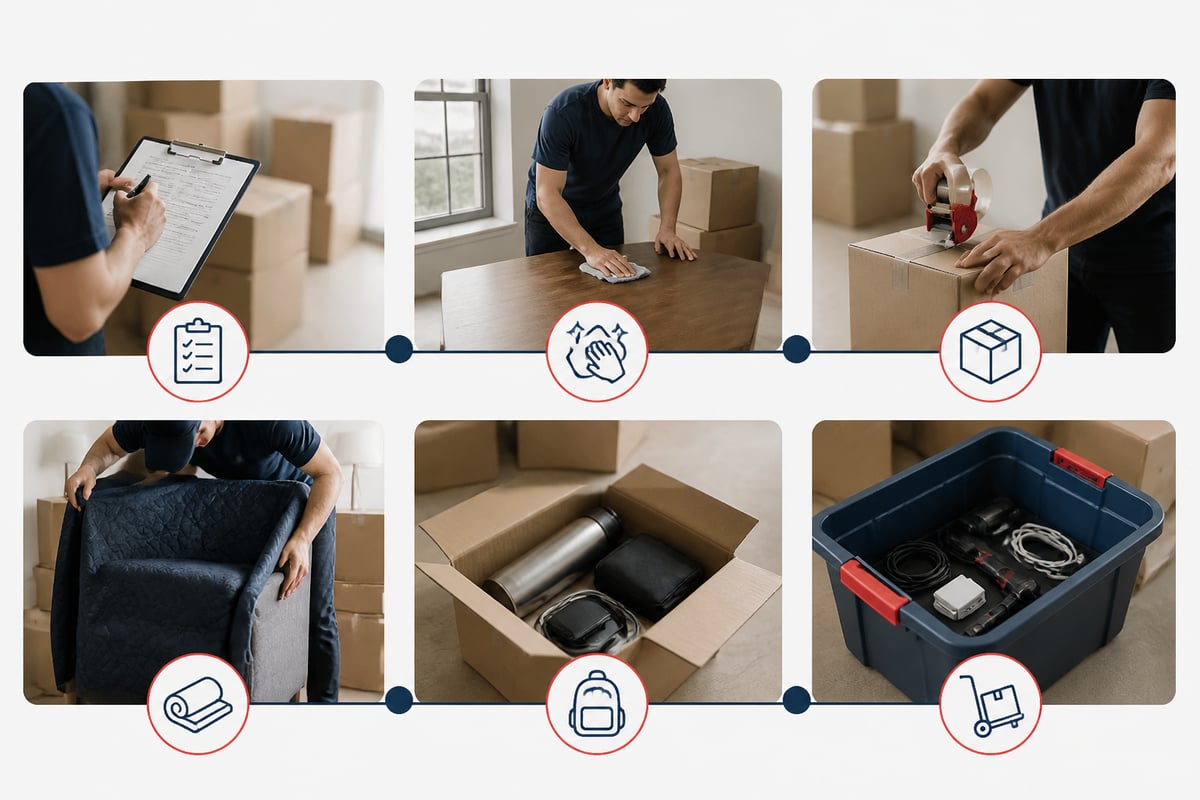
Preparing for storage means packing so that everything stays clean and dry and is easy to find again. A few habits make a large difference.
- Make an inventory. List each box and major item with its room. Take photos of valuable pieces.
- Clean and dry everything. Empty and defrost appliances, wipe furniture, and let anything damp air out first.
- Use sturdy boxes and label them. Write the room and a short description on two sides.
- Wrap furniture. Pads and covers protect wood and fabric from dust and scrapes. Your mover may handle wrapping and disassembly for you.
- Keep essentials out. Pull what you'll need before delivery: documents, medications, a few days of clothing, chargers.
- Pack for retrieval. Put the things you might want early near the front, if your setup allows access. Planning for retrieval is one of the most useful habits you can build before storage.
Packing yourself avoids the packing charge. If you'd rather hand it off, US Prime Movers' packing rates are $1.25 per cubic foot for full packing and $0.75 per cubic foot for partial packing.
What does storage cost on a long-distance move?
Storage cost depends on volume and time, and the first 30 days may cost nothing if your mover includes them. After that, you pay a monthly rate based on cubic feet.
For reference, US Prime Movers' typical long-distance prices are estimates, and your binding price depends on your inventory:
| Home size | Under 500 miles | 500 to 1,500 miles | Over 1,500 miles |
|---|---|---|---|
| Studio / 1-bedroom | $1,750 | $1,950 | $2,350 |
| 2-bedroom | $1,850 | $2,750 | $2,950 |
| 3-bedroom | $2,500 | $3,200 | $3,950 |
Those prices include wrapping, disassembly and reassembly, room-by-room setup, fuel, tolls, taxes and basic liability coverage. Storage after the free 30 days is billed at $0.50 per cubic foot per month.
Timing affects the total too. Peak season, May through September, costs about 40% more, and mid-week or mid-month moves cost about 15 to 30% less. Booking early helps the price. If you're deciding on dates, see our guide to the best time of year to move long distance. For wider cost context, read how much it costs to move out of state.
How do you plan the timing of storage and delivery?
Plan storage by working backward from the day you want your things in your new home. Decide that date first, then add the move's transit time, then confirm when your items will go into storage.
Standard delivery windows depend on mileage:
- Up to 500 miles: 3 to 6 business days
- 500 to 1,000 miles: 5 to 10 business days
- 1,000 to 2,000 miles: 10 to 21 business days
- 2,000 to 3,000 miles: 15 to 21 business days
Storage adds to that if your items rest in a warehouse first. If you need a firmer date, ask about expedited or guaranteed delivery. Expedited delivery is a dedicated, straight delivery, and the truck leaves the day after loading. Terms are set per move.
Storage also helps with the dreaded double move, where you carry things into a temporary place and then out again. Holding everything in one warehouse and delivering once keeps handling to a minimum. Reserve early, especially if you move between May and September.
What are the tradeoffs to keep in mind?
Storage solves a timing problem but adds some handling and some waiting. Knowing the tradeoffs helps you choose well.
Pros
- Flexibility if closing or lease dates change
- No need to rent temporary housing for your furniture
- One company can manage pickup, storage and delivery
- Cleaner showings and easier staging while selling
Cons
- Your items are out of reach while stored
- A longer gap can cost more after any free period
- Extra handling means another load and unload
- Delivery dates need to be confirmed in writing
Ask for the storage terms in your written agreement, including the free period, the monthly rate afterward, and how much notice delivery needs. Military families should also confirm how storage fits their PCS or PPM paperwork and weight tickets.
FAQ
Do movers store your stuff?
Many do, and some include a free period. US Prime Movers includes 30 days of free storage on every long-distance move (not local moves). If you need longer, you can ask, and storage after the free 30 days is $0.50 per cubic foot per month.
Is it cheaper to use PODS or a moving company?
It depends on your move. Portable containers can look cheaper at first, but you often handle the packing and loading yourself, and the total can vary with your situation. A moving company's price covers crews, wrapping and delivery. Compare written quotes for the same inventory. Our post on portable container costs breaks down the math.
What things will movers not move?
Movers generally won't carry hazardous items such as flammables, explosives and corrosives, and many won't take perishable food or live plants over long distances. Our guide on what movers cannot transport lists the usual exclusions.
Is $100 each a good tip for movers?
Tips are optional, and the amount is up to you. Many people base it on the size of the job and the crew's effort. If you want to tip, plan a cash amount ahead of time and hand it to each crew member or the crew lead on delivery day.
Do I need extra insurance for items in storage?
Basic liability coverage is included with US Prime Movers' moves. You can buy more coverage through Baker International, or use your own homeowner's insurance. Check with your insurer about stored items before you decide.
Your next step is to write down your move-out date and your move-in date, then count the days between them, since that gap tells you how much storage you need. US Prime Movers is a family-owned, nationwide, licensed interstate mover (USDOT 3848322, MC 1401881) with warehouses in New Jersey, California, Florida, Washington and Texas, and it can hold your belongings under moving and storage with 30 days free on long-distance moves. Send your inventory by video, phone or list and you can Get a Free Quote with one binding, not-to-exceed price, or call (888) 868-3736, 7 days a week, 9 AM to 8 PM.