
A move across state lines is the perfect time to take stock of everything you own. Downsizing before a long-distance move lowers your moving price, cuts packing and unpacking time and gives you a fresh start in your new home. Long-distance moves are priced by the volume of your belongings in cubic feet, so every item you don't need is space on the truck you'd be paying for. Whether you're moving from New York to California or Texas to Florida, a downsizing plan means you only pay to move what you really want.
Why Downsizing Matters for Long Distance Relocations
It helps to know what your belongings cost to move. With US Prime Movers, a typical 2-bedroom long-distance move costs about $1,850 under 500 miles, $2,750 for 500–1,500 miles and $2,950 over 1,500 miles. The price is set by volume, so the less you bring, the less you pay.
A 2-bedroom home typically runs 500–1,000 cubic feet, and a 3-bedroom 1,000–2,000 cubic feet. On a long move, like New Jersey to Washington state (about 2,800 miles), every piece of furniture or box of unused things you leave behind is volume you don't pay to ship.
Beyond financial considerations, downsizing offers practical advantages:
- Faster packing and unpacking: Fewer items mean less time spent wrapping, boxing, and organizing
- Reduced risk of damage: Fewer belongings in transit means less potential for breakage or loss
- Easier setup: Moving into a new home becomes simpler when you're not overwhelmed by excess possessions
- Fresh start mentality: Letting go of unused items creates psychological space for new experiences
The process also forces you to evaluate what truly matters. Avoiding common moving mistakes like neglecting to declutter beforehand can transform a chaotic relocation into a manageable transition.
How Much Time Do You Need to Downsize Effectively?
Starting your downsizing process 8 to 12 weeks before your move date provides adequate time for thoughtful decision-making without feeling rushed. This timeline allows you to sell valuable items, donate to charities, and properly dispose of unusable goods.
Break down the process into weekly targets:
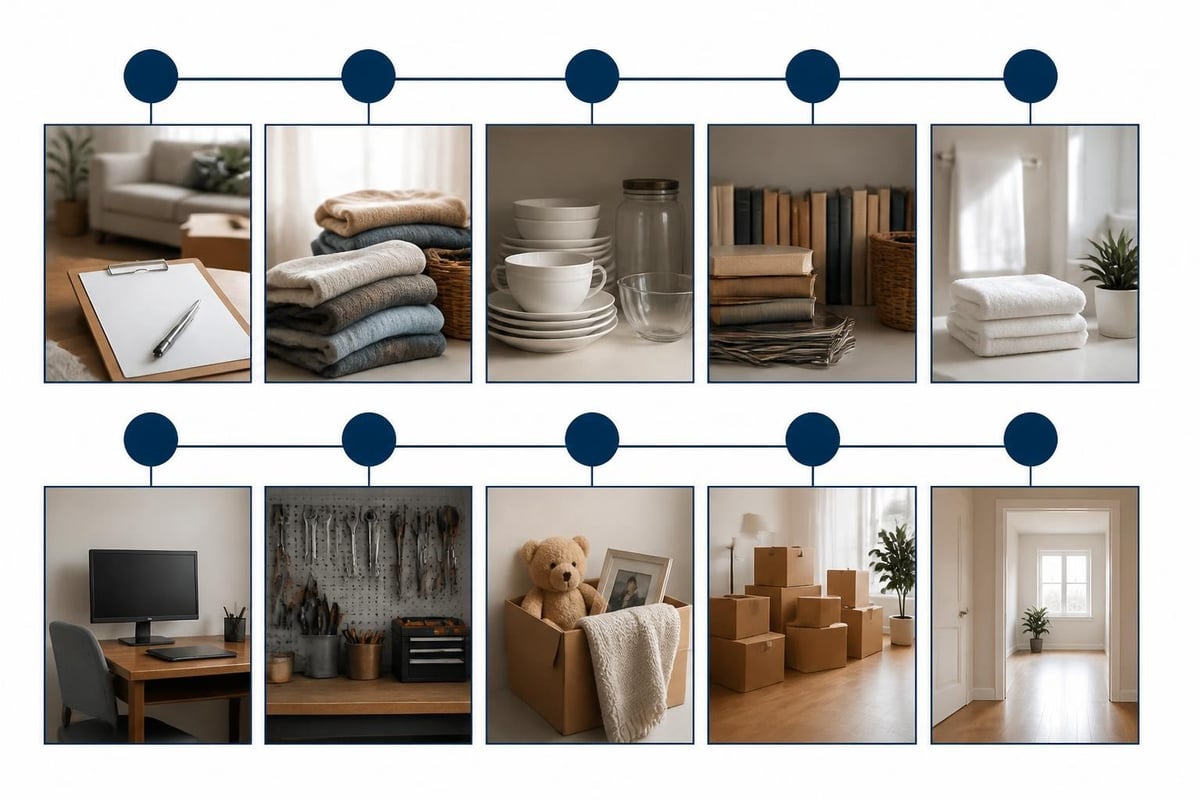
- Weeks 8-10: Assess your new home's size and create an inventory of current belongings
- Weeks 6-7: Sort through storage areas, garage, and basement
- Weeks 4-5: Tackle main living areas and bedrooms
- Weeks 2-3: Handle kitchen, remaining items, and final decisions
- Week 1: Arrange pickup for donations and complete final purge
For military families on PCS orders with tighter timelines, compress this schedule to 4-6 weeks by dedicating more hours daily. The key is consistency rather than perfection.
What Questions Should You Ask About Each Item?
Apply a systematic evaluation method to every possession. The most effective approach combines practical considerations with emotional honesty.
The Essential Question Framework:
- Have I used this in the past 12 months?
- Will this fit in my new home's layout and storage capacity?
- Does this item serve a current purpose in my life?
- Would replacing this cost less than moving it?
- Am I keeping this out of guilt or genuine need?
Create a decision matrix for faster sorting:
| Item Category | Keep If... | Consider Removing If... |
|---|---|---|
| Furniture | Fits new space measurements AND used regularly | Doesn't fit new layout OR duplicates existing pieces |
| Kitchen Items | Used weekly OR special occasion necessity | Duplicate utensils OR unused appliances |
| Clothing | Worn in past year AND fits current lifestyle | Doesn't fit OR hasn't been worn in 18+ months |
| Books/Media | Reference material OR sentimental value | Available digitally OR unlikely to reread |
| Decorative Items | Matches new home style AND brings joy | Stored away OR purchased to fill space |
This structured approach removes emotional paralysis from decision-making. Experts recommend decluttering systematically to prevent the overwhelm that often derails downsizing efforts.
What Items Should You Definitely Remove Before Moving?
Certain categories consistently represent poor value when transported across state lines. Identifying these early streamlines your entire downsizing process.
High-priority removal candidates:
- Outdated electronics: Old TVs, broken computers, obsolete cables and chargers
- Expired products: Medications, cosmetics, pantry items past their prime
- Damaged goods: Anything chipped, stained, broken, or requiring repair
- Bulky low-value items: Worn mattresses, particle board furniture, cheap storage bins
- Duplicate tools: Extra hammers, redundant kitchen gadgets, multiple sets of anything
- Hazardous materials: Paint, chemicals, propane tanks (prohibited in most moving trucks)
Compare what an item would cost to replace with what it costs to move. A cheap, bulky bookshelf takes up the same truck space as a good one, so it often makes more sense to buy a new one when you arrive.
Professional long distance movers measure your inventory in cubic feet during a video, phone or email estimate, so you can see how specific items affect your price. That helps with the borderline keep-or-go decisions.
How Do You Handle Sentimental Items When Downsizing?
Emotional attachments create the biggest obstacles in downsizing. Developing a framework for sentimental items prevents keeping everything while ensuring meaningful treasures make the journey.
Apply the selective preservation strategy:
- Photograph everything first: Create digital records of items before making decisions
- Set numerical limits: Choose your top 10 most meaningful items per category
- Combine memories: Create shadow boxes or albums that consolidate multiple items
- Pass forward: Gift meaningful items to family members who will appreciate them
- Digitize when possible: Scan photos, letters, and children's artwork
For inherited items causing guilt, remember that honoring someone's memory doesn't require keeping every physical object they owned. One representative piece often carries more meaning than a storage unit full of unused items.
Consider these preservation alternatives:
- Professional digitization services for photos, slides, and home videos
- High-quality photographs of heirloom furniture or decorative items
- Shadow boxes displaying small meaningful objects from larger collections
- Digital scrapbooks combining photos with written memories
What's the Best Method for Selling Unwanted Items?
Converting unwanted possessions into cash offsets moving expenses while ensuring items find new homes. The selling process requires different strategies depending on item value and your available time.
Tiered selling approach by value:
High-value items ($200+): Furniture, appliances, electronics, collectibles
- Facebook Marketplace and Craigslist for local buyers
- eBay for items with national appeal
- Specialty consignment stores for antiques or designer goods
- Estimated timeframe: 2-6 weeks to sell
Mid-range items ($50-$200): Small furniture, kitchen appliances, tools, sports equipment
- OfferUp and Letgo for quick local sales
- Neighborhood apps like Nextdoor
- Garage sales for multiple items simultaneously
- Estimated timeframe: 1-3 weeks to sell
Lower-value items (under $50): Clothing, books, toys, household goods
- Bulk garage sales or yard sales
- Donation with tax deduction (often more valuable than selling)
- Free listings to ensure quick removal
- Estimated timeframe: 1 week or immediate donation
Price items to sell quickly rather than for top dollar. A clear discount from retail usually brings buyers fast, and every item sold is one less on the truck.

Where Should You Donate Items You're Not Selling?
Strategic donations serve multiple purposes: clearing space quickly, supporting causes you believe in, and securing tax deductions that offset moving costs.
Donation destinations by item type:
| Item Category | Best Donation Option | Tax Deduction Eligible |
|---|---|---|
| Clothing, shoes, accessories | Goodwill, Salvation Army, local shelters | Yes (receipt required) |
| Furniture in good condition | Habitat for Humanity ReStore, local churches | Yes |
| Books, media, toys | Libraries, schools, literacy programs | Yes |
| Professional clothing | Dress for Success, Career Gear | Yes |
| Building materials, tools | Habitat ReStore, community workshops | Yes |
| Medical equipment | Hospitals, senior centers, disability organizations | Yes |
Schedule pickup services for large items 2-3 weeks in advance, especially during peak moving season (May through September). Most major donation centers offer free pickup for furniture and appliances, saving you the hassle of transport.
Document all donations with itemized receipts. For moves in the $5,000+ range, donation deductions of $500-$1,500 can meaningfully impact your tax situation. Photograph items before donation and maintain detailed records for tax purposes.
How Do You Downsize Room by Room Efficiently?
A systematic room-by-room approach prevents overwhelm and ensures thorough downsizing. Starting with the easiest spaces builds momentum for tackling more challenging areas.
Storage Areas: Basement, Attic, and Garage
Begin with storage spaces since they typically contain items you've already lived without. These areas often yield the highest volume of disposable items.
Storage area downsizing process:
- Remove everything from storage and sort into categories
- Apply the 12-month rule strictly (no exceptions for "might need someday")
- Check for water damage, pest issues, or deterioration
- Evaluate storage containers themselves (often unnecessary to move)
- Measure large items against new home storage capacity
Storage areas often hold a big share of what you'd otherwise pay to move. Clearing them first lowers your moving estimate right away and gives you early wins to keep going.
Kitchen: Appliances, Dishes, and Pantry Items
Kitchens collect duplicates and single-use gadgets that rarely earn their space. Go room by room and keep what you actually cook with.
Kitchen downsizing priorities:
- Keep one complete set of dishes, glasses, and flatware (plus 25% extra for guests)
- Evaluate small appliances: keep only items used monthly or more
- Consolidate duplicate utensils (you don't need three spatulas)
- Dispose of expired pantry items, spices older than one year
- Consider whether specialty items (bread maker, fondue set) earn their space
Pack a "first week" kitchen box with essentials. Everything else should justify its inclusion through regular use. Many people discover they actually use only 20% of their kitchen items regularly.
Living Areas and Bedrooms
Main living spaces require balancing functionality with comfort. Measure your new home's rooms before making final decisions about furniture placement.
Living space evaluation criteria:
- Furniture scale: Will your current sofa overwhelm a smaller living room?
- Bedroom capacity: Count actual bedrooms versus current furniture
- Decorative items: Select pieces that work with new home's style and color scheme
- Entertainment systems: Evaluate whether built-in storage in new home eliminates need for current units
- Bedding and linens: Keep two sets per bed maximum, donate excess
Create a floor plan of your new home using actual measurements. This visual reference eliminates guesswork about whether furniture fits and prevents the common mistake of moving items that won't work in the new space.

Office and Personal Papers
Paper adds up quickly. A full filing cabinet is heavy and takes up real space on the truck.
Document management strategy:
- Scan tax returns, financial records, and important documents (keep originals of deeds, titles, certificates)
- Shred outdated financial statements older than 7 years
- Digitize photos, children's schoolwork, and memorabilia
- Cancel subscriptions to magazines and newspapers before moving
- Transfer important files to cloud storage with proper backup
Most households can cut their paper dramatically by scanning important records and shredding outdated ones. A mobile scanning app does the job for free.
What Should You Do With Specialty Items?
Specialty possessions like pianos, antiques, and family heirlooms require different evaluation criteria than standard household goods. Their value, both monetary and sentimental, often justifies the extra moving expense.
Specialty item decision framework:
Musical instruments: professional piano moving is priced individually, based on the instrument and the handling it needs. For valuable or sentimental instruments, it's worth it.
Antiques and collectibles: Obtain current appraisals before deciding. Items worth $1,000+ generally justify moving costs, especially when properly packed by professionals. Consider whether climate differences between states might affect wooden antiques or delicate items.
Art and fragile valuables: custom crating for valuable artwork adds cost but gives essential protection. Special items like these are priced individually, so factor that into which pieces make the move.
Workshop equipment and tools: Heavy machinery and specialized tools often cost more to move than replace unless they're professional-grade or hold sentimental value. Evaluate replacement costs in your destination state.
For items that need special handling, experienced state-to-state movers know how to pack them properly. With US Prime Movers, basic liability coverage is included free, and you can buy extra coverage through our insurance partner Baker International.
How Does Your New Home's Size Impact Downsizing Decisions?
Your destination home's square footage and storage capacity should drive every downsizing decision. Moving into a smaller space requires more aggressive reduction, while a larger home offers flexibility.
Space comparison analysis:
- Calculate total square footage difference between current and new home
- Count closets, cabinets, and storage areas in new location
- Measure garage or basement storage availability
- Identify built-in features that eliminate furniture needs (bookcases, wardrobes)
- Consider climate differences affecting seasonal item storage
For downsizing moves (larger to smaller home), apply the 50% rule: plan to reduce belongings by half in categories most affected by space reduction. Upsizing moves still benefit from 20-30% reduction to avoid cluttering your new larger space.
Request detailed floor plans from your realtor or landlord. Many people overestimate how much their new space can accommodate, leading to challenging situations on moving day when furniture doesn't fit through doorways or overwhelms rooms.
What Are the Cost Savings of Downsizing Before Your Move?
Understanding specific financial benefits strengthens your commitment to thorough downsizing. The savings extend beyond the obvious moving cost reduction.
Comprehensive savings breakdown:
| Cost | How downsizing lowers it |
|---|---|
| Moving price | Priced by cubic feet: fewer items, lower price |
| Packing | Billed per cubic foot ($1.25 full, $0.75 partial), so fewer items cost less to pack |
| Unpacking | $0.75 per cubic foot if you hire it |
| Storage | 30 days free with every long-distance move, then $0.50 per cubic foot per month |
| Packing materials | Fewer items need fewer boxes, tape and padding |
Less volume means a lower price, because long-distance moves with US Prime Movers are priced by the cubic foot.
Calculate your specific savings potential by obtaining moving quotes before and after downsizing. This tangible number motivates continued effort when decision fatigue sets in during the process.
What Professional Services Can Help With Downsizing?
For time-constrained situations or overwhelming amounts of belongings, professional services accelerate downsizing while reducing stress.
Available professional support:
- Estate sale companies: handle everything from pricing to sale day for a commission, saving you weeks of effort
- Professional organizers: charge by the hour to guide sorting decisions and set up efficient systems
- Junk removal services: haul away unwanted items in one visit, priced by volume
- Moving consultants: Provide room-by-room guidance and packing strategies for $75-$125 per hour
- Senior move managers: Specialize in downsizing for older adults, offering emotional support alongside practical help
Weigh the cost of professional help against your time and stress. If your time is valuable, paying someone to handle the heavy sorting often makes financial sense.
For comprehensive help, professional packing services not only pack your belongings efficiently but can also provide objective advice about what's worth moving versus replacing at your destination.
Frequently Asked Questions About Downsizing for Long Distance Moves
How far in advance should I start downsizing before a long distance move?
Begin downsizing 8-12 weeks before your moving date to allow adequate time for selling items, arranging donations, and making thoughtful decisions without pressure. Military families or those with compressed timelines should dedicate 2-3 hours daily over 4-6 weeks to accomplish the same goals.
What percentage of my belongings should I aim to eliminate?
Most households benefit from reducing possessions by 25-35% before a long-distance move, though this varies based on your new home's size. Measure your destination space and compare it to current square footage for a more precise target, aiming to remove 50% of items when downsizing to a significantly smaller home.
Should I downsize before or after getting a moving estimate?
Downsize before obtaining final moving estimates to get accurate pricing based on what you're actually transporting. Get an initial estimate to understand baseline costs, complete downsizing, then request a revised quote showing your actual savings from the reduction.
What items do professional movers recommend removing before a long distance move?
Professional movers consistently recommend removing hazardous materials, perishable foods, plants, worn mattresses, particle board furniture, outdated electronics, and items costing less to replace than transport. Anything you haven't used in 12+ months typically doesn't justify long-distance moving expenses.
How much money can downsizing actually save on my moving costs?
It depends on how much you remove. Your moving price is based on cubic feet, so every piece you leave behind lowers it. Packing ($1.25 per cubic foot full, $0.75 partial) and storage after the free 30 days ($0.50 per cubic foot per month) are billed by volume too, so you save there as well.
What should I do with items I'm unsure about keeping?
Create a "maybe" category for borderline items and revisit them after completing definite keep and discard piles. Apply the 6-month rule: if you haven't needed the item in six months and can replace it for under $50, remove it from your move to reduce costs and simplify your relocation.
Downsizing turns an overwhelming move into a manageable fresh start, and it lowers your price. Start early, sort room by room and bring only what deserves a place in your new home. US Prime Movers moves families across all 50 states with our own trucks and crews, binding prices based on your inventory and professional packing if you want it. Get your free quote or call (888) 868-3736.