
Pianos represent significant financial and sentimental investments that demand specialized care, particularly when storage becomes necessary during relocations, home renovations, or downsizing situations. Whether you own a grand piano passed down through generations or a professional upright instrument, understanding proper storage techniques ensures your piano emerges from storage in the same pristine condition it entered. This comprehensive guide explores the critical elements of piano storage, from environmental requirements to professional handling considerations.
Understanding the Environmental Requirements for Piano Storage
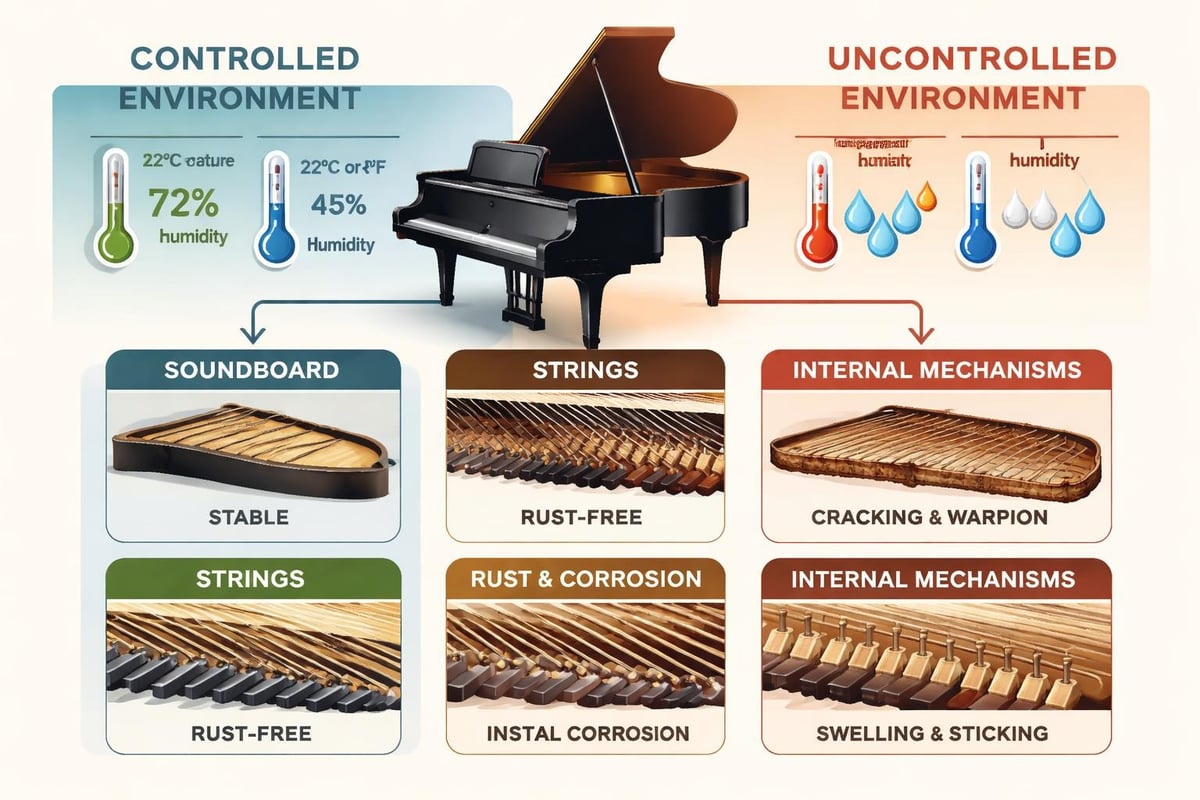
Pianos are complex instruments containing thousands of wooden, metal, and felt components that respond dramatically to environmental changes. The soundboard, made from carefully selected spruce, expands and contracts with humidity fluctuations, while the metal strings and tuning pins maintain tremendous tension that environmental stress can compromise.
Temperature and Humidity Control Standards
The ideal storage environment maintains consistent temperature between 65-75 degrees Fahrenheit with relative humidity levels of 40-50%.Climate-controlled storage facilitiesspecifically designed for musical instruments actively monitor and adjust these conditions throughout the year. Fluctuations beyond these parameters cause wood to swell or shrink, leading to cracked soundboards, warped hammers, and broken strings.
Critical environmental factors include:
- Constant temperature maintenance without seasonal swings
- Humidity regulation through dehumidifiers or humidifiers as needed
- Protection from direct sunlight exposure
- Isolation from external walls prone to temperature transfer
- Prevention of proximity to heating vents or air conditioning units
Risks of Improper Storage Conditions
Storing pianos in garages, basements, or unheated storage units creates conditions that accelerate deterioration.The importance of climate-controlled storagecannot be overstated when considering the long-term preservation of these instruments. High humidity encourages mold growth on felt components, rusts strings and metal hardware, and causes glue joints to fail. Conversely, excessively dry conditions crack wooden components, loosen tuning pins, and damage ivory or plastic key coverings.
| Storage Condition | Temperature Range | Humidity Level | Risk Factor |
|---|---|---|---|
| Ideal Climate Control | 65-75°F | 40-50% | Minimal |
| Standard Indoor | 60-80°F | 35-60% | Low to Moderate |
| Unheated Garage | 32-95°F | 20-80% | High |
| Outdoor Shed | 0-100°F | 10-90% | Severe |
Preparing Your Piano for Storage
Proper preparation before storage prevents damage and ensures your instrument remains ready for use upon retrieval. Professionalpiano moving servicesunderstand these preparation requirements and can guide owners through the process.
Cleaning and Maintenance Steps
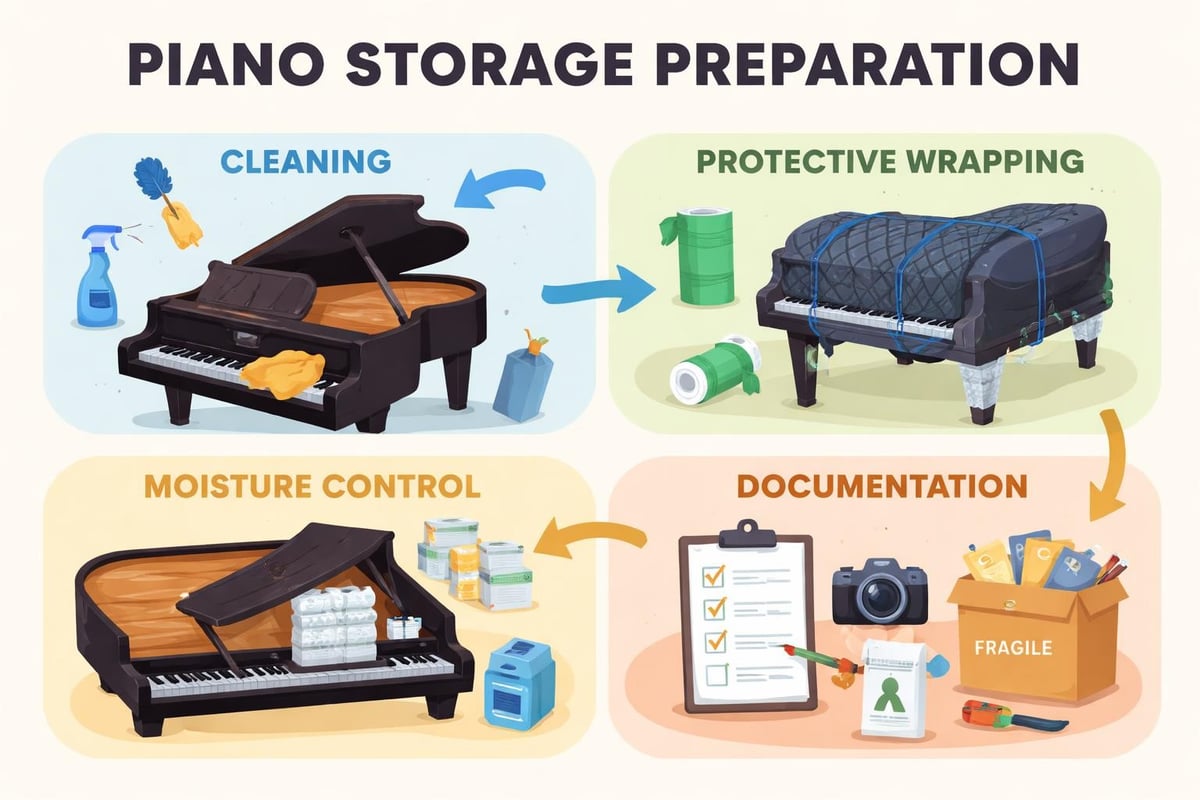
Begin preparation at least two weeks before your planned storage date. Thoroughly clean all piano surfaces using appropriate cleaners for each material type. Dust accumulation during storage can settle into mechanical components and affect performance.
- Clean keys with a slightly damp cloth using piano-specific key cleaner
- Vacuum the interior to remove dust from soundboard and strings
- Polish the exterior cabinet using appropriate wood care products
- Inspect for existing damage or required repairs before storage
- Document the piano's condition with detailed photographs
Schedule a professional tuning and maintenance inspection before storage. Technicians can identify potential issues that might worsen during storage and make preventive adjustments to the action mechanism. This proactive approach saves money compared to addressing accelerated deterioration after extended storage.
Protection and Wrapping Techniques
Never seal a piano in plastic sheeting or airtight coverings that trap moisture and promote condensation.Professional storage facilitiesuse breathable piano covers that protect from dust while allowing air circulation. Heavy moving blankets provide excellent protection for the exterior surfaces without creating moisture problems.
Essential protection materials:
- Breathable piano cover or cotton drop cloths
- Corner protectors for preventing finish damage
- Leg supports to distribute weight properly
- Moisture-absorbing packets placed inside the piano
- Protective padding between the lid and body
Remove or secure all loose items including music stands, pedal lyre attachments, and decorative elements that might shift during transport or storage. Lock the keyboard lid to prevent accidental key damage and cover it with a soft cloth before closing the main lid.
Selecting the Right Piano Storage Facility
Not all storage facilities provide suitable conditions for piano storage. Evaluating potential locations requires careful consideration of multiple factors beyond basic availability and price. Professionalmoving and storage servicesoften maintain relationships with qualified facilities that meet stringent piano storage requirements.
Essential Facility Features
Dedicated piano storage facilities invest in specialized equipment and monitoring systems that general storage units lack.Secure storage with climate controlrepresents the minimum acceptable standard for protecting valuable instruments. Look for facilities offering 24/7 environmental monitoring with automated alerts for temperature or humidity deviations.
Professional facilities position pianos on raised platforms or pallets, preventing ground-level moisture absorption and providing protection against potential flooding. Ground-floor units on concrete slabs without climate control create unacceptable risks for wooden instruments sensitive to concrete's moisture-wicking properties.
| Facility Feature | Standard Storage | Piano-Specific Storage |
|---|---|---|
| Climate Control | Optional | Required with monitoring |
| Security | Basic locks | 24/7 surveillance + alarms |
| Floor Protection | Concrete slab | Raised platforms |
| Access Hours | Limited | Scheduled professional access |
| Insurance Options | Standard contents | Instrument-specific coverage |
Location and Accessibility Considerations
Choose storage facilities conveniently located between your current residence and future destination when using storage duringlong-distance relocations. This positioning simplifies logistics if you need to access the piano before completing your move. For local storage situations, proximity allows periodic inspections to verify environmental conditions remain optimal.
Verify the facility provides adequate clearance and professional loading docks for piano delivery and retrieval. Standard storage units with narrow hallways or tight corners create unnecessary risk during piano movement. Dedicated piano storage locations design their spaces specifically for maneuvering large instruments safely.
Professional Handling and Transportation
Piano storage rarely exists as an isolated requirement. Most situations involve transporting the instrument to and from the storage facility, requiring professional expertise to prevent damage during these transitions.
Why Professional Movers Matter
Attempting DIY piano moving creates substantial risk of personal injury and instrument damage. Professional piano movers possess specialized equipment including piano dollies, padded ramps, and lifting straps designed specifically for these instruments.Specialized moving solutionsensure pianos receive appropriate handling throughout the storage process.
Grand pianos require complete disassembly before transport, including leg removal, lyre detachment, and lid securing. Upright pianos need specialized dollies that support their weight distribution while protecting floors and doorways. Professional teams understand proper weight distribution, balance points, and securing techniques that prevent shifting during transport.
Insurance and Liability Protection
Verify comprehensive insurance coverage throughout the storage period. Standard homeowner's policies typically exclude or severely limit coverage for items in commercial storage, particularly high-value musical instruments.Professional moving companiesoffer specialized insurance options designed for valuable items during transport and storage.
Document your piano's condition thoroughly before storage entry:
- Photograph all surfaces from multiple angles
- Record serial numbers and manufacturer information
- Note existing scratches, dents, or finish imperfections
- Create written inventory of included accessories
- Obtain professional appraisal for insurance purposes

Storage Duration Considerations and Maintenance
The length of time your piano remains in storage affects the maintenance requirements and potential complications that may develop. Short-term storage of less than six months requires minimal intervention, while extended storage beyond one year demands additional attention.
Short-Term Storage Best Practices
For storage periods under six months, properly prepared pianos typically maintain their condition without additional maintenance.The dos and don'ts of storing pianosemphasize that prevention during preparation proves more effective than intervention during storage. Ensure climate control systems function properly before leaving your piano, and consider scheduling one mid-storage inspection if storing more than three months.
Short-term storage checklist:
- Verify climate control functionality before piano delivery
- Place moisture-absorbing materials inside the instrument
- Position piano away from walls and other stored items
- Ensure adequate air circulation around all sides
- Schedule retrieval date to minimize storage duration
Long-Term Storage Requirements
Extended storage beyond six months introduces additional challenges requiring proactive management. Schedule professional inspections every three to four months to assess environmental conditions, check for pest activity, and verify protective coverings remain properly positioned. Some facilities include periodic inspections as part of their storage agreements.
Consider arranging for periodic tuning stability checks during extended storage. While you should not attempt full tuning on a stored piano, technicians can assess whether strings maintain appropriate tension and identify potential problems developing from environmental stress. This monitoring allows early intervention before minor issues escalate into expensive repairs.
| Storage Duration | Inspection Frequency | Tuning Requirement | Additional Considerations |
|---|---|---|---|
| 1-3 months | Entry inspection only | None | Basic monitoring sufficient |
| 3-6 months | Mid-storage check | None | Verify climate control |
| 6-12 months | Every 3 months | Stability assessment | Consider pest prevention |
| 12+ months | Every 2-3 months | Quarterly checks | Professional maintenance plan |
Special Considerations for Different Piano Types
Grand pianos, upright pianos, and digital pianos each present unique storage challenges requiring tailored approaches. Understanding these differences ensures appropriate preparation and facility selection for your specific instrument.
Grand Piano Storage Requirements
Grand pianos occupy significantly more floor space and require complete leg removal for safe storage. The curved rim and heavy cast iron plate demand specialized support systems preventing stress on structural components.Climate-controlled facilitiesdesigned for grand pianos provide custom platforms that support the instrument's weight distribution properly.
Never store grand pianos on their sides or standing upright on the keyboard edge. These positions create abnormal stress on the soundboard and internal structure, potentially causing permanent damage. Professional storage facilities position grands horizontally on custom supports with the lid properly secured.
Upright Piano Considerations
Upright pianos store more compactly but remain vulnerable to the same environmental factors affecting grands. The vertical string arrangement makes uprights particularly sensitive to humidity changes that can cause pitch instability and soundboard cracking. Ensure upright pianos rest on all four legs or casters with weight distributed evenly across the base.
Position upright pianos at least six inches from walls to allow air circulation and prevent moisture transfer from exterior walls. This spacing also protects the piano's back from potential water damage should facility issues occur. Quality storage facilities maintain buffer zones around all stored pianos.
Digital and Electronic Piano Storage
Digital pianos tolerate broader environmental ranges than acoustic instruments but still require protection from extreme conditions. Remove batteries before storage to prevent corrosion from leakage. Store digital pianos in their original cases when possible, providing superior protection for electronic components and screens.
Avoid stacking heavy items on digital pianos even when cased. While electronic components tolerate temperature variations better than acoustic soundboards, extreme heat or cold can damage LCD screens, circuit boards, and plastic casings. Maintain similar climate control standards for digital instruments despite their increased environmental tolerance.
Cost Factors and Budgeting for Piano Storage
Piano storage costs vary significantly based on location, facility quality, storage duration, and included services. Understanding pricing structures helps you budget appropriately and identify the best value for your specific situation.
Pricing Structure Components
Most piano storage facilities charge monthly rates reflecting the unit size required for your instrument type. Grand pianos command higher rates due to increased space requirements, while uprights typically cost less but still exceed standard storage unit pricing due to climate control necessities. Average monthly costs range from $75 to $250 depending on location and facility quality.
Common pricing factors include:
- Geographic location and local market rates
- Climate control system sophistication
- Security features and monitoring systems
- Insurance coverage options and limits
- Initial transport and setup fees
- Minimum storage period requirements
Some facilities offer discounted rates for extended commitments of six months or longer. However, avoid locking into long-term contracts unless you have definite storage timeline requirements. Unexpected circumstance changes might require early retrieval, potentially resulting in cancellation penalties or forfeited discounts.
Additional Service Costs
Beyond base storage fees, budget for transportation costs to and from the facility. Professional piano moving typically ranges from $200 to $1,000 depending on distance, piano type, and access challenges.Packing servicesmay add additional costs but ensure proper preparation that prevents damage worth far more than the service fee.
Insurance represents another essential cost consideration. Comprehensive coverage protecting your piano's full replacement value typically costs 1-2% of the insured amount annually. For a $10,000 piano, expect annual insurance costs between $100 and $200, prorated based on storage duration. This expense provides invaluable protection against the catastrophic loss potential inherent in any storage situation.
Preparing for Piano Retrieval
Successfully retrieving your piano from storage requires as much planning and preparation as the initial storage process. Rushing retrieval or neglecting proper acclimation procedures can damage even perfectly stored instruments.
Acclimation Process
Never move a piano directly from storage into immediate use, particularly after extended storage or if seasonal temperature differences exist between storage and destination environments. Allow pianos to acclimate gradually to their new environment for at least two weeks before playing or tuning. This acclimation period lets wood components adjust to humidity and temperature changes without cracking or warping.
Position retrieved pianos in their permanent location immediately rather than using temporary placement. Moving pianos multiple times increases damage risk and necessitates additional tunings as the instrument repeatedly adjusts to environmental changes. Choose the final location carefully, considering factors like sunlight exposure, proximity to heating systems, and humidity levels throughout seasonal changes.
Post-Storage Maintenance
Schedule professional tuning two to three weeks after retrieval once the piano has acclimated to its new environment. Attempting tuning immediately after retrieval wastes money as pitch changes during acclimation. Most pianos require multiple tunings over the first three to six months following storage as internal components stabilize in their new environment.
Inspect all mechanical components carefully during initial post-storage use. Test each key for proper response, listen for unusual sounds indicating loose components, and check pedal function thoroughly. Address any issues immediately rather than allowing minor problems to worsen through continued use. Professional technicians can identify storage-related damage and recommend appropriate repairs.
Proper piano storage protects your valuable instrument during life transitions while preserving its musical quality and structural integrity for future enjoyment. Whether you need short-term storage during home renovations or extended care duringlong-distance moves, selecting climate-controlled facilities and following professional preparation guidelines ensures your piano emerges ready to perform.US Prime Moversprovides comprehensive piano moving and storage solutions backed by specialized equipment, expert handling, and climate-controlled facilities designed specifically for musical instrument protection, ensuring your treasured piano receives the professional care it deserves throughout every stage of your relocation.