
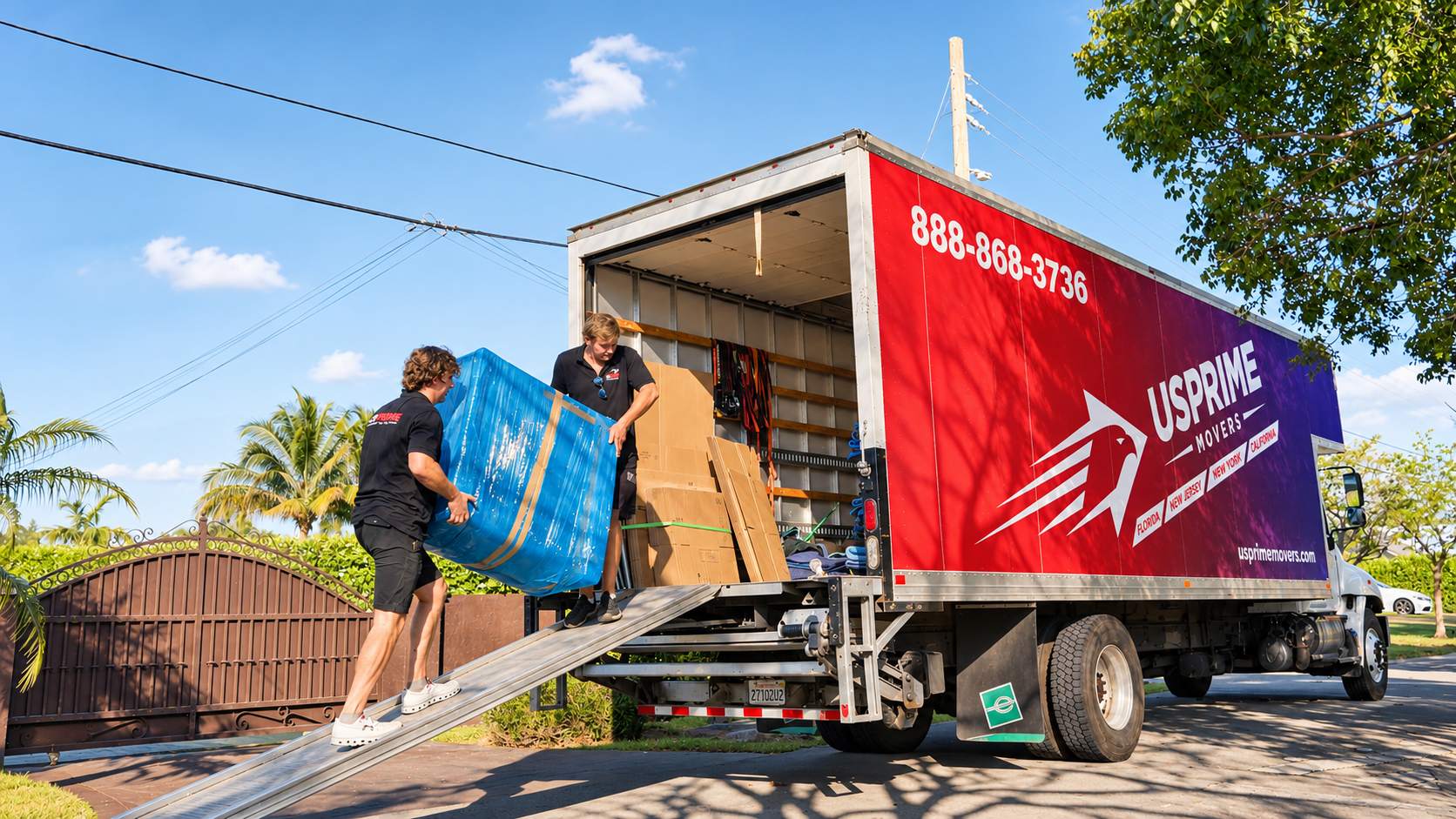
How a long-distance move works, step by step: you share an inventory, get a written estimate, book a date, pack, hand over your belongings at pickup, wait during transit, and sign off at delivery. The whole process usually runs several weeks from first call to the last box. Each stage has its own paperwork and deadlines, and knowing them in order keeps surprises small.
This guide walks through the stages as a family or individual would meet them when moving to another state for a job, to be near relatives, or to find lower living costs. It also covers what movers can't take, how tipping works, and the mistakes that cost people money.
What you need before you start
You need a rough move date, a list of what you own, and the addresses at both ends. That is enough to request a first estimate.
A few other things help:
- A flexible window of a few days for pickup and delivery
- Your lease or closing dates, so the move lines up with them
- A phone or laptop for a video walkthrough of your home
- A notebook or folder for the estimate, contract and inventory
Long-distance moves are priced differently from local ones. Local jobs are often billed by the hour. Interstate jobs are priced by the amount of cargo and the distance. If your move stays inside one state, a local mover is the better fit, and our guide to local movers explains how that works.
Step 1: Decide when to start planning
Start planning well before your move date if you can. That gives you time to compare estimates, book a truck and sort your belongings without rushing.
If you answered "what are the first things I should do before moving?", this is the short list:
- Pick a target move date and a backup date.
- Decide what you will sell, donate or throw away.
- Collect estimates from licensed carriers.
- Tell your landlord, employer or school.
- Start a folder for receipts and paperwork.
Summer and the end of each month are busy. Booking early gives you more choice of dates. US Prime Movers offers early-booking discounts.
Step 2: Cut down what you are moving
Fewer items means a smaller shipment and a lower price. Interstate moves are priced by how much space your belongings take up, so every unused item you remove saves money.
Go room by room. Sort things into keep, sell, donate and discard. Big, low-value items such as old bookcases or a worn sofa are often cheaper to replace than to ship across the country.
Do this before you ask for estimates. If you sort after the quote, your inventory changes and the price may change with it.
Step 3: Get a written estimate based on your inventory
A written estimate based on a survey of your belongings is how a licensed interstate mover sets your price. A verbal quote does not count. The FMCSA says a mover must provide a written estimate for every interstate shipment, and a binding estimate caps the amount due at delivery at the estimate amount.
The same FMCSA guidance says a mover must do a physical survey of your household goods unless you waive it in writing, and the survey can be on-site or virtual. With US Prime Movers, you can share your inventory by video call, by phone, or as a list sent by email or text, and you get a price right after a quick call.
We price by cubic feet. A binding, not-to-exceed price holds as long as your inventory stays the same. Stairs, an extra stop or extra items can raise it. If you have a written estimate from another reputable carrier, we match and beat it when you show us the document.
The table below shows how the main estimate types differ.
| Estimate type | What it means | Risk to you |
|---|---|---|
| Binding | Price is fixed for the listed inventory | Low, if inventory stays the same |
| Not-to-exceed | Final cost can go lower but not above the quote | Low |
| Non-binding | Final cost depends on actual weight or volume | Higher, the bill can rise |
| Verbal | Not an official estimate | No protection |
For more on how interstate pricing is built, see our guide to moving prices.
Step 4: Choose a carrier and check its license
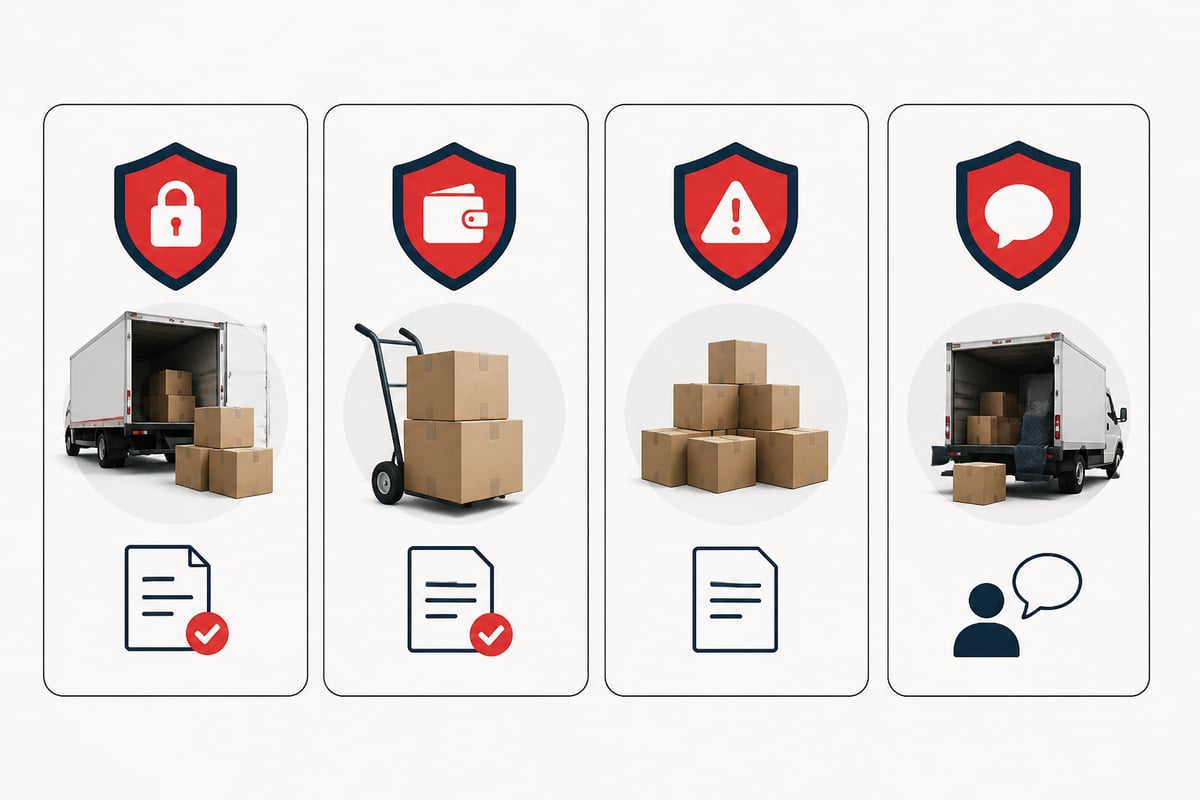
Choose a carrier that is licensed for interstate moves and uses its own crews, then confirm the license before you pay anything. Interstate movers must be registered with the FMCSA and carry a USDOT number and an MC number. You can look these up on the FMCSA site.
US Prime Movers is a licensed interstate carrier (USDOT 3848322, MC 1401881) that moves between all 50 states with its own trucks and background-checked crews. The crew that loads your truck is the crew that delivers it. Our long distance moving service covers loading, transport and unloading anywhere in the US.
Questions to ask any carrier:
- Is the estimate in writing and binding?
- Who does the loading and unloading, your own crew or a subcontractor?
- What is included in the price (wrapping, fuel, tolls, reassembly)?
- What coverage comes with the move, and what costs extra?
- What happens if delivery is late?
Step 5: Book the move and pay the deposit
Booking means signing the contract and paying a deposit that holds your date and your truck. The deposit amount is set for each move.
Read the contract before you sign. Check that the inventory, addresses, pickup window, delivery window and price match what you were told. Keep a copy.
Ask about storage as well. Every long-distance move with US Prime Movers includes 30 days of free storage. If your new home isn't ready, that gap is covered. If you need longer, you can ask.
Step 6: Pack, or have the crew pack
You can pack yourself, or have the crew pack some or all of it. Both work. Packing yourself costs less, and professional packing saves time and lowers the risk of breakage.
If you pack yourself, work through these points:
- Start with rooms you use least, such as the guest room and garage.
- Use new or sturdy boxes and tape every seam.
- Label each box with its room and a short list of contents.
- Keep heavy items in small boxes and light items in large ones.
- Set aside an essentials box for the first two days at the new home.
What things will movers not move?
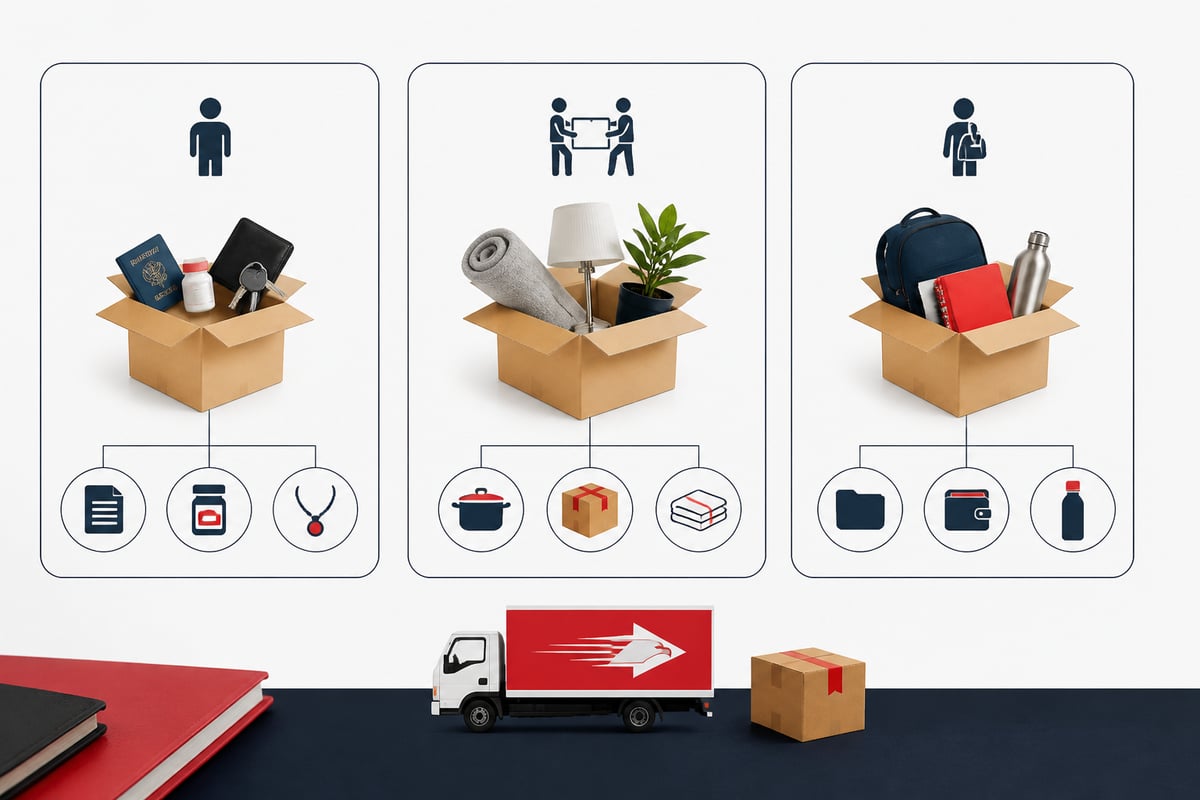
Movers will not take hazardous or perishable items, and most carriers also ask you to carry valuables yourself. Typical no-go items include:
- Flammables such as gasoline, propane and lighter fluid
- Paint, solvents and cleaning chemicals
- Ammunition and fireworks
- Perishable food and frozen items
- Plants (many states restrict moving them)
- Cash, jewelry, important papers and medications
Ask your carrier for its own list, since details vary. Take irreplaceable items and documents with you in your car.
Step 7: Handle paperwork and address changes
Move your mail, utilities and records before moving day, not after. A USPS change-of-address request, once approved, takes 7 to 10 business days to take effect, so file it early.
A short list of things to update:
- USPS mail forwarding
- Electric, gas, water, internet and trash services (stop the old, start the new)
- Bank, credit card and insurance addresses
- Driver's license and vehicle registration in your new state
- School and medical records
- Your employer's payroll address
If you are moving on military orders, keep your paperwork together. US Prime Movers handles PCS and PPM moves and provides weight tickets and the paperwork for reimbursement. The IRS explains which moving expenses may be deductible for eligible Armed Forces members moving under military orders in its guidance. For more detail on how we handle military relocations, see our military moves page.
Step 8: What happens on pickup day
On pickup day the crew arrives, checks the inventory against your list, wraps and loads your things, and has you sign the paperwork. Be home, or have someone you trust there.
Before the truck leaves, review the documents. The FMCSA lists what to check at pickup, including the shipment inventory, the bill of lading and the agreed pickup and delivery dates. Make sure each one is accurate before you sign.
What the crew does with US Prime Movers:
- Walks through the home with you and confirms the inventory.
- Wraps and pads furniture.
- Disassembles beds and large pieces.
- Loads the truck and records items on the inventory.
- Gives you copies of the signed paperwork.
Do a last walk through every room, closet and the garage before the crew leaves.
Is $100 each a good tip for movers?
Tipping is optional, and there is no set rule. Many people tip based on how long the crew worked, how hard the job was, and how carefully they handled your things. Some tip per crew member at the end of the day, others at delivery. If a tip is in your budget, hand it to each person directly. If it isn't, a clear thank-you and an honest review also matter.
Step 9: Transit and delivery windows
During transit your belongings travel in the truck, and the delivery window depends on the mileage. A shorter distance takes fewer days. A cross-country trip takes longer.
Ask for your delivery window in writing before you book. Expedited and guaranteed delivery windows are available with US Prime Movers, and terms are set per move. We also offer an On-Time Guarantee: if we deliver late, we reimburse you for each late day, with the amounts set in your agreement.
While you wait:
- Keep your phone on and answer calls from dispatch.
- Plan for a few days of living from your essentials box.
- Make sure someone with authority can receive the shipment if you are delayed.
If you're not ready for delivery, free storage is the fallback. Our 30 days of storage on long-distance moves covers that gap.
Step 10: Delivery, unloading and inspection
At delivery, the same crew that loaded your truck unloads it, sets furniture in the right rooms and reassembles what they took apart. Stay with them and direct where things go.
Before you sign off, do this:
- Check the items off against your inventory list.
- Look over furniture for scratches and dents.
- Note any damage on the paperwork before you sign.
- Test that beds and tables are reassembled correctly.
- Keep your copy of every document.
Basic liability coverage is included free in every long-distance price. More coverage can be bought through our insurance partner Baker International, or you can use your own homeowner's insurance. If something is damaged, we evaluate claims through our internal claims system or a third-party claims company. When you bought extra coverage through Baker International, the insurer handles the claim.
Typical timeline from first call to last box
The timeline below is a general guide, not a promise, and your own dates depend on the season and distance.
| When | What happens |
|---|---|
| 8 weeks out | Sort belongings, request estimates |
| 6 weeks out | Choose a carrier, sign the contract, pay the deposit |
| 4 weeks out | Start packing, file mail forwarding |
| 1 week out | Confirm times, pack the essentials box |
| Pickup day | Inventory check, loading, paperwork |
| Transit | Delivery window set by mileage |
| Delivery | Unload, inspect, note any damage |
| After | File claims if needed, update records |
Common mistakes on a long-distance move
Most problems come from rushing, vague paperwork or surprises on the day. These are the ones to avoid:
- Taking a verbal quote. Get a written, binding estimate.
- Changing the inventory late. New items can raise a not-to-exceed price.
- Skipping the license check. Confirm the USDOT and MC numbers with the FMCSA.
- Forgetting access issues. Stairs, narrow streets and long carries should be mentioned up front.
- Signing without reading. Check dates, addresses and what is included.
- Packing valuables in the truck. Carry documents, medications and jewelry yourself.
- Waiting to forward mail. The 7 to 10 business day delay can leave you without letters for weeks.
If you are weighing carrier types, such as containers versus full-service crews, our interstate moving companies guide explains the differences.
FAQ
How do I plan a long-distance move?
Start with a date and a budget, sort your belongings, and request written estimates from licensed carriers about 8 weeks ahead. Then book, pack, update your address and confirm pickup details a week before. The steps above follow that order.
How long does a long-distance move take?
It depends on the distance and the carrier's schedule. A shorter trip is faster than a cross-country one. Ask for the delivery window in writing, and ask about expedited or guaranteed windows if your dates are tight.
What does a long-distance move cost?
The price depends on your inventory in cubic feet, the distance, and extras such as stairs or an additional stop. A binding price is set from your inventory and holds while the inventory stays the same. For ranges and what drives them, see our guide to moving company cost.
Do movers take plants, food or cleaning supplies?
Most do not. Hazardous items, perishables and often plants are excluded. Check your carrier's list ahead of time and plan to use up, give away or carry those items yourself.
What if my new home isn't ready when the truck arrives?
Ask about storage when you book. US Prime Movers includes 30 days of free storage on long-distance moves, and you can ask if you need longer.
Your next step is to write down a rough inventory of your home and a target move date, since that is all a mover needs to start an estimate. US Prime Movers is a family-owned, licensed interstate carrier (USDOT 3848322, MC 1401881) that moves families between all 50 states with its own trucks and crews. Call (888) 868-3736, 7 days a week, 9 AM to 8 PM, or get a free quote online to get a binding price based on your inventory.