
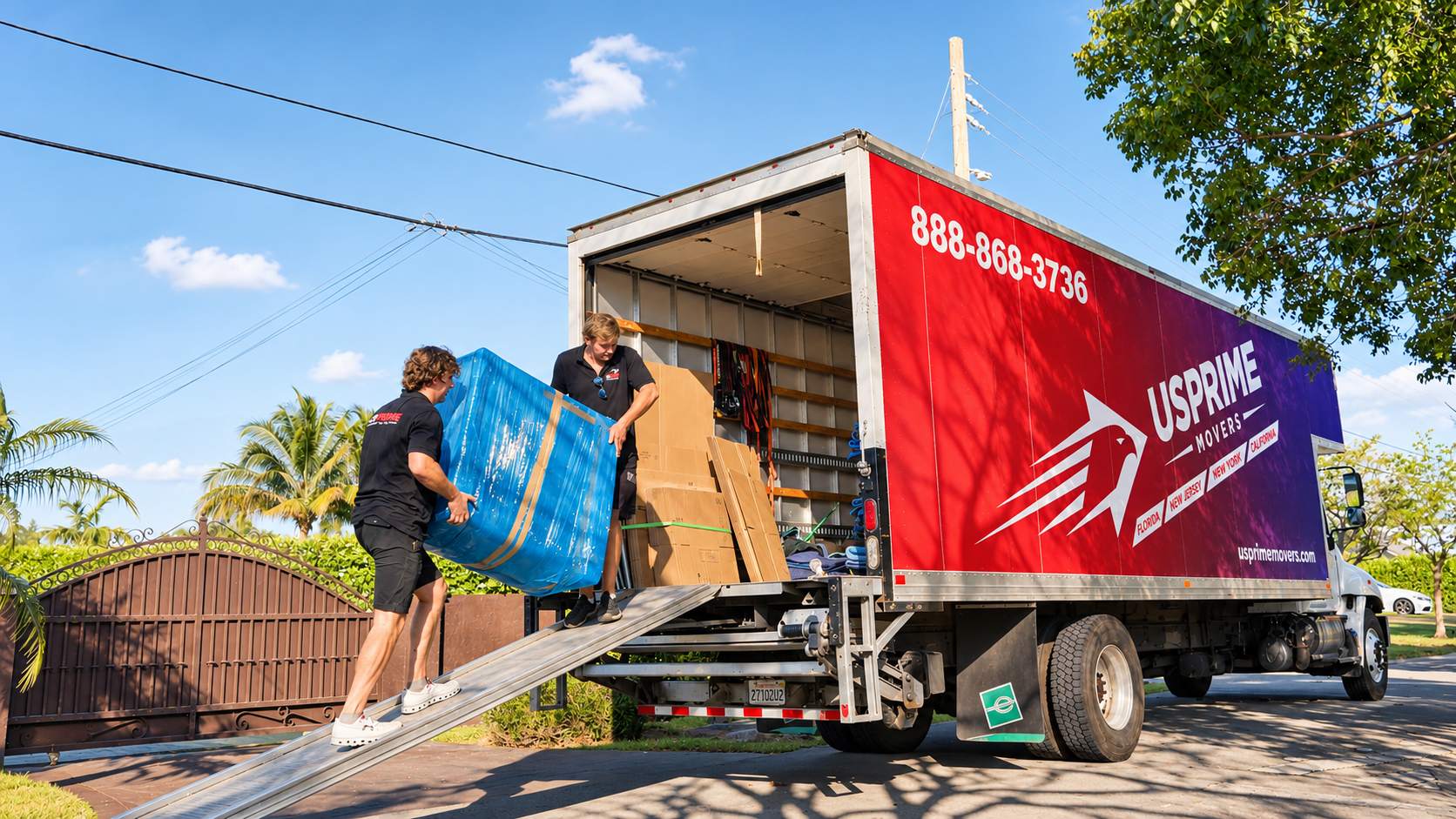
Long-distance movers price your move one of two ways: by weight (what your shipment weighs on a scale) or by cubic feet (how much space it fills on the truck). Both methods can produce a fair price, but they work very differently, and the difference affects how firm your quote really is. This guide explains both methods so you can compare quotes with confidence.
What is the difference between pricing by weight and by cubic feet?
Weight pricing charges you per pound after your belongings are weighed, while cubic-foot pricing charges you for the space your belongings take up in the truck.
With weight pricing, the truck is weighed before loading and again after. The difference is your shipment's weight, and the mover multiplies it by a rate per pound. You will not know the final number until the weighing is done.
With cubic-foot pricing, the mover counts the volume of your items from an inventory. A sofa, a dresser and 30 boxes each take up a known amount of space. Add them up and you have the total volume. The price follows from that volume and the distance.
Here is a side-by-side look:
| Weight-based | Cubic-foot-based | |
|---|---|---|
| What is measured | Pounds on a certified scale | Space your items fill |
| When the price is known | After weighing, often at delivery | Before the move, from your inventory |
| What can change the final bill | Actual weight differs from the estimate | Added items or services |
| Best way to prepare | Cut heavy items you don't need | Cut bulky items you don't need |
Neither method is wrong. The point is to know which one your mover uses before you sign.
How do movers measure cubic feet?
Movers measure cubic feet by building an inventory of every item and adding up the volume each one takes on the truck.
The inventory can come from a video walkthrough, a phone call or a written list. Large furniture is counted piece by piece. Boxes are counted by size. The mover then adds a small allowance for packing material and the way items fit together on the truck.
Typical volumes give you a sense of scale. A 1-bedroom home is typically about 300 to 700 cubic feet, a 2-bedroom about 500 to 1,000 cubic feet, and a 3-bedroom about 1,000 to 2,000 cubic feet. Your own number depends on how much furniture you own and how many boxes you pack.

How does weight-based pricing work?
Weight-based pricing works by weighing the loaded truck, subtracting the empty truck's weight, and charging a per-pound rate for the result.
If the mover gives you a weight estimate first, it is only an estimate. The real charge depends on what the scale says. Several things can push the weight up beyond what you expect:
- Books, tools and files weigh far more than they look.
- Solid wood furniture and appliances add up fast.
- Packing materials and full boxes add pounds too.
You have rights here. Federal rules say a mover that estimates by volume and later converts to a weight-based rate must explain the conversion formula in writing and state that final charges depend on actual weight and services. Ask for that explanation before you agree to anything.
Can a mover charge by volume and still bill by weight?
Yes, some movers estimate by volume and then bill by weight, which is why you should ask exactly how the final charge is calculated.
This is a common point of confusion. A quote that begins in cubic feet can still turn into a per-pound bill at delivery. When that happens, the number on your estimate and the number on your final invoice can be far apart.
The federal rules draw a clear line. If a shipment is priced by a set volume, such as a specified number of cubic feet, its weight does not affect the charge. Some agreements may also require payment for a minimum amount of van space. So the key question is simple: "Is my final price tied to volume or to weight?"
You also have the right to see the mover's tariff, the document listing the rates, rules and charges that govern your shipment. The mover must give you a free copy of the relevant tariff provisions on request. The federal consumer-rights appendix, Appendix A to Part 375, explains estimates, weighing, tariffs and volume-based pricing in plain terms.
What is a binding estimate, and why does it matter?
A binding estimate is a price the mover cannot raise at delivery, as long as your inventory and services stay the same.
The FMCSA explains that with a binding estimate, you cannot be required to pay more than the estimate at delivery, subject to changes such as added items or services. That protection is the main reason many families prefer volume-based quotes. You know the number before the truck is loaded.
A non-binding estimate is only a guess. The final bill can land higher, and you may have to pay it before your belongings come off the truck.
Compare the two:
- Binding, not-to-exceed: One firm price tied to your inventory. Changes only if you add items or services.
- Non-binding: An approximate price. The final charge depends on what is actually loaded or weighed.
When you collect quotes, ask each mover which type they are giving you, and get it in writing.
How does US Prime Movers price a long-distance move?
US Prime Movers prices by cubic feet from your inventory and gives you one binding, not-to-exceed price while the inventory stays the same.
You can send the inventory by video call, by phone, or as a list by email or text. After a quick call, you get your binding price. For families moving to another state, long-distance moving with US Prime Movers includes loading, transport and unloading anywhere in the US.
What is included in the price:
- Furniture wrapping and padding
- Disassembly and reassembly
- Placing everything in the right rooms
- Fuel, tolls and taxes
- Basic liability coverage
- 30 days of free storage on long-distance moves
The crew that loads your truck is the crew that delivers it, and every move uses US Prime Movers' own trucks and background-checked crews. The company is a licensed interstate carrier (USDOT 3848322, MC 1401881) registered with the FMCSA. Interstate household goods movers need federal FMCSA authority, so it is worth checking a mover's USDOT and MC numbers before you book.
How much does a long-distance move cost by home size?
Typical long-distance prices run from about $1,050 for a studio moving about 400 miles to about $7,850 for a 4-bedroom home moving about 2,500 miles, depending on size and distance.
These are estimates only. The binding price depends on your inventory. Based on US Prime Movers' typical ranges:
| Home size | About 400 miles | About 1,000 miles | About 2,500 miles |
|---|---|---|---|
| Studio | $1,050 | $1,450 | $1,750 |
| 1 bedroom | $1,750 | $2,300 | $2,750 |
| 2 bedrooms | $2,400 | $3,150 | $3,750 |
| 3 bedrooms | $3,950 | $5,200 | $6,100 |
| 4 bedrooms | $5,200 | $6,700 | $7,850 |
Some real routes give a feel for the range. A 2-bedroom move from New Jersey to Florida is about $3,250, and from New York to Florida about $3,350. California to Washington is about $2,750 for a 2-bedroom, and California to Nevada about $2,200. For more detail, see this guide to how much it costs to move out of state.
How much should you budget to move across the country?
Budget for the base price of your move, plus a cushion for stairs, extra stops and packing, and plan to book early.
For a typical 2-bedroom home, the estimate above is about $3,750 for a move of about 2,500 miles. A 3-bedroom home runs about $6,100 for the same distance. Treat those as a starting point, since your inventory sets the real number.
Add these to your budget if they apply:
- Stairs: The first flight is free, then $75 per flight.
- Extra stop: $150 for each added stop.
- Shuttle truck: $1 per cubic foot when a large truck can't reach your door.
- Full packing: $1.25 per cubic foot. Partial packing is $0.75, and unpacking is $0.75.
- Storage after the free 30 days: $0.50 per cubic foot per month.
Packing yourself avoids the packing charge. If you want to lower your cubic feet, downsizing before a long-distance move is the most direct way to do it.
How do you lower the cubic feet or weight you pay for?
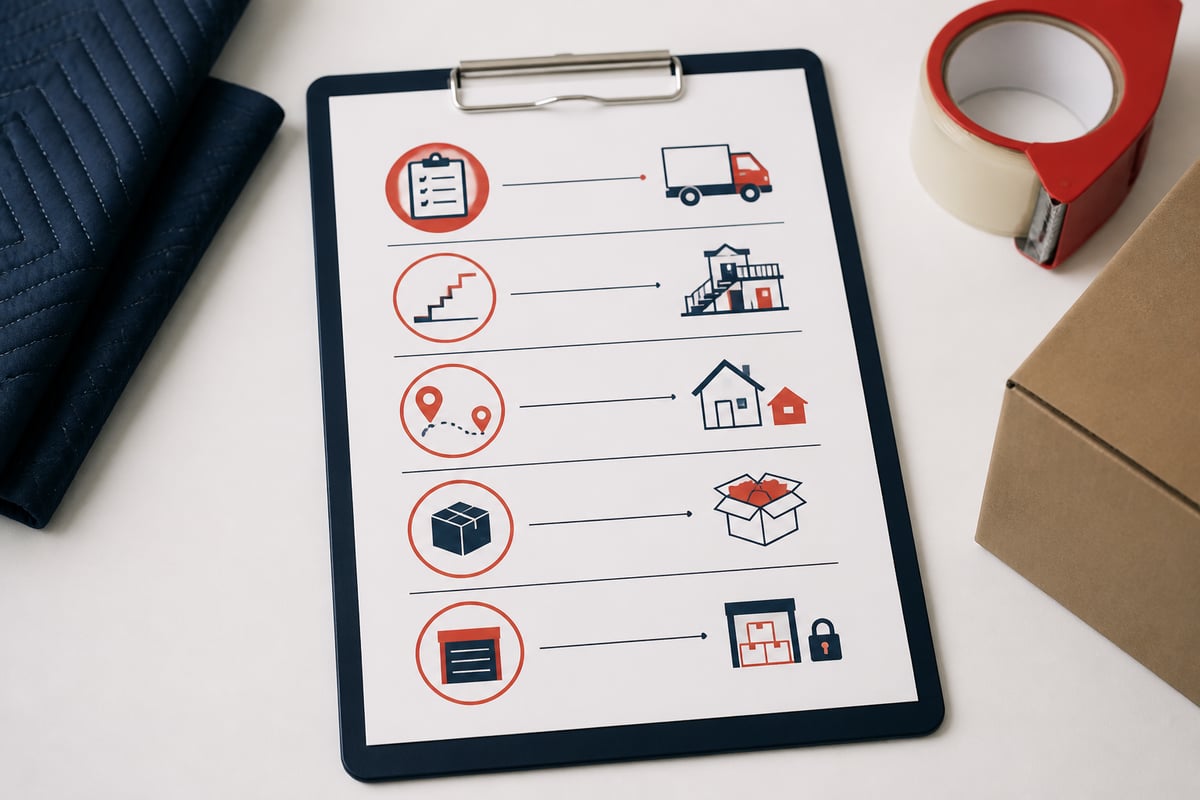
You lower the volume you pay for by owning less, and the steps below put that into practice.
- Sort room by room. Decide what is worth moving before you list anything for a quote.
- Sell or donate bulky items. Old sectionals, extra bookcases and unused exercise equipment take a lot of truck space.
- Take apart what you can. Flat-packed items fit more tightly, though disassembly is included in US Prime Movers' price.
- Use sturdy, uniform boxes. Boxes that stack cleanly waste less space.
- Keep your inventory accurate. Under a binding price, the quote holds while the inventory stays the same. Items added later can change it.
Ask your mover to price the move with and without a few big items. Seeing the difference in dollars makes the keep-or-sell choice easier.
Does timing change the price?
Yes, when you move can change the price noticeably, with peak summer months costing more than the rest of the year.
Peak season (May through September) typically costs about 40% more. Mid-week and mid-month moves typically cost about 15% to 30% less. The earlier you book, the better the price, and early booking discounts are available. For more on choosing a date, read about the best time of year to move long-distance.
On the delivery side, standard windows depend on mileage. Up to 500 miles is 3 to 6 business days, 500 to 1,000 miles is 5 to 10, 1,000 to 2,000 miles is 10 to 21, and 2,000 to 3,000 miles is 15 to 21. Expedited delivery sends a dedicated truck the day after loading, and the price is set per move. To plan around that, see how long a cross-country move takes.
What should you ask before accepting a quote?
Ask whether the price is binding, whether it is based on volume or weight, and what would change it.
Use this list on every call:
- Is this estimate binding and not-to-exceed?
- Is the final charge based on cubic feet or on actual weight?
- What is included: wrapping, disassembly, fuel, tolls, taxes, coverage?
- What extra charges could apply for stairs, stops or a shuttle?
- Can I see the written tariff provisions?
- What is the payment schedule?
For reference, US Prime Movers asks for a deposit of 10% to 30% to secure the date and truck, 50% at pickup after loading, and the balance on delivery. If you hold a written estimate from another reputable carrier, US Prime Movers will match and beat it when you show the written estimate. For a wider look at how interstate carriers are organized, this overview of interstate moving companies is a useful read.
Frequently asked questions
How heavy is too heavy for a moving box?
A box over about 50 pounds is generally too heavy to lift safely. Pack books and other dense items in small boxes and fill larger boxes with lighter things like linens. If you pack yourself, you avoid the packing charge. If you want help, US Prime Movers offers full and partial packing.
Is $50 a good tip for each mover?
Yes, $50 per mover is a good tip for a long-distance move, and many people give more for a long day, a lot of stairs or heavy furniture. Tipping is optional, so base it on the crew's work and have it ready in cash on moving day.
What is the cheapest day for movers?
Mid-week and mid-month days usually cost less than weekends and the first or last days of a month. Savings on those dates are typically about 15% to 30%. Moving outside May through September also helps.
Does a lighter load always cost less?
Under weight pricing, yes, a lighter load lowers the bill. Under cubic-foot pricing, space matters more than pounds, so removing bulky items helps more than removing dense ones. Ask which method your mover uses so you know what to cut.
What can raise a binding price after I get it?
A binding, not-to-exceed price holds as long as your inventory stays the same. Added items, stairs or an extra stop can raise it. Tell your mover about any changes before moving day so the price reflects them.
Your next step is to take a quick inventory of your home, room by room, so you can compare quotes on equal terms. When you are ready, US Prime Movers can turn that list into a binding, not-to-exceed price, so you can get a free quote at usprimemovers.com/get-your-quote or call (888) 868-3736, 7 days a week, 9 AM to 8 PM. The team can walk you through the inventory by video, phone or written list. The company also offers long-distance moving to all 50 states.