
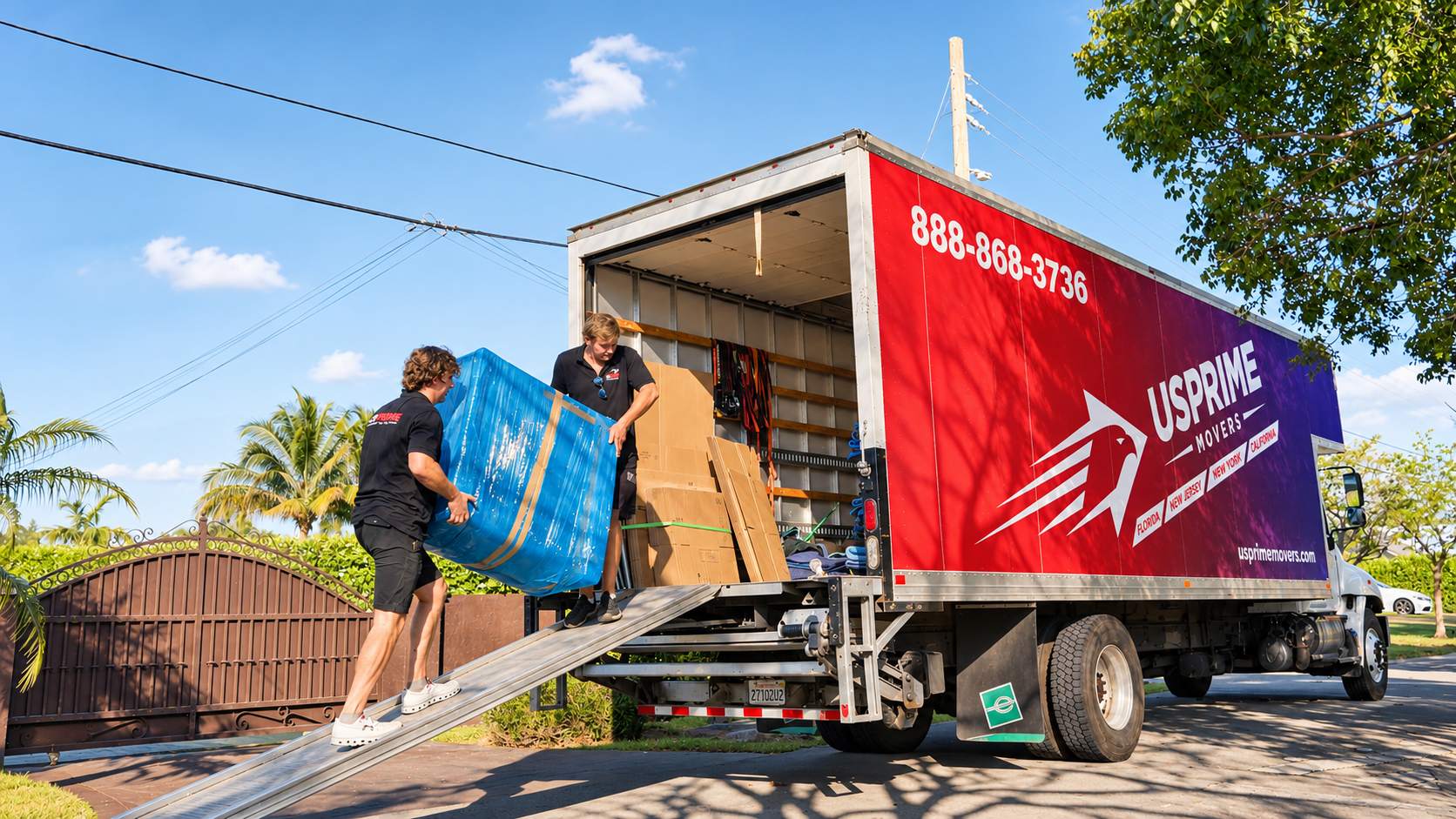
How much does it cost to move out of state? With US Prime Movers, a typical long-distance move runs about $1,750 to $2,950 for a studio to two-bedroom home and about $2,500 to $4,950 for a three- to four-bedroom home, depending on distance and how much you own. These are estimates only. The price you actually pay comes from your inventory, not from a national average.
Every long-distance move has a $1,750 minimum. A large house moved across the country sits at the top of the range. The rest of this guide explains what drives the number, what else belongs in your budget, and how to keep the total down.
What factors set the price of an out-of-state move?
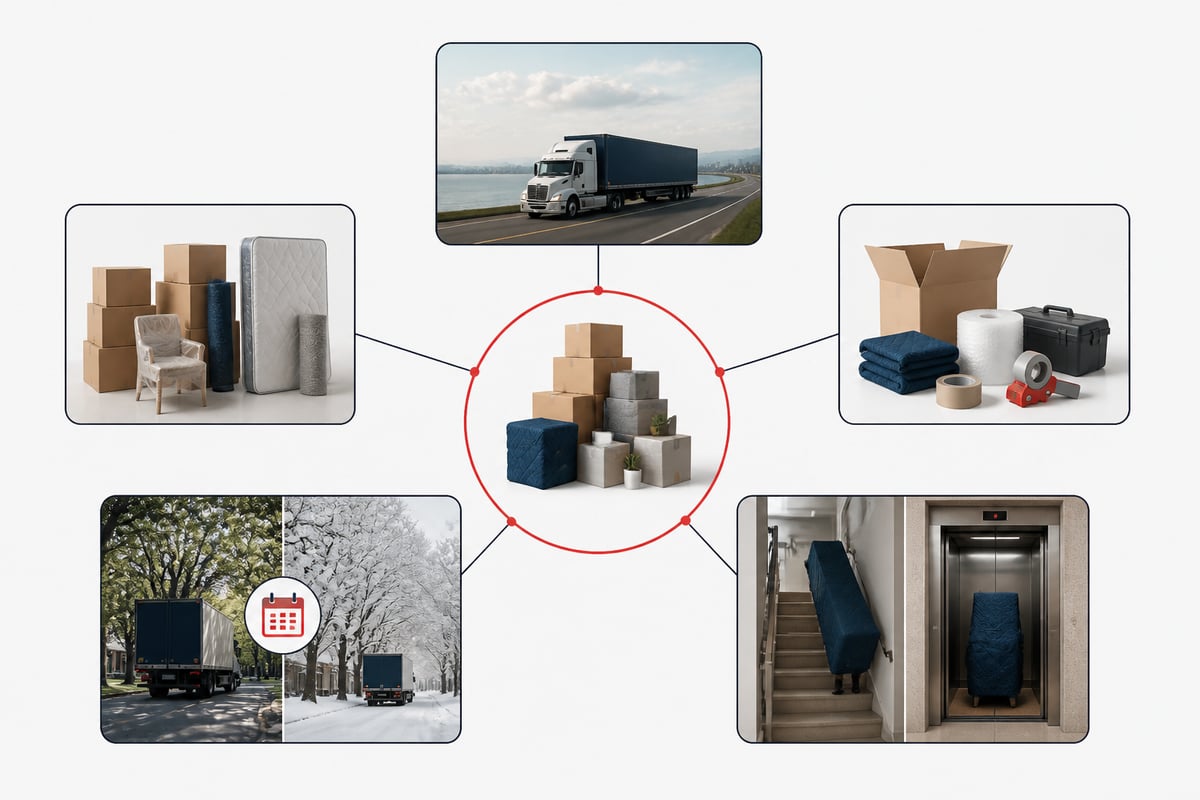
Several things set most of the price: how much you move, how far it goes, which services you add, when you move, and what the building or street looks like at each end.
- Volume and weight. More furniture and boxes mean more truck space and more labor. Long-distance movers commonly price by weight or by cubic feet. US Prime Movers prices by cubic feet from your inventory.
- Distance. A move from New Jersey to Florida costs less than one from New Jersey to Washington state. Fuel, driving time and delivery windows all grow with mileage.
- Services. Packing, unpacking, disassembly of large furniture and special handling all add labor.
- Timing. Peak season, May through September, typically costs about 40% more. Mid-week and mid-month moves typically cost about 15 to 30% less than weekends and month-end.
- Access. Stairs, long carries from the truck, narrow streets and elevator reservations can change the final figure.
Think of the price as a simple formula: what you move, how far, and how much work the crew does. Change any one of those and the total changes.
How much does it cost to move out of state by home size?
Typical prices by home size and distance are below. These are planning estimates for a full-service move with US Prime Movers, not quotes, and your binding price depends on your inventory.
| Home size | Under 500 miles | 500 to 1,500 miles | Over 1,500 miles |
|---|---|---|---|
| Studio or 1 bedroom | $1,750 | $1,950 | $2,350 |
| 2 bedrooms | $1,850 | $2,750 | $2,950 |
| 3 bedrooms | $2,500 | $3,200 | $3,950 |
| 4+ bedrooms | about $3,500 | $4,000 | $4,950 |
Two common routes as examples: New Jersey to Florida runs about $2,500 and New York to Florida about $2,750 for most households. Every long-distance move has a $1,750 minimum.
Two homes of the same size can price very differently. One person may own a sparse two-bedroom. Another may have a garage full of tools, a piano and a dining set for ten. The inventory tells the real story, which is why a good quote starts with a list of what you own.
What does a professional out-of-state move include?
A professional move should list exactly what is in the price, and it should be in writing. At US Prime Movers, every long-distance price includes furniture wrapping and padding, disassembly and reassembly, placing everything in the right rooms, fuel, tolls and taxes, and basic liability coverage. Long-distance moves also come with 30 days of free storage.
That list matters when you compare quotes. One quote may look lower because fuel, tolls or reassembly are billed separately later. Another may look higher because those items are already inside it. Compare what is covered before you compare totals.
Federal rules back this up. For an interstate household move, the mover must provide a written estimate covering transportation and applicable accessorial and advance charges, and a verbal rate quote is not an estimate, according to the FMCSA. Ask for the written version before you book.
If you want a full-service option for crossing state lines, see our long distance moving service, which covers loading, transport and unloading anywhere in the US.
Is a binding estimate better than a non-binding one?
For most households, a binding estimate gives the most certainty because the price cannot rise unless your move changes. A binding estimate limits the amount due at delivery to the estimate, unless the shipment or requested services change or unforeseen circumstances require a new estimate.
A non-binding estimate works differently. The final bill depends on the actual weight or volume, and the mover cannot require payment of more than 110% of the estimate at delivery. You may still owe the rest later.
Our prices are binding and not-to-exceed as long as the inventory stays the same. A few things can raise the price: stairs, an extra stop, or extra inventory items added after the quote. If you sell a sofa before moving day, tell us. If you buy new furniture, tell us that too. Keeping the inventory accurate keeps the quote accurate.
What extra costs should you budget beyond the mover?
The mover's invoice is only one line in the full budget. Plan for these as well.
- Travel. Gas or flights, hotels, and meals for you and your family on the way.
- Deposits. First month's rent, a security deposit, or closing costs on a purchase.
- Utilities and setup. Connection fees, internet installation and any deposits for service.
- Vehicle costs. Re-registration, new plates, and a driver's license in the new state. If you ship a car, add that fee.
- Storage. If your closing dates do not line up, you may need storage on top of the included period.
- Replacement items. Furniture that does not fit the new layout, or things you chose to sell instead of move.
- Tips. Many people tip the crew. It is optional.
- Cleaning and repairs. Some leases require a deep clean or a repair fee.
A simple rule: add a cushion of 10 to 15 percent on top of your moving quote for surprises. That is a budgeting habit, not a rule from any agency.
Is $10,000 enough to move out of state?
For most households, $10,000 covers the move itself with room to spare. Based on the typical prices above, even a four-bedroom home moved more than 1,500 miles runs about $4,950. The real question is what else has to be paid in the same window.
The harder question is the rest of the move. Add a security deposit, first month's rent, travel, and a few weeks before your first paycheck lands in the new place, and the total climbs quickly. If you are moving without a job lined up, set aside several months of living costs, not just the truck.
A practical way to test your own number: get a written moving quote first, then add travel, housing deposits and one month of bills. If the total fits comfortably under your cash on hand, you are in good shape.
What is a good budget for moving out of state?
A good budget covers the mover, the trip, your first month of housing and a cushion, with about 10 to 15 percent held back for surprises.
Use this simple frame:
- The move: your written, binding quote.
- The trip: fuel or flights, lodging and food.
- Housing: deposit and first month's rent, or closing costs.
- Setup: utilities, registration, and basic replacement items.
- Cushion: 10 to 15 percent of the total.
If you are moving for a job, ask whether your employer offers relocation help. Some employers pay a lump sum or cover part of the move. Get the terms in writing before you sign.
What is the cheapest way to move from one state to another?
The cheapest way depends on how much you own and how much work you will do yourself, but selling or donating what you will not use is almost always the first saving.
Here are the main options, from lowest cost to most hands-off:
- Shrink the load. Sell furniture that is easy to replace. Every item you drop shrinks the volume on your quote.
- Pack yourself, hire pros to load and drive. You save on packing labor and keep full-service transport.
- Pick a quiet date. Mid-week and mid-month moves typically cost about 15 to 30% less, and moving outside May through September avoids peak-season pricing.
- Book early. Early booking discounts are available with us, and more time gives you room to compare written estimates.
- Compare written quotes. We match and beat written estimates from reputable moving carriers. Bring your written estimate and we will look at it.
Renting a truck and driving yourself can look cheaper on paper, but you take on the driving, the loading, the fuel and the risk to your belongings. If you want professional crews doing the lifting and driving, a full-service mover is the better fit. A do-it-yourself truck rental is not something we offer.
How can you keep the cost of an out-of-state move down?
You can lower the cost most by moving less, being flexible on dates, and giving your mover an accurate inventory early.
- Declutter first. Go room by room. Sell, donate or toss what you do not need before the quote.
- Do an inventory by video. A quick video call or a list by email or text lets us price by cubic feet right away, with no surprises on moving day.
- Be flexible on dates. A few days either way can change availability and price.
- Ask about discounts. Early booking, military and senior discounts are available.
- Pack what you can. Books, linens and kitchen items are easy to box up yourself. Leave fragile and heavy items to the crew if you want extra care.
- Use the included storage. Every long-distance move includes 30 days of free storage. If your new home is not ready, you do not need to pay for a second unit right away. If you need longer, you can ask us.
- Keep the inventory steady. Late changes are the main way a binding price moves.
For a deeper look at how pricing works across the industry, our guide to moving company cost breaks it down further.
Which states will pay you to relocate?
Some states, towns and remote-work programs offer cash or other incentives to new residents, but they come with conditions, so check the terms before you plan around them.
These programs change often. Common conditions include working remotely for an out-of-state employer, buying a home, staying for a set number of years, or moving to a specific rural town. Some are grants, some are tax credits, and some are help with housing.
Do not build your budget on an incentive you have not yet been approved for. Treat it as a bonus, not a plan. Check the official state or county website for current details.
What about military, senior and business moves?
Each of these has its own cost rules, and the right path can save real money.
Military moves. If you are moving on orders, the paperwork matters. For 2026, eligible active-duty Armed Forces members moving under military orders and certain Intelligence Community members may qualify for moving-expense tax treatment. Eligible expenses can include household goods, storage and travel, but not meals. We handle PCS and PPM moves with certified weight tickets and the paperwork for reimbursement, and a military discount is available. Our military moves page explains the packing options.
Senior moves. Adult children moving a parent, or seniors downsizing to another state, can often save by moving less. A smaller inventory means a smaller price. A senior discount is available, and packing and unpacking help can take the physical work off the family.
Office moves. Businesses relocating across state lines price by volume too: desks, files, equipment and servers. A commercial moving service can plan around your hours so the office is not down longer than it needs to be.
How do you protect yourself from surprise charges?
You protect yourself by getting everything in writing, checking the mover's federal registration, and keeping your inventory accurate.
- Check the license. A legitimate interstate carrier is registered with the FMCSA and has a USDOT number. Ours are USDOT 3848322 and MC 1401881.
- Get a written estimate. Do not accept a verbal price.
- Ask if the price is binding. Then ask what changes it.
- Read what is included. Fuel, tolls, taxes, wrapping and reassembly should be listed.
- Review coverage. Basic liability coverage is included free with us. More coverage is available through our insurance partner, Baker International, or you can use your own homeowner's insurance.
- Use the federal checklist. The FMCSA's tips for a successful move cover required documents, written estimates, inventories and protection for your belongings.
Reading the fine print takes an hour. Fixing a surprise bill takes far longer.
How to get an accurate quote for your move
An accurate quote starts with an accurate inventory, and you can usually get a price within minutes of a short call.
- Walk through each room. List big furniture, appliances, boxes and anything in the garage, attic or storage unit.
- Choose how to share it. Video call, phone, or a list by email or text all work.
- Share your dates and both addresses. Mention stairs, elevators or tight parking at either end.
- Ask what is included. Compare it line by line with any other written estimate.
- Confirm the price is binding. Keep the paperwork.
- Put down a deposit to hold the date and truck. The amount is set for each move.
Our team is available 7 days a week, 9 AM to 8 PM, and the crew that loads your truck is the crew that delivers it. If you want help planning the timeline too, our guide to moving out of state walks through it step by step.

FAQ
How far ahead should I book an out-of-state move?
Book as early as you can, ideally several weeks before your move date. Early booking gives you time to compare written estimates and may qualify for a discount. Summer and month-end dates tend to fill first.
Does the price change if I add items after the quote?
Yes. Our price is binding and not-to-exceed while the inventory stays the same. Extra items, stairs or an added stop can raise it, so tell us about changes before moving day.
What if my new home is not ready when the truck arrives?
Every long-distance move includes 30 days of free storage. If you need more time, you can ask us about extending it.
What happens if the delivery is late?
We have an On-Time Guarantee. If we deliver late, we reimburse you for each late day, with the amounts set in your agreement. Delivery timing depends on the mileage, and expedited or guaranteed delivery windows are available.
What if something is damaged during the move?
Basic liability coverage is included at no charge. We evaluate claims through our internal claims system or a third-party claims company. If you bought extra coverage through Baker International, the insurer handles the claim.
Your next step is to write down what you plan to move and ask for a written, binding quote so you can plan the rest of your budget around a real number. US Prime Movers is a family-owned, licensed interstate carrier that moves homes and businesses between all 50 states with its own trucks and background-checked crews, and you can reach our team at (888) 868-3736, 7 days a week, 9 AM to 8 PM. If you want a full-service option, our long distance moving team handles loading, transport and unloading across state lines. When you are ready to see your price, Get a Free Quote by sharing your inventory by video, phone or list.