
Searching for "packing services near me" typically signals one of two scenarios: you're preparing for a major move and feeling overwhelmed by the sheer volume of belongings to pack, or you've realized that packing an entire household requires far more time, materials, and expertise than you initially anticipated. Professional packing services have evolved significantly in 2026, offering customizable solutions that range from full-service packing of your entire home to targeted assistance with fragile or specialty items. Understanding what these services include, how they're priced, and how to select the right provider can save you considerable stress, time, and potentially prevent costly damage during your relocation.
What Professional Packing Services Actually Include
Professional packing services extend far beyond simply placing items into boxes. When you hire qualified packers, you're accessing a comprehensive system designed to protect your belongings throughout the entire moving process.
Full-Service Packing Options
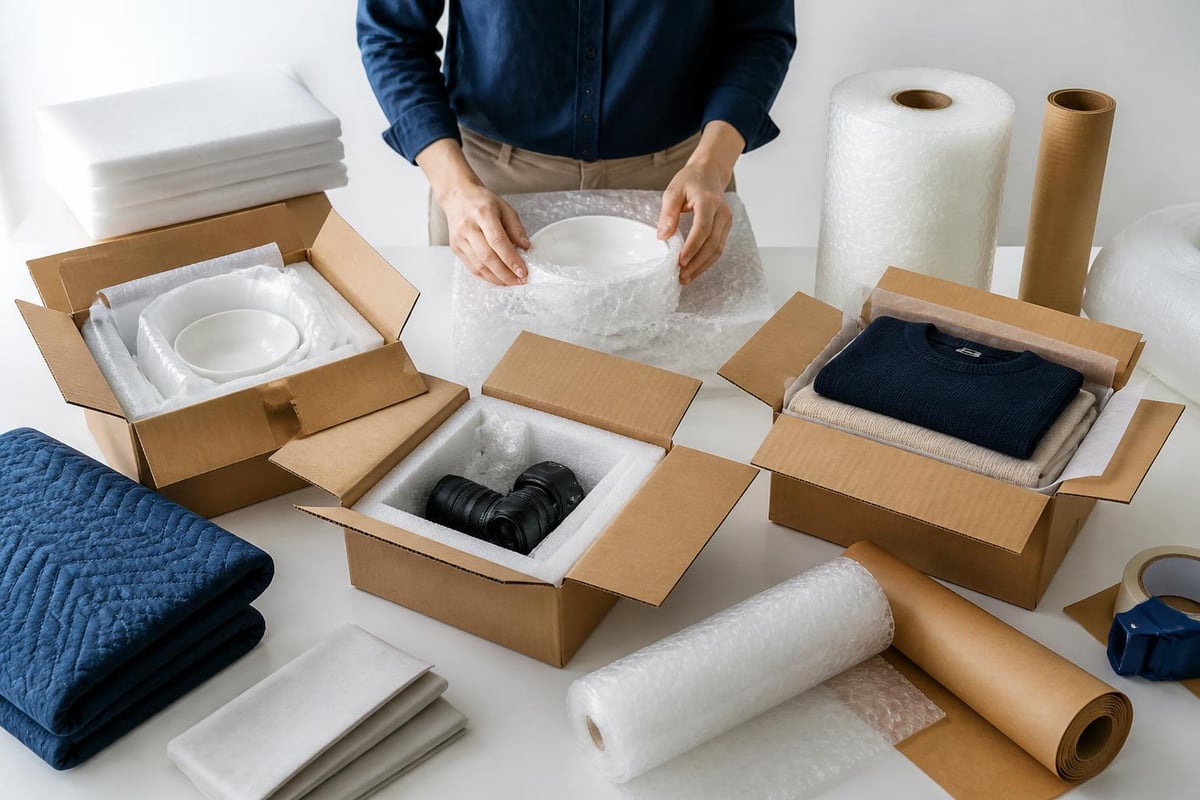
Full-service packing means professionals handle every aspect of preparing your household for transport. This includes:
- Complete material provision: All boxes, tape, bubble wrap, packing paper, and specialty containers
- Room-by-room systematic packing: Organized approach ensuring nothing gets overlooked
- Fragile item protection: Dishes, glassware, artwork, and electronics receive specialized wrapping
- Furniture preparation: Disassembly, padding, and wrapping of large pieces
- Detailed inventory creation: Documentation of packed items for insurance and tracking purposes
- Strategic labeling: Clear marking of boxes by room and contents for efficient unpacking
Theprofessional packing and unpacking serviceapproach ensures that items are packed using industry-standard techniques that have been refined through thousands of moves. This expertise becomes particularly valuable for long-distance relocations where items spend days in transit.
Partial and Custom Packing Solutions
Not every move requires full-service packing. Many providers offer flexible options that let you handle some tasks while delegating others.
Fragile-only packingfocuses exclusively on items requiring special care. Professional packers will wrap and box your china, crystal, artwork, mirrors, and electronics while you handle clothing, linens, and other durable goods. This hybrid approach can reduce costs by 40-60% compared to full-service packing.
Room-specific packingallows you to select particular areas of your home for professional attention. Kitchen packing is the most commonly requested service in this category, as kitchens contain the highest concentration of fragile items and require specialized dish pack boxes and techniques.
| Packing Service Type | Average Cost Range | Best For | Typical Timeline |
|---|---|---|---|
| Full-Service Packing | $800-$2,400 | Entire households, time-sensitive moves | 1-3 days |
| Fragile-Only Packing | $300-$900 | Homeowners handling basics themselves | 4-8 hours |
| Kitchen Packing | $200-$500 | Protecting high-value dishware and appliances | 3-5 hours |
| Unpacking Service | $400-$1,200 | Settling in quickly at destination | 1-2 days |
How to Find Qualified Packing Services Near You
The search for "packing services near me" yields hundreds of results in most metropolitan areas, but not all packing services deliver equal quality or reliability.
Essential Qualifications to Verify
Professional packing companies should carry proper licensing and insurance coverage. For interstate moves, verify that the company holds a U.S. Department of Transportation (USDOT) number, which indicates federal authorization to transport household goods across state lines. This credential ensures the company meets safety standards and maintains required insurance levels.
Request proof of liability and cargo insurance. Standard coverage typically protects items at $0.60 per pound, which proves inadequate for most household goods. Comprehensive coverage options should be available for higher-value belongings.
Check credentials through multiple sources:
- Better Business Bureau ratings and complaint history: Look for A+ or A ratings
- Online review patterns across platforms: Google, Yelp, and moving-specific sites
- Years in business and local presence: Established companies have reputation to protect
- Professional association memberships: American Moving & Storage Association affiliation
- State-level consumer protection records: Search your state's moving company database
Questions to Ask During Your Search
When contacting potential packing services, asking specific questions reveals their professionalism and expertise. Understandingprofessional packing tips for movinghelps you evaluate whether providers follow industry best practices.
Material quality questionsmatter significantly. Ask what grade of boxes they use (new vs. recycled), whether they employ proper dish pack boxes with double walls, and how they protect furniture (shrink wrap, moving blankets, or both).
Process and timeline inquiriesshould cover how many packers will be assigned to your job, their estimated completion time, and whether the same team handles both packing and loading. Continuity between packing and loading reduces miscommunication and potential damage.
Cost structure clarityprevents surprise charges. Request detailed written estimates that itemize material costs, labor hours, and any additional fees for stairs, long carries, or specialty items. Reputable companies provide binding estimates that won't increase unless you add services.
Understanding Packing Service Costs and Pricing Models
Packing service costs vary significantly based on home size, item quantity, special requirements, and your geographic location. In 2026, national averages provide helpful benchmarks for budget planning.
Standard Pricing Structures
Most packing services use one of three pricing models:
Hourly ratestypically range from $100 to $200 per hour for a two-person packing crew. This model works well for smaller jobs or partial packing services. Three-bedroom homes usually require 8-12 hours of packing labor, placing total costs between $800 and $2,400 before materials.
Flat-rate pricingprovides cost certainty based on home size and scope. Companies conduct in-home assessments or virtual surveys to estimate the job, then quote a single price covering labor and materials. This approach eliminates concerns about crews working slowly to increase billable hours.
Per-box pricingappears less frequently but exists in some markets. Rates of $5-$12 per box include packing, materials, and labeling. This model favors smaller moves but can become expensive for full households.
Materials typically add 15-25% to labor costs when charged separately. A three-bedroom home requires approximately 50-80 boxes of various sizes, plus specialty materials like wardrobe boxes, dish packs, and mattress covers.
Factors That Increase Packing Costs
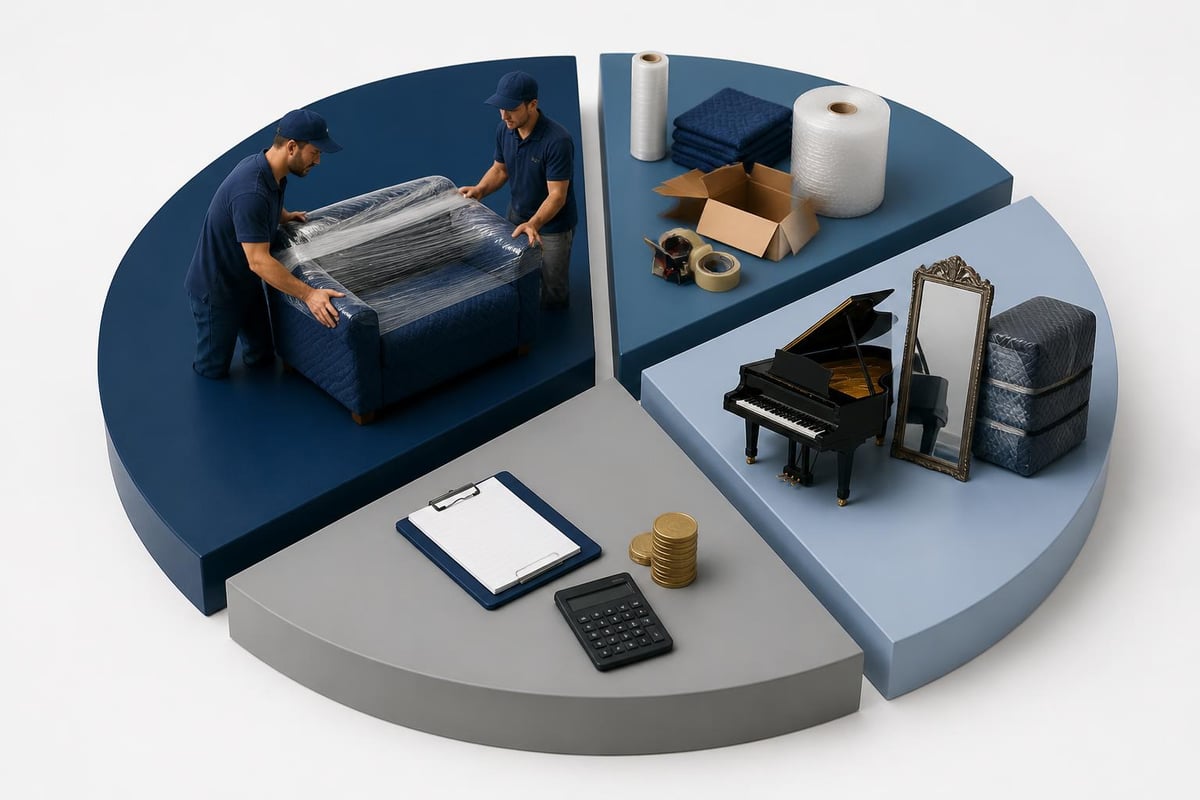
Several variables push packing costs above average ranges.Specialty itemsrequiring custom crating-pianos, artwork, antiques, or chandeliers-add $150-$500 per piece depending on complexity. Companies offeringspecialized piano moving servicesoften include custom crating in their pricing.
Timing constraintsimpact pricing. Last-minute bookings (less than two weeks' notice) or moves during peak season (May through September) may carry premium charges of 20-40%. Conversely, booking during winter months or mid-month dates often yields discounts.
Geographic considerationsaffect both availability and pricing. Major metropolitan areas like those served byNew York moversorCalifornia moversoffer abundant options with competitive pricing, while rural areas may have limited providers commanding premium rates.
Packing Service Standards and Best Practices
Understanding professional packing standards helps you evaluate service quality and ensures your belongings receive proper protection. Industry best practices have been refined through decades of experience and testing.
Material Selection and Box Standards
Professional packers use corrugated boxes meeting specific strength ratings. The Edge Crush Test (ECT) rating indicates a box's stacking strength. For household moves, boxes should carry minimum ECT-32 ratings for standard items and ECT-44 for heavier contents.
Followingpackaging best practicesensures structural integrity throughout transport. New boxes significantly outperform used ones, as repeated use degrades corrugated material strength by 30-50%.
Box size selection follows strategic principles:
- Small boxes (1.5 cubic feet): Books, canned goods, tools, and heavy items
- Medium boxes (3.0 cubic feet): Kitchen items, small appliances, toys
- Large boxes (4.5 cubic feet): Linens, pillows, lampshades, lightweight bulky items
- Extra-large boxes (6.0 cubic feet): Comforters, seasonal clothing, large lightweight items
Specialty containersserve specific purposes. Dish pack boxes feature double-wall construction and dividers for plates and glasses. Wardrobe boxes include hanging bars for transporting clothing on hangers. Mirror and picture boxes adjust to various frame sizes with telescoping designs.
Proper Packing Techniques for Damage Prevention
Professional packers employ systematic techniques that amateur packers rarely know. Thebest practices for packing and sealing shipping boxesemphasize complete cavity filling and proper weight distribution.
Thelayering methodfor fragile items creates protective zones within boxes. Heavy plates go on the bottom, wrapped individually and stacked vertically (like records) rather than flat. Lighter bowls and cups fill middle sections, with the most delicate items positioned on top, cushioned by crushed packing paper.
Void eliminationprevents shifting during transport. Professional packers fill every gap with appropriate materials-crumpled paper for irregular spaces, bubble wrap for fragile items, and foam peanuts for lightweight goods. Items should not move when boxes are gently shaken.
TheH-taping methodprovides superior box sealing. Tape runs along the center seam, then perpendicular strips cross both ends, forming an H pattern. This distributes stress across multiple tape layers and prevents bottom failures from heavy loads.
When DIY Packing Makes Sense Versus Hiring Professionals
The decision between self-packing and professional services involves more than simple cost comparison. Time availability, physical capability, and item value all factor into this choice.
Calculating the True Cost of DIY Packing
Self-packing appears economical until you account for all expenses and hidden costs. Material purchases for a three-bedroom home typically total $300-$600 when sourced retail, including:
- 60-80 boxes of various sizes
- 6-10 rolls of packing tape
- 2-3 rolls of bubble wrap
- 10-15 pounds of packing paper
- Specialty boxes for dishes, wardrobes, and mirrors
- Markers, labels, and mattress covers
Time investment represents the largest hidden cost. Most homeowners underestimate packing duration by 50-75%. A three-bedroom home requires 30-50 hours of active packing time for inexperienced packers. At an opportunity cost of $25-$50 per hour (what you might earn working or the value of your personal time), self-packing costs $750-$2,500 in time alone.
Physical demands escalate quickly. Packing involves repeated bending, lifting, and carrying. Individuals with mobility limitations or time constraints often find professional services worthwhile regardless of cost considerations.
Hybrid Approaches That Balance Cost and Convenience
Many families successfully combine self-packing with professional assistance for optimal value. This strategy leverages your available time while ensuring proper protection for vulnerable items.
Pack personal items yourselfincluding clothing, linens, books, and non-fragile belongings. These straightforward items don't require specialized techniques. Focus professional packing on:
- Kitchen contents (dishes, glassware, small appliances)
- Artwork and mirrors
- Electronics and entertainment systems
- Collectibles and valuables
- Lamps and decorative items
This division typically reduces professional packing costs by 50-60% while eliminating 70-80% of potential damage risk. Learning proper techniques fromlong-distance packing tips that prevent damageimproves your self-packing results.
Time-sensitive considerationssometimes override cost calculations. Professionals pack a three-bedroom home in one to two days, while self-packing typically spans two to three weeks. Families managing job transitions or coordinating with closing dates often find professional packing essential for meeting deadlines.

Specialized Packing for Different Item Categories
Different household items require distinct packing approaches. Professional packers categorize belongings by fragility, value, weight, and shape, then apply appropriate techniques to each category.
Electronics and Appliances
Electronics packaging combines moisture protection, shock absorption, and static prevention. Professional packers wrap devices in anti-static bubble wrap, then cushion them in boxes with foam corners. Original packaging provides optimal protection when available-many families store appliance boxes unnecessarily but discard irreplaceable electronics packaging.
Preparation steps for electronicsinclude:
- Photograph cable connections before disconnecting anything
- Remove batteries from remotes and portable devices
- Secure moving parts (printer cartridges, turntable arms)
- Backup data from computers and external drives
- Use original boxes when available, or select boxes 3-4 inches larger than the device
Flat-screen televisions require special handling. Professional-grade TV boxes include foam corner protectors and adjustable sizing. The screen should never face outward in the moving truck, and televisions should always remain upright during transport.
Kitchen and Glassware
Kitchens present the greatest packing challenge in most homes due to item quantity, fragility, and irregular shapes. Dish pack boxes with their reinforced construction become essential rather than optional.
Professional kitchen packing follows a specific sequence.Heavy items(pots, pans, mixing bowls) go in small boxes at maximum weight of 30-35 pounds.Dishwarereceives individual wrapping with 3-4 sheets of packing paper per plate, stacked vertically in dish packs with dividers.
Glassware packingemploys the bundle method. Wrap 3-4 glasses together, nest them if shapes allow, and position them upright (never sideways) in boxes. Wine glasses require individual cells created with cardboard dividers or specialized glass packs.
Small appliances need preparation beyond simple boxing. Coffee makers should be cleaned and dried thoroughly to prevent mold during storage or transit. Remove glass carafes and pack separately. Food processors should have blades removed, wrapped, and secured in labeled bags taped to the motor base.
Evaluating Packing Service Quality and Red Flags
Distinguishing professional packing services from unreliable providers requires attention to specific indicators and warning signs. Quality providers demonstrate consistent patterns in their operations, communication, and business practices.
Positive Indicators of Reputable Services
Legitimate packing services provide detailed written estimates following in-home or virtual assessments. These estimates should itemize labor hours, crew size, materials included, and any potential additional charges. Verbal estimates or rough quotes without home inspection suggest inexperienced or unprofessional operations.
Professional communication patternsinclude:
- Responses to inquiries within 24 hours during business days
- Clear explanation of services, limitations, and pricing
- Written contracts specifying services, dates, and costs
- Proactive communication about scheduling and logistics
- Professional email addresses and branded materials
Quality providers maintain consistent crews. The same team that packs your belongings should ideally handle loading, or at minimum, detailed notes transfer between teams. This continuity prevents the "I didn't pack that box" scenario when damage questions arise.
Insurance coverage details should be explained clearly, including coverage limits, deductible amounts, and claim procedures. Companies confident in their service quality offer comprehensive coverage options and explain them without pressure tactics.
Warning Signs to Avoid
Several red flags indicate potential problems with packing services.Significant deposit requirementsbefore services begin (over 20% of total cost) suggest cash flow problems or potential fraud. Reputable movers typically request deposits of 10-15% or work on payment-upon-delivery terms for local services.
Lack of physical addressor only P.O. box listings raises concerns about legitimacy. Professional moving and packing companies maintain warehouse facilities for materials storage and truck parking. Visit the business location when possible or verify the address through mapping services.
Extremely low estimatescompared to competitors often indicate bait-and-switch tactics. Some companies quote artificially low prices to secure bookings, then dramatically increase costs on moving day when your belongings are loaded and you face pressure to accept new terms. Estimates significantly below market rates (30%+ lower than other quotes) warrant skepticism.
Generic paperwork without company branding, USDOT numbers, or specific contract terms suggests unlicensed operations. Legitimate companies use professional documents, provide copies immediately, and encourage you to review terms before signing.
Coordinating Packing Services with Your Moving Timeline
Successful integration of packing services into your moving timeline requires understanding typical schedules, booking windows, and coordination requirements. Strategic planning prevents last-minute stress and ensures service availability.
Optimal Booking Timeline
Professional packing services book quickly during peak moving season (May through September). Securing your preferred dates requires booking 4-6 weeks in advance during this period. Winter and mid-month moves offer more flexibility, often allowing bookings with 2-3 weeks' notice.
Recommended booking timeline:
- 8-10 weeks before moving: Research packing services and request estimates
- 6-8 weeks before moving: Complete in-home assessments and compare quotes
- 4-6 weeks before moving: Book packing service and confirm dates
- 2-3 weeks before moving: Confirm crew size, arrival time, and final details
- 1 week before moving: Complete any requested preparations (clearing access, parking arrangements)
The relationship between packing services andlong-distance moversrequires careful coordination. When using separate companies for packing and moving, ensure they communicate about timeline expectations and loading schedules. Most families find booking both services through a single provider eliminates coordination challenges.
Preparation Before Packers Arrive
Professional packers work most efficiently when homes are prepared properly. While they handle the physical packing, certain preparations remain your responsibility and significantly impact the process speed and final results.
Pre-packing declutteringshould happen before professional packers arrive. Sort through belongings and remove items you won't transport. Packers will box everything they encounter unless specifically instructed otherwise-including that broken blender you meant to discard. Reducing volume by 15-20% through decluttering saves both packing costs and moving expenses.
Access preparationprevents delays and additional charges. Ensure clear pathways from all rooms to the exit, reserve elevator time in apartment buildings, obtain parking permits for moving trucks in urban areas, and notify homeowners' associations about upcoming moving activity.
Create a"do not pack" zonein one room where you gather items traveling with you personally-medications, important documents, valuables, overnight bags, and electronics you'll need immediately. Clearly mark this area and communicate its status to the packing crew supervisor.
Understanding Insurance and Liability for Packed Items
Insurance coverage for professionally packed items differs significantly from self-packed belongings. Understanding these distinctions affects both your choice to use professional services and your insurance selection.
Coverage Differences for Professional Versus Self-Packed Items
Most moving companies offer enhanced protection for items they pack themselves. This "full value protection" typically covers repair, replacement, or cash settlement at current market value when the company packs the damaged item. Self-packed items often receive only basic liability coverage calculated at $0.60 per pound.
For perspective, a self-packed 10-pound laptop damaged during transit receives $6.00 compensation under basic coverage. The same laptop professionally packed and damaged would be replaced at current value under full protection plans-a significant difference justifying professional packing costs for valuable items.
Coverage verification steps:
- Request written explanation of coverage differences
- Understand deductible amounts for each coverage tier
- Confirm whether coverage applies during packing, transit, or both
- Ask about claims process and documentation requirements
- Verify coverage limits for high-value items
Some items require special declaration regardless of packing method. Jewelry, currency, important documents, and collectibles worth over $500 per item typically need supplemental insurance or should travel with you personally.
Documentation and Claims Procedures
Professional packing services should create detailed inventories during the packing process. These inventories list boxes by number, general contents, and destination room. Request a copy before the packing crew leaves and verify accuracy while items remain accessible.
Photograph valuable items before packing, including serial numbers when visible. These images provide crucial evidence if damage claims become necessary. Focus documentation on:
- Electronics and appliances showing condition and serial numbers
- Artwork and antiques from multiple angles
- Furniture detailing existing wear or damage
- Specialty items like musical instruments or collections
Report damage immediately upon discovery during unpacking. Most insurance policies require claims within specific timeframes-typically 9 months for concealed damage and immediately for visible damage. Delayed reporting may result in claim denial.
Alternative Packing Solutions and When They Make Sense
Beyond traditional packing services, several alternative approaches serve specific moving scenarios effectively. Understanding these options helps match solutions to particular circumstances.
Container-Based Moving Systems
Portable storage containers from companies offeringmoving and storagesolutions present interesting alternatives for certain situations. These services drop containers at your home, allow you to pack at your pace, then transport containers to your destination or storage facilities.
Packing services integrate with container systems in two ways. Some container companies offer optional professional packing, while others allow you to hire independent packing services that work within the containers. This combination provides flexibility for phased moves or situations requiring temporary storage between locations.
Container advantagesinclude:
- No rush to pack everything in one day
- Single loading and unloading of belongings
- Built-in storage option if destination timing remains uncertain
- Less handling reducing damage potential
However, containers present challenges for long-distance moves. They cost more than traditional moving trucks for cross-country relocations and offer less flexibility for delivery scheduling. The hybrid approach works best for local moves with storage needs or situations where packing timeline flexibility outweighs cost considerations.
Packing-Only Services from Independent Providers
Some markets support independent packing specialists who don't offer moving services. These providers focus exclusively on packing, often at rates 20-30% below full-service moving companies. They supply materials, pack your belongings, then turn the job over to your chosen moving company.
This unbundled approach offers advantages when you've already selected a moving company but want specialized packing help. However, it creates potential liability gaps. If damage occurs, the packing company and moving company may dispute responsibility-the packer blaming rough handling during transport, the mover citing improper packing techniques.
Questions to resolve before using separate providers:
- Does your moving company accept loads packed by third parties?
- How does insurance coverage work across multiple providers?
- Who assumes liability if damage occurs during transit?
- Will the moving company inspect packing quality before loading?
- What happens if the moving company refuses items based on packing concerns?
Most families find the integrated approach through providers like those offeringcomprehensive packing serviceseliminates these coordination challenges while providing clear liability chains.
Military and Specialized Moving Packing Services
Military relocations and corporate moves often include packing services as part of the overall benefit package. Understanding how these services work ensures you maximize available benefits while protecting your belongings.
Military moving servicesoperate under specific regulations and timelines. The government contracts with moving companies that must meet Department of Defense standards. Service members can request full packing services as part of their PCS (Permanent Change of Station) entitlement at no personal cost.
However, military move packing differs from civilian services. Packers work under tight schedules with less flexibility for special requests. The focus remains on meeting weight allowances and timelines rather than premium white-glove service. Service members often supplement government packing with private services for high-value items or belongings exceeding weight allowances.
Corporate relocation packages vary widely. Some employers cover full packing services, while others provide allowances letting you select providers. Review your relocation policy carefully, noting coverage limits, approved vendor requirements, and reimbursement procedures before booking services.
Professional packing services transform one of moving's most time-consuming and stressful aspects into a manageable, expertly handled process. Whether you need full-service packing for an entire household or specialized assistance with fragile items, understanding service options, costs, and quality indicators helps you make confident decisions.US Prime Moverscombines professional packing expertise with nationwide moving services, offering transparent pricing and licensed, insured protection for your long-distance relocation. Contact us today for a free quote and discover how our experienced team can simplify your upcoming move across state lines.