
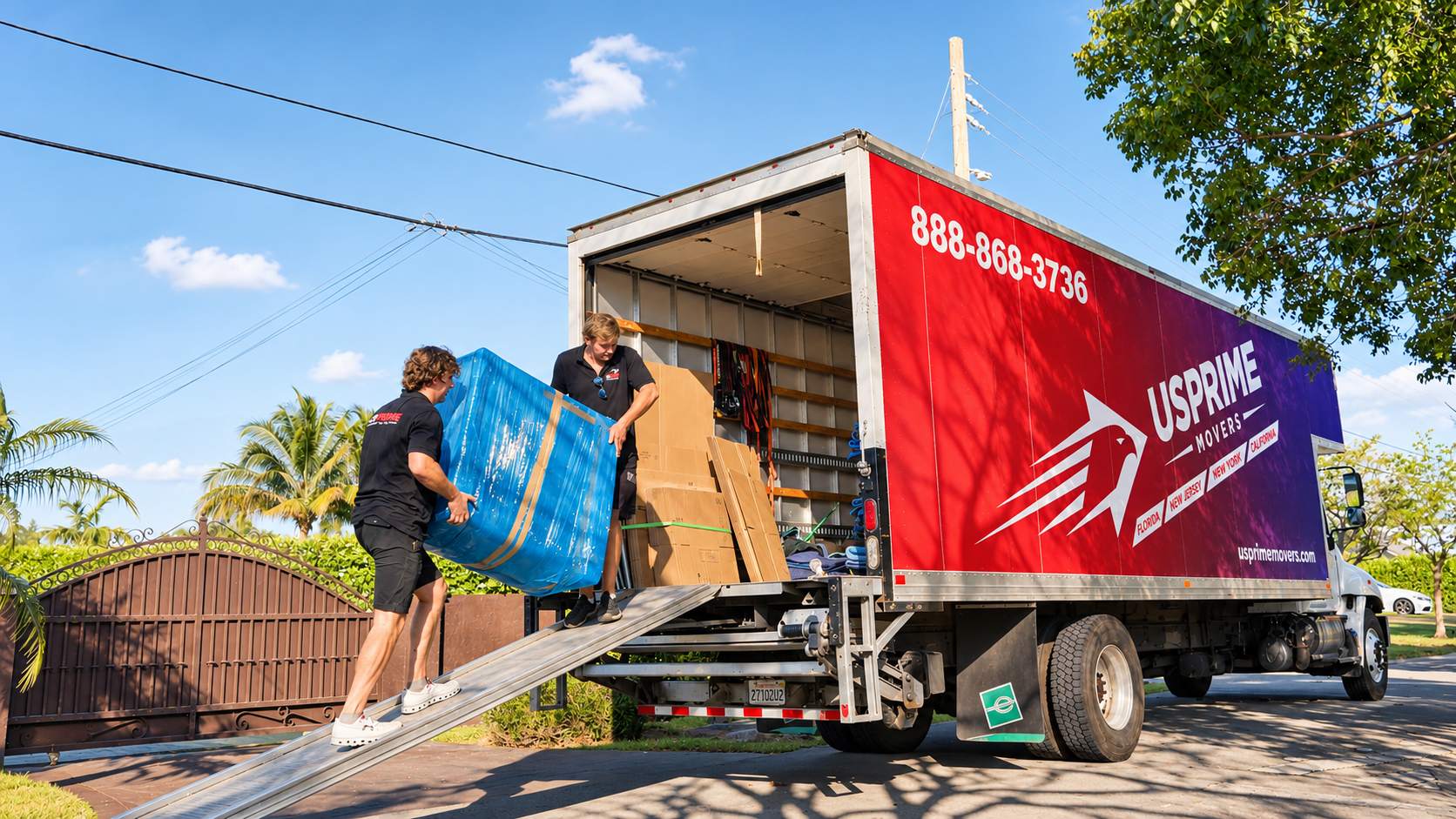
Relocating across state lines represents one of the most significant logistical challenges most families face. Finding reliable out of state moving companies requires careful research, understanding regulatory requirements, and knowing how to distinguish legitimate professionals from companies that cut corners. With approximately 27 million Americans moving each year and nearly 14% of those moves crossing state lines, the interstate moving industry serves millions of households annually. This guide walks you through everything you need to know to select, vet, and work with professional movers for your cross-country relocation.
Understanding Interstate Moving Regulations
Out of state moving companies operate under different rules than local movers. The Federal Motor Carrier Safety Administration (FMCSA) regulates all interstate moves, requiring companies to obtain a USDOT number and comply with federal standards for consumer protection.
Every legitimate interstate mover must provide you with the "Your Rights and Responsibilities When You Move" booklet, often called the "Ready to Move" brochure. This document outlines your protections under federal law and explains the claims process if something goes wrong during your move.
Licensing Requirements for Interstate Movers
Professional interstate movers must hold specific credentials:
- USDOT Number: Required for all companies transporting household goods across state lines
- MC Number: Motor Carrier number issued by FMCSA for for-hire interstate transportation
- State-specific permits: Additional licensing may be required depending on origin and destination states
- Insurance coverage: Minimum liability insurance as mandated by federal regulations
You can verify any company's USDOT number through the FMCSA's database. Certified Mover Association provides an additional layer of verification by conducting background checks and confirming proper licensing for member companies.
The Washington Utilities and Transportation Commission offers helpful guidance on verifying mover credentials and understanding the distinction between intrastate and interstate regulatory requirements.

Types of Out of State Moving Companies
Not all interstate movers operate the same way. Understanding the different business models helps you choose the right fit for your needs and budget.
Full-Service Moving Companies
These companies handle every aspect of your relocation from start to finish. Services typically include packing, loading, transportation, unloading, and unpacking. Full-service movers employ their own crews and operate their own trucks, giving you a single point of contact throughout the process.
Advantages:
- Complete accountability with one company
- Professional packing reduces damage risk
- Streamlined coordination and communication
- Often include insurance options
Disadvantages:
- Higher cost compared to other options
- Less flexibility with timing
- May require minimum weight or volume
Broker vs. Carrier Distinction
Many consumers don't realize they're working with a broker rather than an actual carrier. Brokers arrange your move but subcontract the actual transportation to third-party carriers.
| Factor | Direct Carrier | Broker |
|---|---|---|
| Owns trucks | Yes | No |
| Employs movers | Yes | No |
| Pricing control | Direct | Adds markup |
| Accountability | Single company | Multiple parties |
| Transparency | Higher | Variable |
Always ask whether you're dealing with a carrier or broker. If working with a broker, request the carrier's information before signing any contracts. Brokers aren't inherently problematic, but you need to know who will actually handle your belongings.
Self-Service and Hybrid Options
Container companies and freight services offer middle-ground solutions. You pack and load while they handle transportation. These services work well for flexible timelines and can reduce costs significantly.
For moves requiring temporary storage between pickup and delivery, moving and storage solutions combine transportation with secure warehousing facilities.
How to Choose the Right Out of State Moving Company
Selecting from dozens of out of state moving companies requires a systematic approach. Start your research at least two months before your planned move date.
Research and Comparison Process
Begin by gathering recommendations from trusted sources. Friends, family, and colleagues who've recently completed interstate moves can provide valuable insights. Real estate professionals like Diana Burress, who serves home buyers and sellers throughout South Central Kansas, often maintain relationships with reliable moving companies and can offer referrals based on client experiences.
Online platforms like MoveBuddha aggregate verified customer reviews and licensing data, helping you compare multiple companies efficiently. Look beyond star ratings to read detailed experiences, particularly regarding how companies handle problems or delays.
Getting Accurate Moving Estimates
Professional out of state moving companies offer three types of estimates:
- Non-binding estimate: An approximation that can increase if actual weight or services exceed the estimate
- Binding estimate: A guaranteed price that won't change regardless of actual weight (unless you add services)
- Binding not-to-exceed: The final cost won't exceed the estimate, but may be lower if actual weight is less
Request in-home or virtual surveys from at least three companies. Phone or online quotes based solely on your room inventory rarely capture the full scope of your belongings. Quality movers will ask detailed questions about specialty items, access challenges, and specific services you need.
Red flags during the estimate process:
- Requiring large deposits before the move
- Providing estimates without seeing your inventory
- Offering prices significantly lower than competitors
- Refusing to provide written estimates
- Lacking proper licensing credentials
Questions to Ask Every Company
Prepare a standard set of questions for each company you're considering:
- How long have you been in business under your current name?
- Will you use your own employees or subcontractors?
- What's included in your liability coverage, and what additional insurance do you offer?
- What's your claims process if items are damaged or lost?
- Do you have references from recent interstate moves?
- What's your policy on delivery windows and delays?

Cost Factors for Interstate Moves
Understanding how out of state moving companies calculate prices helps you budget accurately and identify potential overcharges. Interstate moves typically cost between $2,500 and $7,500 for a typical three-bedroom household, with significant variation based on multiple factors.
Distance and Weight Calculations
Most interstate movers charge based on the combined weight of your shipment and the distance traveled. Companies weigh the truck empty, then weigh it loaded with your belongings. You're entitled to be present for both weighings or to request copies of the weight tickets.
Average cost per pound by distance:
- 500-1,000 miles: $0.50-$0.80 per pound
- 1,000-2,000 miles: $0.40-$0.70 per pound
- 2,000+ miles: $0.30-$0.60 per pound
A 7,000-pound household moving 1,500 miles typically costs $3,500-$5,250 for basic transportation, before additional services.
Additional Service Charges
Beyond basic transportation, expect potential charges for:
- Packing services: $300-$1,500 depending on home size and whether you need full or partial packing
- Specialty item handling: $200-$800 for items like pianos, pool tables, or antiques
- Long carry fees: $75-$150 if movers must transport items more than 75 feet from the truck
- Stair or elevator fees: $50-$100 per flight
- Storage: $75-$200 per month for warehouse storage between pickup and delivery
- Insurance upgrades: 1-3% of declared value for full replacement coverage
Professional packing services not only save time but often reduce damage claims since companies assume greater liability for items they pack themselves.
Peak Season vs. Off-Peak Pricing
Moving costs fluctuate significantly based on timing. Peak season runs from May through September when demand is highest.
| Season | Price Variation | Availability |
|---|---|---|
| Peak (May-Sep) | +20-30% | Limited, book 6-8 weeks ahead |
| Mid-season (Mar-Apr, Oct) | Standard rates | Moderate, book 4-6 weeks ahead |
| Off-peak (Nov-Feb) | -15-25% | Better, book 3-4 weeks ahead |
Moving mid-month or mid-week also typically costs less than month-end or weekend moves, when demand peaks.
Preparing for Your Interstate Move
Once you've selected your moving company, preparation becomes critical. Starting early reduces stress and helps avoid last-minute complications.
Timeline for Planning
8-10 weeks before:
- Research and compare out of state moving companies
- Request in-home estimates
- Begin decluttering and planning what to move
6-8 weeks before:
- Select your mover and book your date
- Start gathering packing supplies if doing your own packing
- Notify your landlord or start the home sale process
4-6 weeks before:
- Begin packing non-essential items
- Transfer or cancel utilities at your current home
- Register children in new schools
2-4 weeks before:
- Confirm details with your moving company
- Pack most belongings, label boxes clearly
- Arrange travel plans to your new state
1 week before:
- Pack remaining items except daily essentials
- Prepare appliances for moving
- Conduct final walkthrough with your moving crew leader
Documentation and Inventory
Maintain detailed records throughout the process. Photograph valuable items before packing, and create a written inventory of everything being moved. Most professional movers will create their own inventory, but having your own record provides crucial documentation if claims become necessary.
Keep all moving-related paperwork in one dedicated folder:
- Written estimates from all companies
- Your signed contract and bill of lading
- Inventory sheets
- Insurance documentation
- Receipts for any moving-related expenses
The bill of lading serves as your receipt and contract combined. Review it carefully before signing, and keep it accessible until your move is complete and any claims are resolved.
Understanding Moving Insurance and Liability
Standard liability coverage provided by out of state moving companies offers minimal protection. Federal regulations require only $0.60 per pound per item, meaning a 50-pound television worth $1,500 would only be covered for $30 if damaged.
Types of Coverage Available
Released Value Protection:
- Included at no extra cost
- Covers $0.60 per pound per article
- Sufficient only for items with low value relative to weight
Full Value Protection:
- Costs 1-3% of your shipment's declared value
- Mover must repair, replace, or compensate for damaged items at current market value
- May include deductible options to reduce cost
Third-Party Insurance:
- Purchased from specialized moving insurance companies
- Often provides broader coverage than carrier-offered options
- Costs vary based on declared value and distance
For moves including valuable antiques, electronics, or specialty items, comprehensive coverage makes financial sense. Companies specializing in antique moving services often work with specialized insurers familiar with high-value items.

Special Considerations for Different Types of Moves
Different household situations require specific expertise from out of state moving companies. Understanding these specialized services helps ensure your unique needs are met.
Military and Government Relocations
Service members relocating under Permanent Change of Station (PCS) orders work within specific regulations and timelines. The Department of Defense maintains an approved list of moving companies, and military families typically receive full-service moves covered by their relocation allowance. Specialized military moving services understand weight allowances, required documentation, and coordination with military transportation offices.
Moves Requiring Storage Solutions
When your new home isn't ready immediately or you're downsizing, combined moving and storage services provide flexibility. Professional facilities offer climate-controlled environments and security features that protect your belongings during transition periods. Costs vary by location and duration, typically ranging from $75-$200 monthly per 100 cubic feet.
Long-Distance Apartment Moves
High-rise apartments present unique challenges for interstate moves. Elevator reservations, building access restrictions, and parking permits require advance coordination. Some buildings prohibit moving during certain hours or require certificate of insurance from your moving company. Confirm all building requirements at both origin and destination at least two weeks before your move date.
Red Flags and Common Scams
The interstate moving industry unfortunately includes dishonest operators who exploit consumers during vulnerable transitions. Recognizing warning signs protects you from fraud and hostage loads, where companies demand payment beyond the original estimate before releasing your belongings.
Warning Signs of Problematic Companies
Avoid out of state moving companies that exhibit these characteristics:
- Operating without a physical address or using only P.O. boxes
- Demanding cash deposits or payments before loading your items
- Arriving in rental trucks without company markings
- Providing estimates without company letterhead or proper licensing information
- Offering prices dramatically lower than all competitors
- Refusing to answer questions about subcontracting or insurance
- Having numerous complaints with the Better Business Bureau or FMCSA
The Connecticut Department of Consumer Protection outlines key regulations and consumer protections specific to interstate moves, emphasizing the importance of working only with properly licensed companies.
What to Do If Problems Arise
If disputes occur during your move, document everything thoroughly. Take photographs, save all communications, and note names of everyone you interact with. Most reputable companies have internal dispute resolution processes that should be your first step.
If internal resolution fails, you have several options:
- File a complaint with FMCSA through their consumer complaint system
- Contact your state consumer protection office
- Initiate the company's formal claims process for lost or damaged items
- Seek resolution through small claims court for amounts within jurisdictional limits
Federal regulations require moving companies to acknowledge claims within 30 days and respond with a settlement or denial within 120 days. Understanding these protections helps you navigate problems effectively.
Alternatives to Traditional Moving Companies
While professional out of state moving companies offer the most comprehensive service, alternatives exist for different budgets and preferences.
Portable Container Services
Companies deliver storage containers to your home, you pack and load at your own pace, then they transport the container to your new location. This hybrid approach costs 20-40% less than full-service movers but requires more physical work from you.
Container service considerations:
- Containers remain at your home for several days to weeks
- You control packing and loading timing
- Limited protection during transport compared to professional movers
- May require permits for street placement in some municipalities
Freight Trailer Options
Freight companies allocate space on trucks for household goods, charging based on linear feet occupied rather than weight. You load your items into a designated section of a larger truck, and they transport it along with other shipments.
Freight options work best for smaller moves (studio to one-bedroom apartments) or when you're moving only select items rather than an entire household. Average costs run $1,500-$3,500 depending on volume and distance.
DIY Rental Truck Moves
Renting a truck and driving yourself offers maximum cost savings but requires significant physical effort and driving skill. One-way truck rentals for interstate moves cost $1,000-$2,500 plus fuel, with additional charges for equipment, insurance, and any helper labor you hire.
Consider the hidden costs: fuel expenses (often $300-$800 for cross-country drives), lodging during multi-day trips, meals, potential vehicle damage, and your time investment. For many families, the savings don't justify the stress and physical demands.
Regional Considerations and State-Specific Regulations
Different states maintain varying regulations for incoming and outgoing moves. Understanding these requirements prevents complications during your relocation.
High-Regulation States
California, New York, and Florida maintain particularly stringent moving regulations. These states require additional permits, have specific insurance requirements, and impose strict penalties for violations.
When planning moves to or from these states, verify your chosen company holds all necessary state-specific credentials. Companies serving California movers, New York movers, and Florida movers must maintain compliance with both federal and state-level regulations.
Rural vs. Urban Move Considerations
Rural moves often incur additional charges for distance from major highways or limited access. Some companies apply long-carry fees or require shuttle trucks to navigate narrow roads or driveways that large moving trucks can't access.
Urban moves present different challenges: parking permits, building restrictions, and navigating dense traffic. Cities like Seattle, Los Angeles, and Austin often require advance permits for moving trucks to park on streets. Companies experienced in Washington movers and Texas movers understand local permitting requirements and building access protocols.
Technology and Modern Moving Services
Today's out of state moving companies increasingly leverage technology to improve customer experience and operational efficiency. These innovations benefit consumers through better tracking, communication, and pricing transparency.
Digital Tools for Customers
Most professional movers now offer:
- Virtual surveys: Video walkthroughs replace in-home estimates, saving time while providing accurate quotes
- Real-time tracking: GPS tracking shows your shipment's location during transport
- Digital inventory systems: Tablet-based inventory creation with photo documentation
- Online account portals: Access estimates, contracts, and communications in one place
- Text and email updates: Automated notifications about pickup, transit, and delivery status
These tools increase transparency and reduce communication gaps that previously caused customer frustration.
Pricing Transparency Platforms
Comparison platforms aggregate quotes from multiple out of state moving companies, allowing side-by-side cost analysis. While convenient, remember that the lowest quote isn't always the best value. Balance price against company reputation, insurance coverage, and service quality.
Making Your Final Decision
After researching multiple out of state moving companies, comparing estimates, and verifying credentials, trust your instincts alongside the data. The company you choose will handle your household's entire contents during a stressful transition.
Evaluation Checklist
Review each company against these criteria:
- Valid USDOT and MC numbers with clean safety records
- Transparent pricing with detailed written estimates
- Responsive communication and willingness to answer questions
- Appropriate insurance options for your needs
- Positive customer reviews from recent interstate moves
- Professional presentation and documented processes
- Realistic delivery windows and clear policies
Don't let pressure tactics or artificially urgent deadlines force premature decisions. Legitimate companies understand that consumers need time to make informed choices about interstate relocations.
Contract Review Essentials
Before signing any agreement, confirm these elements appear in writing:
- Complete company information including licensing numbers
- Detailed inventory of services included
- Clear pricing structure with all potential additional fees explained
- Pickup and delivery date windows
- Insurance coverage details and declared value
- Claims procedure and dispute resolution process
- Your rights under federal regulations
Never sign blank or incomplete contracts, and ensure you receive copies of all signed documents immediately.
Choosing reliable out of state moving companies requires research, verification, and careful planning, but taking these steps protects your belongings and reduces stress during interstate relocations. Whether you're moving across two states or coast-to-coast, working with properly licensed, insured professionals ensures your household goods arrive safely and your rights remain protected. When you're ready to plan your interstate move with a family-owned company that prioritizes transparency, care, and customer service, US Prime Movers offers licensed and insured moving services across all 50 states with experienced crews ready to handle your relocation professionally.