
Planning a long-distance move brings enough stress without adding confusion about which moving method works best for your situation. Moving pods companies have grown dramatically in popularity over the past decade, offering a hybrid approach between DIY truck rentals and traditional full-service movers. These portable storage containers get delivered to your home, allowing you to pack at your own pace before the company transports everything to your destination. Understanding how these services work, what they cost, and whether they suit your specific moving needs can save you thousands of dollars and considerable headaches during your relocation.
Understanding How Moving Pods Companies Work
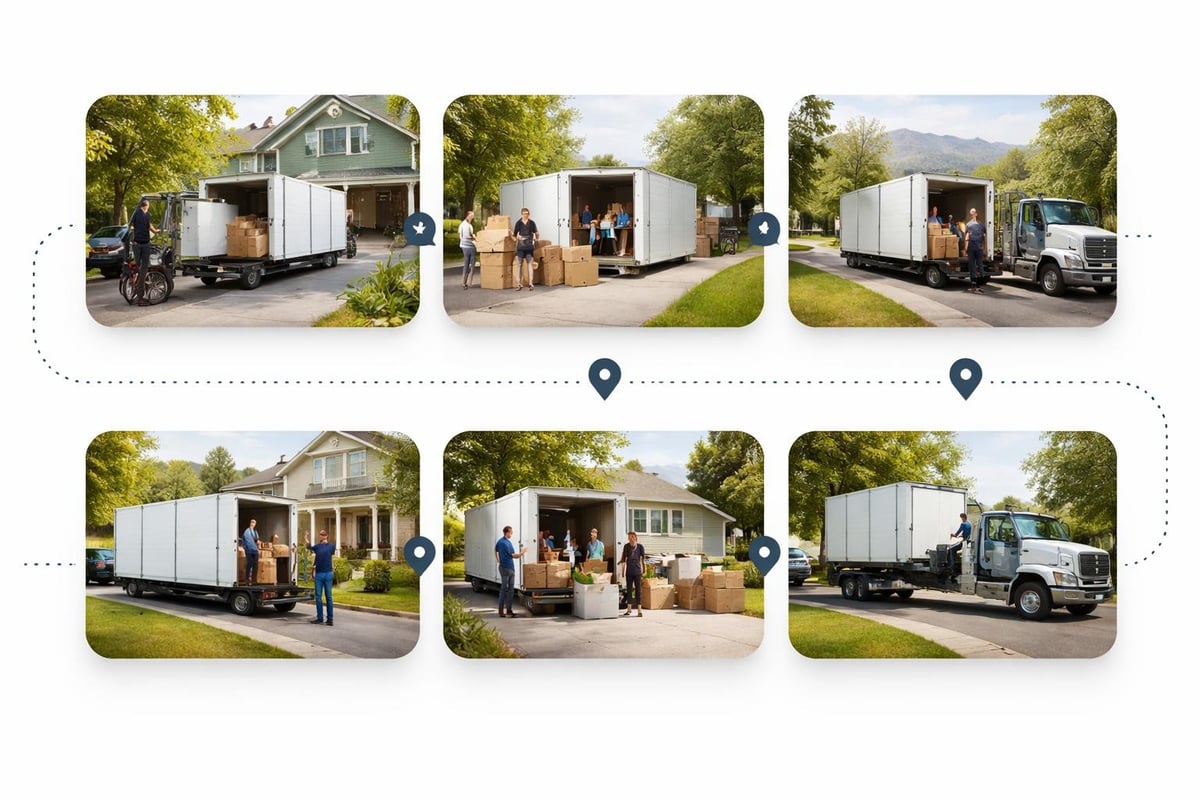
Moving pods companies operate on a fundamentally different model thantraditional long-distance movers. The process typically begins when you request a container delivery to your current address. The company drops off a weatherproof storage container in your driveway or on the street, where it remains for a predetermined loading period, usually ranging from three days to several weeks.
You control the packing timeline, which appeals to homeowners who prefer working at their own pace rather than coordinating with a moving crew's schedule. Once you've loaded all your belongings, you contact the company to pick up the sealed container. The company then transports it to your new location, where you have another designated period to unload before they retrieve the empty container.
Key Service Features
Most moving pods companies offer similar core services with slight variations:
- Flexible delivery and pickup scheduling around your timeline
- Weather-resistant containers designed to protect belongings during transport
- Ground-level loading that eliminates the need for ramps
- Storage options if your new home isn't ready for delivery
- Multiple container sizes to accommodate different move volumes
The self-service nature means you handle all packing, loading, and unloading yourself. Some companies offer optional labor services to assist with heavy lifting, though this increases your total cost. According toMove.org's comprehensive review, the average customer spends between $3,000 and $5,500 for a long-distance move with containers, depending on distance and container size.
Major Moving Pods Companies Comparison
The moving container industry has consolidated around several major national providers, each with distinct strengths and limitations. Evaluating these companies requires looking beyond advertised prices to understand service quality, container availability, and coverage areas.
| Company | Container Sizes | Average Cost Range | Best For | Coverage Areas |
|---|---|---|---|---|
| PODS | 7', 12', 16' | $3,800-$6,200 | Most moves | All 50 states |
| U-Pack | ReloCube, 28' trailer | $2,500-$4,800 | Budget-conscious | Lower 48 states |
| SMARTBOX | 8' | $2,800-$5,000 | Smaller moves | Most metro areas |
| 1-800-PACK-RAT | 8', 12', 16' | $3,200-$5,800 | Flexible timing | 48 states |
| Zippy Shell | 8', 16' | $3,000-$5,200 | Urban moves | Select cities |
PODS: Industry Leader
PODS pioneered the portable storage concept and remains the largest provider with the most extensive network. Their 16-foot container holds approximately three to four rooms of furniture, making it suitable for most two- to three-bedroom homes.NerdWallet's evaluationhighlights PODS' reliability but notes their pricing tends to run 10-15% higher than competitors.
The company's strength lies in nationwide availability and consistent service quality. Whether you're moving from New York to California or Texas to Washington, PODS maintains local facilities that ensure predictable delivery windows. Their containers feature roll-up doors and ground-level access, eliminating the steep ramps required with moving trucks.
Budget Alternatives
U-Pack operates differently than traditional container companies by offering both ReloCubes (similar to standard pods) and shared trailer space. You load your belongings into a section of a 28-foot trailer, paying only for the linear feet you use. This approach works exceptionally well for smaller moves where a full container would be wasteful.
According toMoveBuddha's long-distance pods guide, U-Pack consistently delivers the lowest pricing for cross-country relocations. However, their service network is less comprehensive than PODS, potentially limiting availability in rural areas.
Cost Breakdown and Pricing Factors
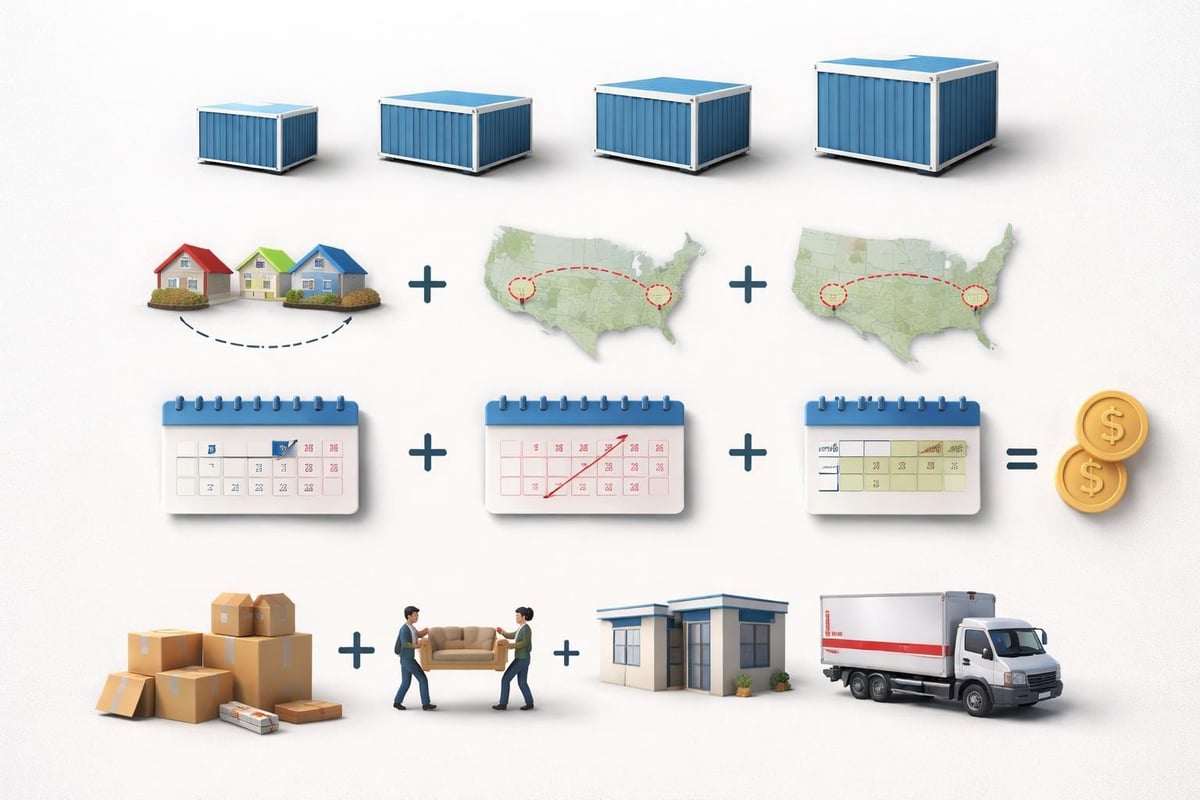
Moving pods companies calculate pricing through multiple variables, making it difficult to estimate costs without a detailed quote. Understanding these factors helps you anticipate your final bill and identify potential savings opportunities.
Primary Cost Components
Container rental feesform the base charge, typically calculated by the day or month. Most companies include the first month in their quoted price, with additional storage time billed separately. A 16-foot container generally costs between $200 and $350 monthly after the initial period.
Transportation distancerepresents the largest variable expense. Companies typically charge per mile, with rates decreasing for longer distances. A 500-mile move might cost $0.85 per mile, while a 2,500-mile cross-country relocation drops to $0.45 per mile due to efficiency gains.
- Delivery and pickup fees: $75-$200 per service call
- Fuel surcharges: 2-8% of base transport cost
- Insurance coverage: $40-$80 per month
- Additional containers: 15-20% discount on second unit
- Labor assistance: $300-$600 per loading/unloading session
Sample Cost Estimates for Common Routes
Planning your budget requires realistic expectations based on actual distance and household size. These estimates reflect mid-2026 pricing for a typical three-bedroom home requiring one 16-foot container:
New York to Florida(1,100 miles): $3,800-$4,600, including 30 days of container rental and standard insurance. Transit time averages 7-10 business days, with delivery windows typically spanning three days.
California to Texas(1,400 miles): $4,200-$5,100, with similar inclusions. The longer distance increases transport costs while maintaining comparable rental fees.
Chicago to Seattle(2,000 miles): $4,800-$6,000, reflecting the cross-country distance premium. Transit extends to 10-14 business days.
These figures assume straightforward access at both locations. Difficult driveways, narrow streets requiring shuttle services, or delivery restrictions in gated communities can add $200-$500 to your total cost. Always request an on-site estimate or provide detailed photos when obtaining quotes to avoid surprise charges.
When Moving Pods Companies Make Sense
Container companies excel in specific situations but fall short in others. Matching your circumstances to the right moving method prevents costly mistakes and frustrating experiences.
Ideal Scenarios for Container Services
Flexible moving datesrepresent the primary advantage of moving pods companies. If your new home's closing date remains uncertain or you need temporary storage between residences, containers offer unmatched flexibility. Traditional movers require precise scheduling with substantial penalties for date changes, while containers simply remain in storage until you're ready.
DIY enthusiasts who want partial controlappreciate handling their own packing and loading. For those interested in exploring comprehensivepacking services, traditional movers provide superior expertise, but containers let you pack fragile items yourself while saving professional fees for heavy furniture.
Budget-constrained movesbenefit from container pricing when you can provide all labor. Eliminating professional packing and loading fees cuts 40-50% from traditional moving costs, though this assumes you have the physical capability and time to manage the work.
When Full-Service Movers Work Better
Moving pods companies create challenges for certain relocations that make traditional movers the smarter choice.Tight timelinesdon't accommodate the slower container delivery, loading, transport, and unloading cycle. A professional moving crew completes most long-distance moves in 3-5 days compared to 10-21 days for containers.
Heavy or specialty itemsrequire professional equipment and expertise.Piano moversuse specialized dollies, padding, and techniques that protect instruments worth thousands of dollars. Loading a grand piano into a storage container yourself risks significant damage and personal injury.
Limited physical abilitymakes DIY loading impractical. Homeowners over 60, individuals with mobility limitations, or anyone recovering from injuries should seriously consider full-service options. The physical demands of loading furniture into containers for hours or days exceed most people's capabilities.
This Old House explainsthat while containers reduce stress for some customers, others find the extended timelines and physical labor more taxing than anticipated. Carefully assess your personal situation before committing to a container-based move.
Selecting the Right Container Size
Choosing the wrong container size ranks among the most common mistakes with moving pods companies. Order too small, and you'll need a second container at premium rates. Order too large, and you're paying for unused space and weight capacity.
Standard Container Dimensions and Capacity
7-8 foot containersaccommodate studio apartments or small one-bedroom homes. Interior dimensions typically measure 7' x 7' x 8', providing approximately 400 cubic feet of space. This handles roughly one to two rooms of furniture, including a queen bed, dresser, couch, dining table with chairs, and 15-20 boxes.
12 foot containerssuit two-bedroom apartments or small homes. With approximately 800 cubic feet, these units hold full kitchen appliances, living room furniture, two bedrooms worth of items, and 30-40 boxes. Weight limits generally cap at 4,000-5,000 pounds.
16 foot containersrepresent the industry standard for three-bedroom homes. Interior space reaches 850-900 cubic feet with weight limits of 4,200-4,500 pounds. This accommodates most household moves including appliances, unless you own exceptionally heavy furniture or extensive book collections.
Calculating Your Space Needs
- Count rooms and major furniture pieces in your current home
- Estimate box quantities based on 3-5 boxes per room
- Account for appliances if moving washer, dryer, or refrigerator
- Factor in outdoor items like patio furniture or lawn equipment
- Add 10-15% buffer for miscellaneous items and packing inefficiency
According toBob Vila's moving container analysis, most customers underestimate their space requirements by approximately 20%. When in doubt, sizing up prevents the headache and expense of ordering a second container mid-move.
Preparing for Container Delivery
Success with moving pods companies begins before the container arrives. Proper preparation prevents delivery problems, maximizes loading efficiency, and protects your belongings during transport.
Site Assessment and Placement
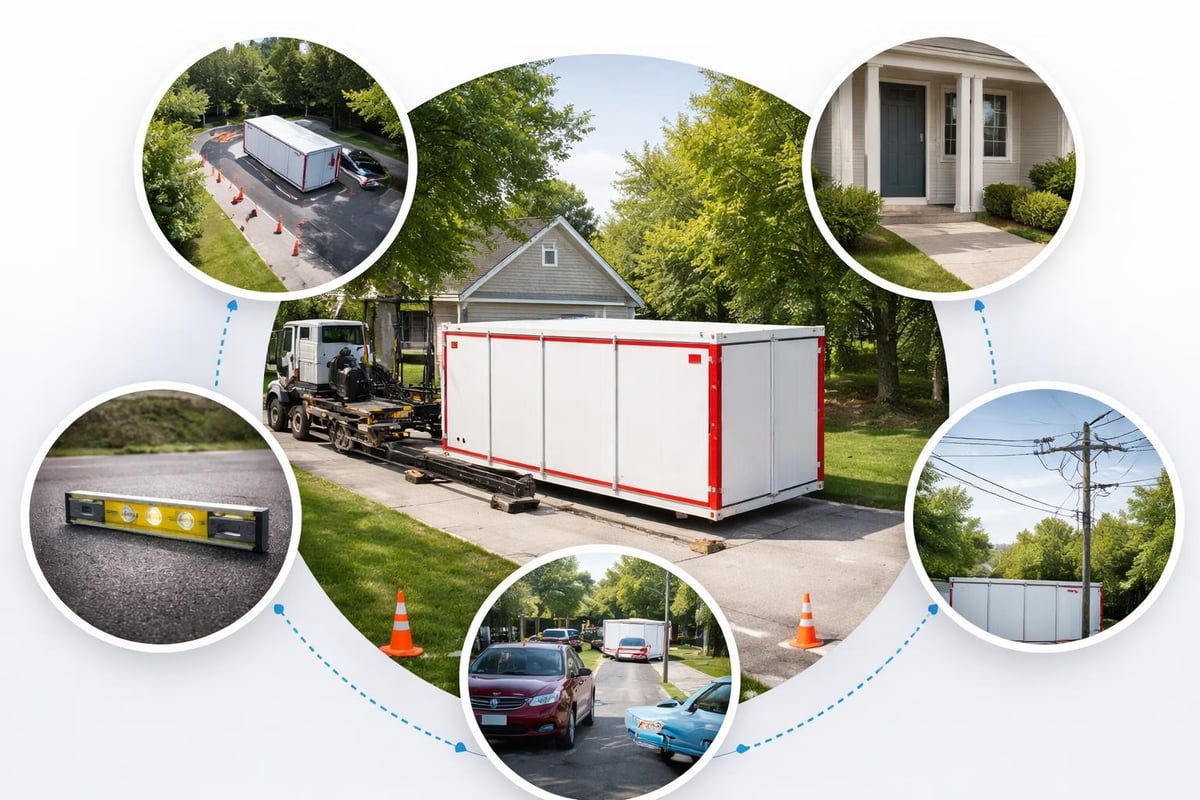
Companies require specific clearances to safely position containers using hydraulic lift systems.Minimum clearance requirementsinclude 12 feet of width, 40 feet of length, and 15 feet of overhead height. Trees, power lines, or overhanging structures that intrude into this space prevent delivery.
Survey your property identifying the best placement location:
- Flat, level surface prevents the container from settling or tilting
- Proximity to your home reduces the distance you carry items
- Neighborhood regulations may restrict street placement or require permits
- Ground protection using plywood sheets prevents lawn damage from the container's weight
Many municipalities require permits for containers placed on public streets. Application processing takes 3-7 business days in most areas, so start this process when booking your container. Permit fees range from $25 to $150 depending on location and duration.
Loading Strategies for Maximum Efficiency
Moving pods companies provide the container, but loading quality determines whether your belongings arrive safely. Unlike traditional movers who bring expertise and experience, you're responsible for proper weight distribution and item protection.
Weight Distribution Fundamentals
Containers ride on flatbed trucks during transport, creating different stress points than traditional moving vans.Bottom-heavy loadingprevents shifting by placing your heaviest items on the floor toward the front wall. Appliances, loaded boxes, and solid furniture form the foundation layer.
Create a wall of heavy itemsacross the front third of the container. This section experiences the most vibration and movement during highway transport. Lighter items toward the back minimize shifting when the driver brakes or turns.
Protective Packing Techniques
Professional movers use specialized materials and methods most homeowners don't consider. Furniture pads, mattress bags, and plastic wrap protect surfaces from scratches and moisture. Investment in quality materials pays dividends when your furniture arrives undamaged.
- Wrap all furniture legs to prevent punctures in upholstered items
- Stand mattresses vertically along container walls to save floor space
- Fill hollow furniture like dressers with linens or soft goods
- Secure doors and drawers with plastic wrap or tape
- Layer fragile items between soft goods rather than stacking boxes
TheConsumer Affairs 2025 moving company awardsreveal that customer satisfaction with container moves correlates directly with packing quality. Those who invested time in proper protection techniques reported significantly lower damage rates.
Storage Integration and Flexibility
A significant advantage of moving pods companies involves seamless storage options when your timeline doesn't align perfectly. Traditional movers charge premium rates for warehouse storage, while container companies simply park your sealed unit in their facility.
Storage-in-Transit Scenarios
Closing date gapsfrequently occur in real estate transactions. You close on your old home before your new purchase finalizes, creating a 1-4 week gap requiring temporary storage. Container companies include the first month in their standard pricing, with subsequent months costing $150-$300 depending on market and container size.
Home renovation projectsmake containers ideal for temporary furniture storage. Rather than cramming everything into a garage or spare room, you can clear the entire house while contractors work. This approach particularly benefits those undertaking kitchen or bathroom remodels that require vacant space.
For homeowners who need both relocation services and storage flexibility, exploringmoving and storageoptions with traditional movers sometimes proves more cost-effective for moves exceeding three months of storage time.
Long-Term Storage Considerations
Monthly storage rates remain constant regardless of duration, but long-term container storage creates potential drawbacks. Accessing stored items requires scheduling container delivery to your location or visiting the storage facility, unlike climate-controlled storage units offering daily access.
Climate controlisn't standard with most moving pods companies. Containers sit outdoors in storage yards, exposing contents to temperature fluctuations and humidity. This environment damages wood furniture, electronics, important documents, and anything moisture-sensitive over extended periods.
Security measuresvary significantly between providers. Top-tier companies maintain fenced, monitored facilities with 24/7 surveillance. Budget providers may use unsecured parking lots. Always verify security protocols before storing valuable items long-term.
Comparing Container Services to Traditional Moving
Making an informed decision between moving pods companies and full-service movers requires honest assessment of your priorities, capabilities, and budget. Each approach delivers distinct advantages depending on your specific circumstances.
Cost Comparison Analysis
Container services advertise lower prices, but final costs depend heavily on what you value. A typical cross-country container move costs $3,500-$5,500 when you handle all labor. The equivalent full-service move ranges from $5,500-$8,500 including professional packing, loading, and unloading.
Hidden time costsoften surprise first-time container users. Loading a three-bedroom home requires 12-20 hours of intensive physical labor spread across several days. Unloading demands another 8-12 hours. If you earn $30-$50 per hour in your career, the opportunity cost reaches $900-$1,500-narrowing the apparent savings significantly.
| Factor | Moving Pods Companies | Full-Service Movers |
|---|---|---|
| Direct Cost | $3,500-$5,500 | $5,500-$8,500 |
| Your Labor Required | 20-30 hours | 0-2 hours |
| Timeline | 10-21 days | 3-5 days |
| Damage Risk | Higher (DIY loading) | Lower (professional handling) |
| Flexibility | Excellent | Limited |
| Physical Demand | Very High | Minimal |
Service Quality and Reliability
According toFreightWaves' comparison of PODS versus competitors, customer satisfaction varies widely between providers. Delivery window reliability represents the most common complaint, with containers arriving outside promised timeframes in roughly 15-20% of moves.
Full-service movers, particularly established companies specializing ininterstate moving, maintain tighter schedule adherence due to dedicated equipment and crews. Container companies coordinate complex logistics involving shared trucks and multiple pickups, creating more variables that affect timing.
Damage ratesalso differ substantially. Professional movers pack and load items using proven techniques developed over thousands of moves. They understand weight distribution, proper padding placement, and securing methods. DIY loaders lack this expertise, resulting in 2-3 times more damage claims according to industry data.
Special Considerations for Long-Distance Moves
Interstate relocations create unique challenges that affect whether moving pods companies suit your situation. Distance magnifies both the advantages and disadvantages of container services.
Transit Time Planning
Cross-country moveswith containers typically require 10-14 business days from pickup to delivery. The container doesn't travel directly to your destination. Instead, it goes to a regional hub for consolidation with other shipments headed the same direction. This routing efficiency enables lower pricing but extends transit time.
Traditional movers complete the same route in 3-5 business days using dedicated trucks. Your belongings load in New York on Monday and arrive in California by Thursday or Friday. This speed matters when you need essential items quickly or face penalties for delayed move-out dates.
Coordinating Housing Transitions
Overlapping housing costsaccumulate quickly during extended moving timelines. If you maintain your old residence until the container arrives at your new location, you're paying rent or mortgage on both properties. A 14-day transit time plus loading and unloading periods can mean three weeks of dual housing payments totaling $2,000-$4,000 in many markets.
Moving pods companies mitigate this through storage flexibility, allowing you to vacate your old home and place the container in storage until your new residence is ready. However, you'll still need temporary housing during the transition period unless you can move in with family or friends.
Military Moves and Container Services
Active duty military personnel face unique relocation requirements that sometimes align well with container services, though government PCS moves typically utilize traditional movers for several practical reasons.
DITY Move Considerations
Do-It-Yourself (DITY) movesallow military members to receive reimbursement for personally procuring moving services. Moving pods companies offer an appealing option for DITY moves because you can pocket the difference between reimbursement and actual costs.
However, the calculation requires careful analysis. Military reimbursement is based on the government's contracted rate for traditional movers, which includes professional packing and loading. You receive a percentage of that amount, typically 95%. Container costs plus your labor time may exceed the reimbursement for larger households.
Formilitary families coordinating PCS relocations, full-service movers familiar with military requirements often streamline the process. These companies understand weight allowances, documentation requirements, and the tight timelines that characterize military moves.
Timeline Flexibility Challenges
Orders frequently changein military moves, requiring adaptable solutions. While container flexibility seems ideal, military housing timelines are often rigid with specific check-in and check-out dates. The extended transit times with containers can create conflicts when you must vacate base housing on a specific date but your new assignment's housing isn't ready.
Traditional movers work within these constraints more effectively, coordinating with housing offices and adjusting delivery schedules to match military requirements. The higher cost often proves worthwhile for the reduced stress during an already challenging transition.
Insurance and Liability Protection
Moving pods companies offer various protection levels, but coverage differs substantially from traditional moving insurance. Understanding these differences prevents unpleasant surprises if damage occurs.
Standard Coverage Limitations
Basic liability coverageincluded with most container rentals provides minimal protection, typically $0.60 per pound per item. A damaged 100-pound dresser worth $1,500 receives only $60 in compensation under standard coverage. This released value protection proves inadequate for most households.
Full-value protectioncosts extra but remains considerably cheaper than replacing damaged items. Premium protection typically costs $80-$150 for moves under $50,000 in declared value. This coverage repairs or replaces damaged items at current market value rather than weight-based calculations.
Documenting Your Belongings
Container loading creates opportunities for undiscovered damage. Unlike traditional movers who inventory items during loading, you're responsible for documentation with container services.
- Photograph all furniture from multiple angles before loading
- Video walkthrough of the loaded container before pickup
- Detailed inventory list with estimated values
- Note existing damage to avoid disputes during claims
- Inspect immediately upon delivery and document any new damage
Claims success depends entirely on your documentation quality. Companies deny claims lacking clear evidence that damage occurred during transit rather than before or after their custody period.
Making Your Final Decision
Choosing between moving pods companies and traditional movers requires weighing multiple factors against your specific priorities and constraints. Neither option universally outperforms the other-the right choice depends on your circumstances.
Decision Framework
Budget-focused moveswhere you can provide labor and accept longer timelines favor container services. The 30-40% cost savings justify the physical effort and extended duration for many homeowners, particularly those moving smaller households that don't require extensive loading time.
Time-sensitive relocationsrequiring quick turnaround make traditional movers essential. Starting a new job, coordinating with school schedules, or managing tight closing dates leave little margin for the 2-3 week container timeline.
Physical capabilityhonestly assessed determines feasibility. Loading and unloading heavy furniture and appliances challenges even fit individuals. Those over 55, anyone with back problems, or households lacking strong helpers should strongly consider professional movers regardless of cost differences.
Specialty itemslike pianos, antiques, or valuable artwork need professional handling. The expertise required to safely move these items exceeds what most homeowners can provide, even with container loading assistance.
Getting Accurate Quotes
Request detailed quotes from at least three providers in each category you're considering. Moving pods companies should provide:
- Container size recommendation with capacity explanation
- Delivery and pickup dates with guaranteed windows
- Transit time estimate for your specific route
- All-inclusive pricing covering delivery, transport, pickup, and first month rental
- Additional fees for challenging access or special circumstances
Compare these against quotes from full-service movers offeringcomprehensive long-distance moving services. Ensure quotes cover identical scope to make valid comparisons-container quotes assuming you provide all labor shouldn't compete against full-service quotes including professional packing.
Moving pods companies deliver genuine value for homeowners with flexible timelines, physical capability to handle loading, and budget consciousness. However, the slower process, physical demands, and potential for damage require careful consideration against your specific needs. When speed, expertise, and comprehensive care matter more than cost savings, partnering with experienced professionals makes the difference between a stressful ordeal and a smooth transition.US Prime Moversspecializes in long-distance relocations across all 50 states, offering transparent pricing, licensed professionals, and the peace of mind that comes from knowing your belongings are in expert hands-request your free quote today to compare what full-service care can mean for your upcoming move.