
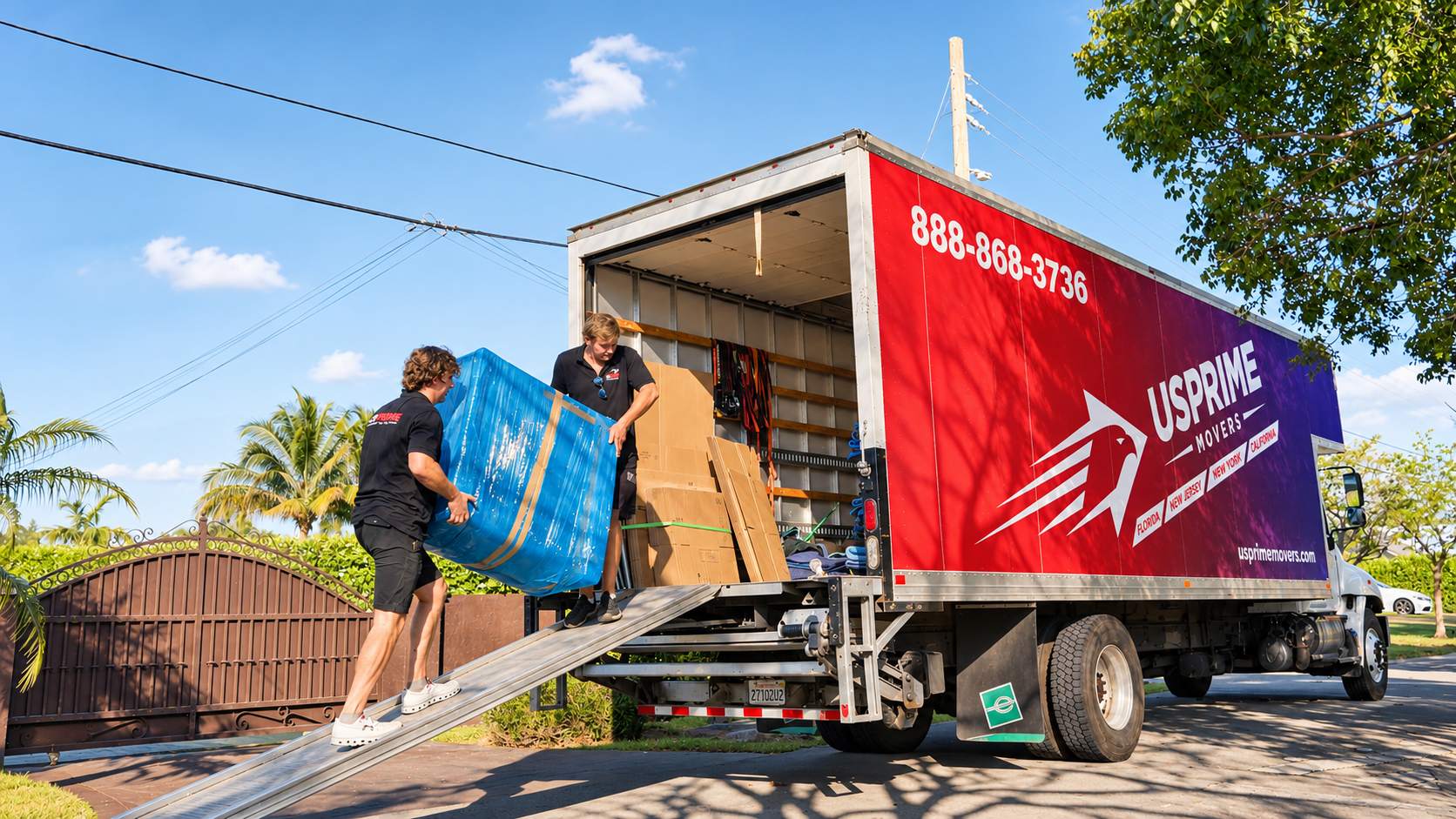
Relocating your entire household across state lines represents one of life's most significant transitions. Whether you're moving from New York to Florida or California to Texas, house removal companies provide the expertise, equipment, and workforce necessary to transport your possessions safely. Understanding how these companies operate, what services they provide, and how to select the right partner can transform a potentially overwhelming experience into a manageable, well-coordinated transition. This comprehensive guide explores everything homeowners and renters need to know about professional house removal services in 2026.
What House Removal Companies Actually Do
House removal companies specialize in relocating entire households from one residence to another, handling everything from a studio apartment to a five-bedroom estate. These professional movers coordinate the complete relocation process, ensuring your possessions arrive safely at your destination.
The scope of services extends far beyond simply loading items onto a truck. Professional movers conduct pre-move consultations to assess your inventory, provide accurate estimates, and develop customized moving plans. They supply packing materials, disassemble furniture when necessary, and navigate logistical challenges like narrow staircases or limited parking access.

Core Services Provided
Most house removal companies offer a range of service tiers to accommodate different budgets and preferences:
- Full-service moving: Complete packing, loading, transportation, unloading, and unpacking
- Partial packing assistance: Professional packing for fragile or valuable items only
- Loading and transportation: Customer handles packing, movers handle the heavy lifting
- Specialty item moving: Dedicated services for pianos, antiques, artwork, and other delicate possessions
- Storage solutions: Temporary or long-term warehousing during transitions
According to industry statistics on home removals, the market continues to grow as more households prioritize professional assistance over DIY approaches. The investment in experienced movers typically pays dividends through reduced damage, faster completion times, and significantly less physical strain.
How to Evaluate House Removal Companies
Selecting the right moving partner requires careful research and comparison. Not all house removal companies maintain the same standards, and making an informed choice protects both your possessions and your budget.
Licensing and Insurance Requirements
Legitimate house removal companies operating across state lines must hold proper licensing from the Federal Motor Carrier Safety Administration (FMCSA). This registration demonstrates compliance with federal regulations governing interstate moving services and consumer protection standards.
Verification checklist:
- Request the company's USDOT number and MC number
- Verify active registration through the FMCSA database
- Confirm adequate cargo insurance coverage (minimum $750,000)
- Review the company's safety rating and complaint history
- Ensure workers' compensation coverage for all employees
Insurance coverage deserves particular attention. Basic liability coverage (typically 60 cents per pound per item) provides minimal protection. Full-value protection, while more expensive, ensures the company repairs, replaces, or provides cash settlement for damaged items at current replacement value.
Reputation and Track Record
Key factors when hiring house removal companies include transparent communication, consistent pricing, and demonstrated reliability. Research companies through multiple channels to build a complete picture.
| Research Method | What to Look For | Red Flags |
|---|---|---|
| Online Reviews | Consistent positive feedback across platforms | Deleted negative reviews, fake-looking testimonials |
| Better Business Bureau | A+ or A rating, complaint resolution | Unresolved complaints, pattern of similar issues |
| References | Recent customers with similar move types | Reluctance to provide references |
| Industry Affiliations | Membership in AMSA or ProMover certification | No verifiable industry connections |
Request references from customers who completed moves similar to yours. A company specializing in local moves may lack the expertise for complex long-distance relocations spanning multiple states.
Understanding House Removal Company Pricing
Pricing structures for house removal companies vary considerably based on distance, volume, services selected, and timing. Understanding these factors helps you budget accurately and identify reasonable estimates.
Cost Components and Estimates
Long-distance moves typically charge based on weight (per pound or per 100 pounds) combined with distance traveled. Additional factors include:
- Volume and weight: More possessions mean higher costs
- Packing services: Professional packing adds $300-$1,500 depending on home size
- Access challenges: Stairs, long carries, or shuttle service increase labor costs
- Specialty items: Pianos, safes, and antiques require additional handling fees
- Seasonal demand: Summer months (May-September) command premium rates
Typical 2026 pricing ranges for common scenarios:
- 1-bedroom apartment (800 miles): $2,800-$4,200
- 2-bedroom home (1,200 miles): $4,500-$7,500
- 3-bedroom home (2,000 miles): $7,000-$12,000
- 4-bedroom home (2,500 miles): $10,000-$16,000
These estimates assume full-service moving with standard packing. Understanding how house removal companies calculate costs helps you evaluate whether quotes align with industry standards.
Getting Accurate Quotes
House removal companies provide estimates through three primary methods: phone estimates, virtual surveys, and in-home assessments. In-home assessments typically deliver the most accurate pricing, as estimators can evaluate actual volume, identify potential challenges, and discuss specific requirements.
Quote comparison strategy:
- Obtain at least three written estimates
- Ensure all quotes include identical services
- Question unusually low estimates (often indicating hidden fees)
- Request detailed breakdowns of all charges
- Clarify what services are included versus optional add-ons
Binding estimates guarantee the quoted price, provided your inventory remains accurate. Non-binding estimates allow charges to increase based on actual weight, creating budget uncertainty. Binding not-to-exceed estimates offer consumer protection by capping potential overages.

Preparing for Your House Removal
Proper preparation significantly influences moving day efficiency and overall satisfaction. House removal companies work most effectively when customers complete essential pre-move tasks.
Timeline Planning
8 weeks before moving day:
- Research and book your house removal company
- Begin decluttering and selling unwanted items
- Request moving quotes and compare services
- Review your homeowner's or renter's insurance coverage
6 weeks before:
- Confirm your moving date and finalize contracts
- Order packing supplies if handling partial packing
- Notify utility companies of your move date
- Begin packing non-essential items and seasonal belongings
4 weeks before:
- Label boxes clearly with contents and destination rooms
- Photograph valuable items for insurance documentation
- Arrange temporary lodging if needed during transition
- Schedule disconnect and reconnect dates for utilities
2 weeks before:
- Confirm details with your house removal company
- Pack most household items, keeping essentials accessible
- Defrost and clean refrigerator and freezer
- Prepare an essentials box for immediate needs at your new home
For customers requiring professional packing services, the timeline compresses considerably. Professional packers typically complete entire households in 1-2 days before the scheduled moving date.
Inventory Documentation
Creating detailed inventory lists protects you if disputes arise about damaged or missing items. Photograph valuable possessions, note existing damage, and maintain serial numbers for electronics and appliances.
House removal companies provide inventory sheets during loading, marking each item's condition. Review these documents carefully before signing. This record becomes critical evidence if you need to file damage claims after delivery.
Specialized House Removal Services
Beyond standard household goods, many situations require specialized expertise. House removal companies often maintain dedicated divisions for unique moving challenges.
Fragile and High-Value Items
Certain possessions demand extra care beyond standard packing protocols. Antiques, artwork, crystal collections, and musical instruments require custom crating, climate-controlled transportation, and specialized handling techniques.
Pianos present particularly complex challenges. These instruments weigh 300-1,200 pounds, contain thousands of precision parts, and suffer damage from improper handling. Specialized piano moving services use custom equipment like piano boards, skid plates, and climate-controlled trucks to ensure safe transport.
Storage Integration
Moving timelines don't always align perfectly. You might need to vacate your current residence before your new home becomes available, or you might be downsizing and need time to sell excess furniture. Many house removal companies offer integrated moving and storage solutions that simplify these transitions.
Professional storage facilities provide climate-controlled environments, pest control, and 24/7 security monitoring. Items remain in the company's warehouse until you're ready for delivery, eliminating the need to coordinate with separate storage providers.
Storage cost considerations:
| Storage Duration | Typical Monthly Cost (200 sq ft) | Best For |
|---|---|---|
| 1-3 months | $150-$250 | Home closing delays |
| 3-6 months | $125-$200 | Temporary relocation |
| 6-12 months | $100-$175 | Extended transitions |
| 12+ months | $90-$150 | Downsizing, overseas assignments |
What to Expect on Moving Day
Understanding the moving day process reduces anxiety and helps you prepare appropriately. Professional house removal companies follow systematic approaches to maximize efficiency while protecting your possessions.
The Loading Process
Movers typically arrive with a crew of 2-4 professionals, depending on your home's size. The team leader conducts a walkthrough, reviewing the inventory and identifying any items with special handling requirements. This initial assessment helps the crew plan the loading sequence strategically.
Professional movers employ specific techniques to prevent damage:
- Furniture padding and shrink-wrapping to protect surfaces
- Proper weight distribution inside the truck to prevent shifting
- Securing items with straps and load bars
- Placing heaviest items on the bottom with lighter boxes on top
- Positioning mattresses and mirrors vertically to prevent crushing
The loading process for a typical 3-bedroom home requires 4-6 hours. Larger households or properties with access challenges may extend to 8-10 hours. Customers should remain available to answer questions but generally stay out of the work area for safety.
Transit and Communication
Once loading completes, house removal companies provide estimated delivery windows based on distance and route planning. Cross-country moves typically require 5-14 days, depending on the specific route and whether your shipment travels on an exclusive or consolidated truck.
Delivery timeline examples:
- New York to Florida: 3-5 days
- California to Texas: 2-4 days
- Washington to New York: 5-7 days
- Florida to California: 7-10 days
Reputable companies maintain communication throughout transit, providing tracking updates and confirming delivery appointments. Delays occasionally occur due to weather, mechanical issues, or routing adjustments, but professional movers notify customers promptly when schedules change.

Red Flags and How to Avoid Moving Scams
The moving industry unfortunately attracts fraudulent operators who exploit customers during vulnerable transitions. Understanding common scams helps you identify and avoid disreputable house removal companies.
Warning Signs of Unreliable Companies
Immediate red flags:
- Requests for large deposits (over 20%) or cash-only payment
- No physical address or legitimate business location
- Significantly lower estimates than all competitors
- Inability to provide USDOT or MC numbers
- Pressure to sign contracts immediately without review time
- Offers to move inventory "off the books" for lower rates
Fraudulent moving companies often operate during peak season when legitimate movers reach capacity. These scammers provide lowball estimates, then hold belongings hostage until customers pay inflated fees.
Protection Strategies
Protect yourself through diligent verification and documentation:
- Never pay more than 20% deposit before loading day
- Obtain everything in writing, including estimates and service agreements
- Verify the company's physical address through independent searches
- Check for complaints through the Better Business Bureau
- Review the company's complaint history in the FMCSA database
- Understand your rights under the FMCSA's "Your Rights and Responsibilities When You Move"
Read contracts thoroughly before signing. Legitimate house removal companies use standardized industry contracts that clearly outline pricing, liability, pickup and delivery dates, and dispute resolution procedures. Vague terms, missing information, or pressure to sign without reading indicate potential problems.
Military and Specialized Relocations
Certain customer segments have unique requirements that standard house removal companies may not fully understand. Military families, corporate relocations, and government transfers involve specific regulations and reimbursement procedures.
Military PCS Moves
Permanent Change of Station (PCS) moves follow Department of Defense regulations governing weight allowances, reimbursement rates, and timing requirements. Experienced military moving specialists understand these complexities and work directly with the military's transportation office.
Military moves typically proceed through two options:
Government-arranged moves (PPM/DITY): The military books and pays the moving company directly. Service members have limited control over dates and services but face no out-of-pocket expenses.
Personally Procured Moves (PPM): Service members arrange their own house removal companies and receive reimbursement based on government rates. This option offers greater flexibility and potential profit if actual costs fall below reimbursement amounts.
Weight allowances vary by rank and dependency status, ranging from 5,000 pounds for junior enlisted personnel to 18,000 pounds for senior officers. Exceeding these limits results in personal expense for the excess weight.
Regional Considerations and Interstate Regulations
House removal companies operating nationwide navigate varying state regulations, geographic challenges, and regional cost differences. Understanding these factors helps set realistic expectations for your specific route.
State-Specific Requirements
Some states impose additional licensing requirements, insurance minimums, or consumer protection regulations beyond federal standards. California movers, for example, must register with the California Public Utilities Commission and maintain higher insurance thresholds than many other states.
High-cost states like New York, California, and Washington typically charge premium rates due to higher labor costs, fuel prices, and operational expenses. Moves originating from or delivering to major metropolitan areas like New York City often incur additional fees for parking permits, building requirements, and congestion challenges.
Geographic Challenges
Distance directly impacts pricing, but route complexity matters equally. Mountain passes, seasonal weather closures, and limited access routes can extend transit times and increase costs. Winter moves to or from northern states carry weather-related risks that may delay delivery.
Remote or rural destinations sometimes require shuttle services when full-size moving trucks cannot access final delivery locations. This additional handling increases both cost and potential for damage, though professional house removal companies minimize these risks through careful planning and appropriate equipment.
Making Your Final Decision
After researching options, obtaining quotes, and verifying credentials, you face the final selection decision. Trust your instincts while weighing objective factors against subjective impressions.
Questions to Ask Before Signing
Finalize your decision by confirming:
- Exact pickup and delivery date windows
- Total cost with all fees explicitly listed
- Insurance coverage options and claim procedures
- Payment schedule and accepted payment methods
- What happens if delivery delays occur
- Process for addressing damaged or missing items
- Cancellation policies and associated fees
Professional house removal companies answer these questions transparently and provide written documentation. Evasive responses or reluctance to commit details to writing suggests potential problems.
Contract Review Essentials
Before signing any agreement, verify the contract includes:
- Complete company information (name, address, USDOT number, MC number)
- Detailed inventory list or estimated weight
- All pickup and delivery addresses
- Binding or non-binding estimate clearly designated
- Itemized list of all charges and fees
- Insurance coverage type and valuation method
- Dispute resolution procedures
- Your signature requirements for final delivery
House removal companies typically require signatures at three points: contract signing, pickup inventory completion, and delivery acceptance. Never sign blank or incomplete documents. Request copies of all signed paperwork for your records.
The moving industry continues evolving, with business formation trends showing steady growth in professional moving services. This competitive marketplace benefits consumers through improved services, transparent pricing, and enhanced accountability.
Selecting the right house removal company transforms a potentially stressful transition into a well-managed relocation experience. By understanding how professional movers operate, what services they provide, and how to evaluate competing options, you protect your possessions while ensuring efficient, reliable transportation to your new home. When you're ready to begin planning your interstate move, US Prime Movers offers fully licensed, insured nationwide moving services with transparent pricing and experienced professionals handling everything from standard household goods to specialty items requiring extra care.