
Searching for "packers and movers near me" typically signals the start of a stressful journey. Whether you're planning a cross-country relocation or moving to a neighboring state, finding a trustworthy moving company requires more than a quick Google search. The moving industry includes thousands of companies ranging from established nationwide carriers to small local operations, and unfortunately, not all of them operate with the same standards of professionalism and integrity. This guide walks you through the essential steps for identifying, vetting, and hiring the right moving company for your long-distance relocation in 2026.
Understanding What "Near Me" Really Means for Long-Distance Moves
When you search for packers and movers near me, search engines prioritize companies with local physical locations or service areas that include your current address. However, for long-distance moves, proximity to your current home matters less than you might think.
Local Presence vs. National Coverage
A moving company with a local office provides certain advantages, including in-person estimates and easier communication. Yet for interstate relocations, you need a carrier licensed by the Federal Motor Carrier Safety Administration (FMCSA) with proven experience in state-to-state operations.Consumer Reports emphasizesthe importance of verifying these credentials before signing any contracts.
Key factors to prioritize over mere proximity:
- FMCSA registration and DOT number
- Interstate operating authority
- Experience with your specific route (origin and destination states)
- Physical presence or partnerships in both locations
- Positive reviews from customers who completed similar moves
For those planninglong-distance relocations, working with a company that maintains hubs in multiple states often provides better service coordination than a purely local operator without nationwide infrastructure.

Step-by-Step Process for Finding Qualified Moving Companies
Finding reliable packers and movers near me requires a systematic approach rather than choosing the first company that appears in search results.
1. Create Your Initial List (Week 6-8 Before Moving)
Start by compiling at least five to seven companies that serve your route. Use multiple sources:
- Google Maps searches for "moving companies" in your area
- Recommendations from real estate agents or recent movers
- Professional directories maintained by the American Moving and Storage Association
- Online review platforms like Google Reviews, Yelp, and Better Business Bureau
2. Verify Licensing and Insurance (Week 5-6 Before Moving)
Every legitimate interstate mover must have:
| Required Credential | How to Verify | What It Means |
|---|---|---|
| FMCSA Registration | Check FMCSA database using company name or DOT number | Federal authorization for interstate moving |
| DOT Number | Request from company, verify online | Unique identifier for tracking safety records |
| Motor Carrier (MC) Number | FMCSA database | Operating authority number |
| State License | State transportation authority | Permission to operate commercially in your state |
| Insurance Certificate | Request proof of coverage | Liability and cargo protection |
Moving.com outlineshow to obtain and verify these credentials through official government databases. Never work with a company that cannot immediately provide this information.
3. Request In-Home Estimates (Week 4-5 Before Moving)
Reputable companies offer virtual or in-person assessments at no charge. During these evaluations, estimators should:
- Walk through your entire home, including garage, attic, and storage areas
- Ask about items requiring special handling
- Provide detailed inventory lists
- Explain pricing structure clearly
- Discuss insurance options and valuation coverage
Red flags during the estimate process:
- Requests for large upfront deposits (over 20% of total cost)
- Estimates provided without seeing your belongings
- Prices significantly lower than competitors (50% or more below average)
- Pressure to sign immediately or "lock in" special rates
- Vague answers about insurance and licensing
4. Compare Written Estimates and Services
Once you receive estimates from multiple companies, create a comparison spreadsheet. Include not just the bottom-line price, but also:
- Estimated weight or cubic footage
- Services included (packing, unpacking, disassembly, storage)
- Insurance coverage levels
- Delivery window (guaranteed vs. estimated dates)
- Payment terms and accepted methods
- Additional fees for stairs, long carry, or shuttle service
For a typical three-bedroom household moving from New York to California in 2026, expect estimates ranging from $4,500 to $8,500 depending on services selected, distance, and timing. Peak season moves (May through September) typically cost 20-30% more than winter relocations.
Evaluating Company Reputation and Track Record
Beyond basic licensing, dig deeper into each company's history and customer satisfaction record.
Online Reviews and Ratings
Examine reviews across multiple platforms to identify patterns. A company with hundreds of positive reviews and occasional negative feedback shows more authenticity than one with only perfect five-star ratings. When reviewing feedback for packers and movers near me, look specifically for comments about:
- Timeliness and communication during the move
- Condition of belongings upon delivery
- Accuracy of final billing compared to estimates
- Responsiveness to damages or complaints
- Professionalism of the moving crew
CBS News provides guidanceon interpreting online reviews and identifying fake or manipulated ratings.
Better Business Bureau and Complaint Records
Check each company's BBB profile for:
- Accreditation status and rating
- Number and nature of complaints filed in the past three years
- How the company responded to and resolved issues
- Any unresolved complaints or patterns of similar problems
The FMCSA also maintains a complaint database where you can search by company name or DOT number to review federal complaints and enforcement actions.

Understanding Pricing Structures and Hidden Costs
Transparent pricing separates professional movers from problematic operators. When comparing packers and movers near me, understanding how companies calculate costs helps you identify legitimate estimates and avoid surprises.
Common Pricing Models for Long-Distance Moves
Interstate moves typically use one of these pricing structures:
Weight-based pricing:The most common method charges by total weight (in pounds) multiplied by distance. In 2026, expect rates of $0.50 to $0.75 per pound for moves over 1,000 miles. A 7,000-pound household traveling 2,500 miles would cost approximately $3,500 to $5,250 for basic transportation.
Volume-based pricing:Some companies charge by cubic feet rather than weight, with rates ranging from $4 to $8 per cubic foot depending on distance and services.
Flat-rate pricing:Certain movers offer all-inclusive pricing based on home size and distance. While convenient, verify exactly what the rate includes and excludes.
Additional Fees to Anticipate
| Fee Type | Typical Cost | When It Applies |
|---|---|---|
| Packing services | $400-$2,000 | If company packs your belongings |
| Packing materials | $150-$600 | Boxes, tape, paper, specialty crates |
| Long carry | $75-$350 | Parking over 75 feet from entrance |
| Stairs/elevator | $50-$150 per flight | No ground-level access |
| Storage in transit | $100-$300/month | Delay between pickup and delivery |
| Shuttle service | $200-$600 | Truck cannot access your home |
| Specialty items | $150-$800 per item | Pianos, safes, artwork |
Professional packing servicescan significantly reduce stress and protect fragile items, but add 15-30% to your total moving costs depending on the size of your household.
Avoiding Moving Scams and Fraudulent Operators
The moving industry unfortunately attracts fraudulent operators who exploit customers during vulnerable transitions.The Howard County Office of Consumer Protectionwarns about common scam tactics and how to protect yourself.
Hostage Loads and Bait-and-Switch Tactics
The most serious moving scam involves companies holding your belongings "hostage" by demanding significantly more money than the original estimate before delivery. These operations typically:
- Provide extremely low initial estimates to secure your business
- Load your belongings onto their truck
- Refuse to unload unless you pay double or triple the original quote
- Threaten to sell your items if you don't pay immediately
Protection strategies:
- Never hire a company without proper FMCSA registration
- Refuse to pay more than 10% over a binding estimate
- Get everything in writing before the move begins
- Document the condition of belongings with photos and video
- Know your rights under FMCSA regulations
Unlicensed and Uninsured Operators
Companies operating without proper licensing pose serious risks. If an unlicensed mover damages your belongings or disappears with your possessions, you have extremely limited legal recourse. Always verify credentials before allowing anyone to handle your household goods.
Questions to Ask Before Hiring Your Mover
During consultations with potential companies, ask these critical questions to assess professionalism and compatibility:
How long have you been in business under this company name?Established companies typically have longer track records, though newer companies can also provide excellent service.
For those researchingthe best cross-country moving companies, asking detailed questions helps differentiate between adequate and exceptional service providers.
Timing Your Search and Booking Process
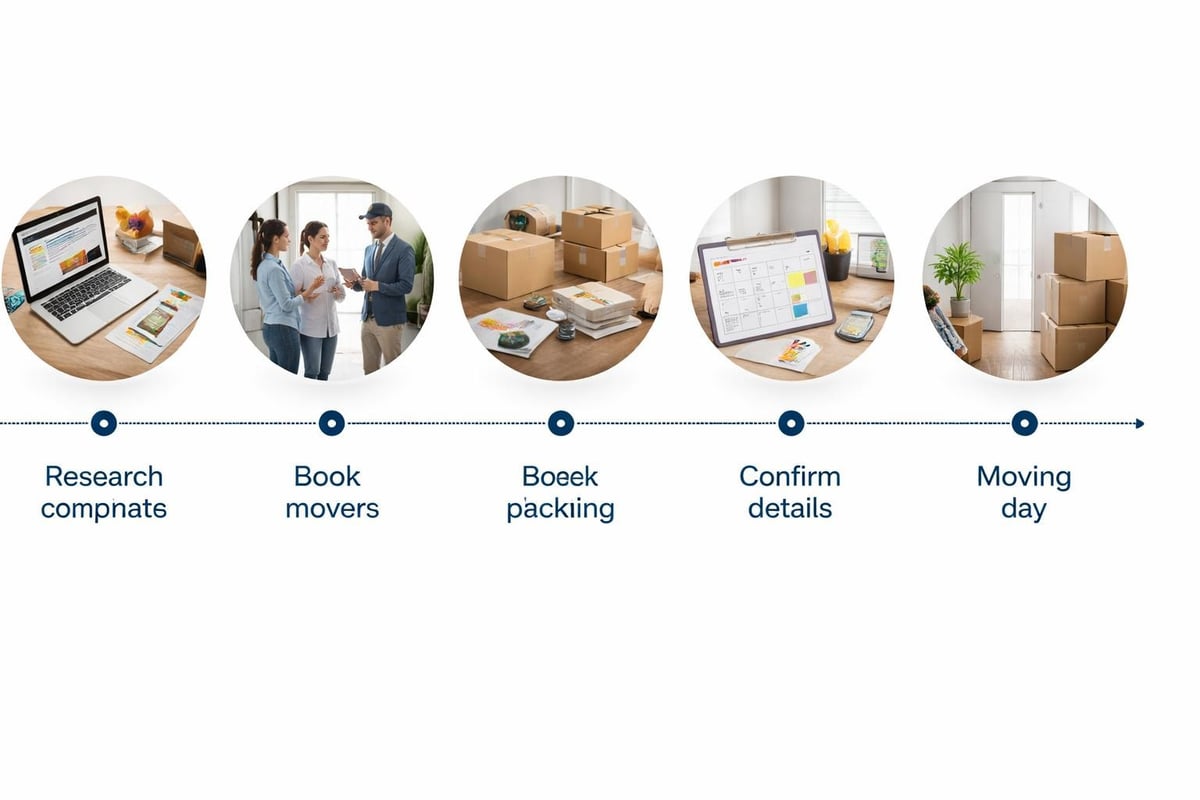
When you search for packers and movers near me depends significantly on your moving timeline and season.
Optimal Booking Windows
- Peak season moves (May-September): Book 6-8 weeks in advance, preferably 10-12 weeks for flexibility
- Off-peak moves (October-April): 4-6 weeks advance notice typically sufficient
- End-of-month moves: Book 8-10 weeks ahead as these dates fill quickly
- Military PCS moves: Coordinate 8-12 weeks before orders date
Companies often provide discounts for:
- Mid-week moves (Tuesday, Wednesday, Thursday)
- Mid-month dates (avoiding month-end rushes)
- Winter relocations (November through March)
- Flexible delivery windows (allowing 5-7 day delivery spans)
Insurance and Valuation Coverage Options
Understanding protection for your belongings represents one of the most important aspects of choosing packers and movers near me.
Standard Released Value vs. Full Value Protection
All licensed interstate movers must offer two minimum coverage levels:
Released Value Protection (included):The most basic option provides minimal coverage at $0.60 per pound per item. For a 50-pound television valued at $1,200, you would receive only $30 if it's damaged beyond repair. This option costs nothing additional but offers inadequate protection for most households.
Full Value Protection (additional cost):Under this option, the mover repairs, replaces, or provides cash settlement for damaged items at current replacement value. Expect to pay an additional $200-$600 for a typical household, with the exact amount based on declared value.
Third-Party Insurance
Some homeowners purchase supplemental moving insurance through third-party providers, which can offer more comprehensive coverage than mover-provided options. Compare costs and coverage limits carefully, as duplication may not provide additional value.
Special Considerations for Different Move Types
Different household situations require specific expertise when searching for packers and movers near me.
Military Relocations
Military families moving under PCS orderswork with government-contracted movers or receive reimbursement for personally procured moves. Understanding weight allowances, claim procedures, and timeline requirements specific to military moves ensures smoother relocations.
Specialty Items
Items like pianos, antiques, artwork, and delicate collections require specialized equipment and training. When evaluating companies, ask specifically about their experience with your particular items. Not every moving company possesses the expertise or equipment for safepiano relocation, for example.
Senior Relocations
Older adults downsizing to smaller homes or retirement communities benefit from movers offering additional services like estate cleanouts, donation coordination, and unpacking assistance. Some companies specialize in senior moves with trained staff who understand the emotional aspects of these transitions.
Red Flags That Should End Your Consideration
Certain warning signs should immediately disqualify a company from your consideration:
- Cannot provide DOT or MC numbers upon request
- Refuses to perform in-home or virtual estimates
- Demands cash-only payment or large deposits before moving day
- Uses unmarked rental trucks rather than company-branded vehicles
- Provides estimates via phone without knowing inventory details
- Has numerous recent complaints with no satisfactory resolutions
- Operates under multiple business names or frequently changes names
- Cannot provide proof of insurance coverage
ADT's resource on finding moversemphasizes trusting your instincts when something feels wrong during the vetting process.
Making Your Final Decision
After completing your research, comparing estimates, and checking references, trust the data you've collected rather than making emotional decisions based solely on price.
Creating Your Decision Matrix
Rank companies using weighted criteria:
- Licensing and insurance (25%): Non-negotiable requirement
- Customer reviews and reputation (20%): Track record matters
- Price competitiveness (20%): Balance cost with value
- Services offered (15%): Match your specific needs
- Communication and professionalism (10%): Indicators of service quality
- Availability for your dates (10%): Logistical necessity
The company scoring highest across all factors typically represents your best choice, even if not the absolute lowest price.
Getting Everything in Writing
Before signing contracts, ensure you receive:
- Bill of lading (contract and receipt for your shipment)
- Written estimate (binding, non-binding, or binding not-to-exceed)
- Insurance/valuation options and coverage limits
- Pickup and delivery date commitments or windows
- Inventory list of items being transported
- Copy of "Your Rights and Responsibilities When You Move" booklet
Never sign blank or incomplete documents, and keep copies of everything related to your move.
Post-Selection Steps and Move Preparation
Once you've selected your mover, preparation determines whether your experience matches expectations.
Confirming Details and Maintaining Communication
Contact your moving company 7-10 days before your scheduled date to:
- Reconfirm pickup and delivery windows
- Verify the crew size and estimated arrival time
- Discuss any changes to your inventory or circumstances
- Review payment methods and amounts
- Get direct contact information for your driver or coordinator
Documenting Your Belongings
Take photos and videos of valuable items before packing. Document the condition of furniture, electronics, and anything of significant value. This evidence proves invaluable if you need to file damage claims after delivery.
Preparing Your Current and New Homes
Ensure both locations have:
- Clear pathways from the street to entrances
- Reserved parking for moving trucks (check local permit requirements)
- Elevator reservations (if applicable)
- Protected flooring in high-traffic areas
- Utilities connected at your destination
Understandingwhat to expect when moving out of statehelps you prepare mentally and practically for the transition ahead.
Understanding Your Rights as a Moving Customer
Federal regulations protect interstate moving customers through specific requirements and complaint procedures.
FMCSA Protections
The Federal Motor Carrier Safety Administration requires licensed movers to:
- Provide written estimates before binding agreements
- Deliver "Your Rights and Responsibilities" booklet
- Offer basic liability coverage at minimum
- Allow you to be present during weighing (for weight-based pricing)
- Provide notice before increasing charges beyond binding estimates
Filing Complaints and Claims
If problems occur during your move:
- Attempt resolution with the company directly using their internal claims process
- File a complaint with FMCSA if the company is unresponsive or unreasonable
- Report to your state consumer protection office for additional advocacy
- Submit BBB complaints to document issues for future customers
- Consider small claims court for damages under your state's limit (typically $5,000-$10,000)
Most disputes resolve through direct negotiation, but knowing your escalation options provides leverage during discussions.
Finding reliable packers and movers near me requires thorough research, careful vetting, and attention to detail, but the effort protects your belongings and reduces moving day stress. Whether you're relocating across state lines for a new job, downsizing to a smaller home, or making a major life transition, working with a licensed, experienced moving company makes all the difference.US Prime Moversspecializes in long-distance and interstate relocations with transparent pricing, fully licensed and insured service, and professional crews trained to handle everything from complete household moves to fragile specialty items. Get your free moving quote today and experience the peace of mind that comes with working with a family-owned company committed to making your relocation smooth and stress-free.