
Understanding moving truck hire prices is essential for anyone planning a relocation in 2026. Whether you're moving across town or across the country, rental truck costs represent a significant portion of your moving budget. The price you'll pay depends on multiple factors including truck size, distance, rental duration, seasonal demand, and additional services. This comprehensive guide breaks down everything you need to know about moving truck hire prices, helping you make informed decisions and potentially save hundreds of dollars on your next move.
Understanding Base Moving Truck Hire Prices
Moving truck hire prices vary significantly based on the scope of your relocation. For local moves within the same city or county, rental companies typically charge a flat daily rate plus a per-mile fee. These rates in 2026 generally range from $20 to $40 per day for smaller trucks, with mileage charges adding approximately $0.59 to $1.99 per mile.
Long-distance moves operate under a different pricing structure. According toMove.org's analysis of average truck rental costs, cross-country relocations typically involve flat-rate packages based on distance and truck size. These packages often include unlimited mileage within specific geographic zones, making them more cost-effective for longer journeys than paying per-mile rates.
Truck Size Impact on Pricing
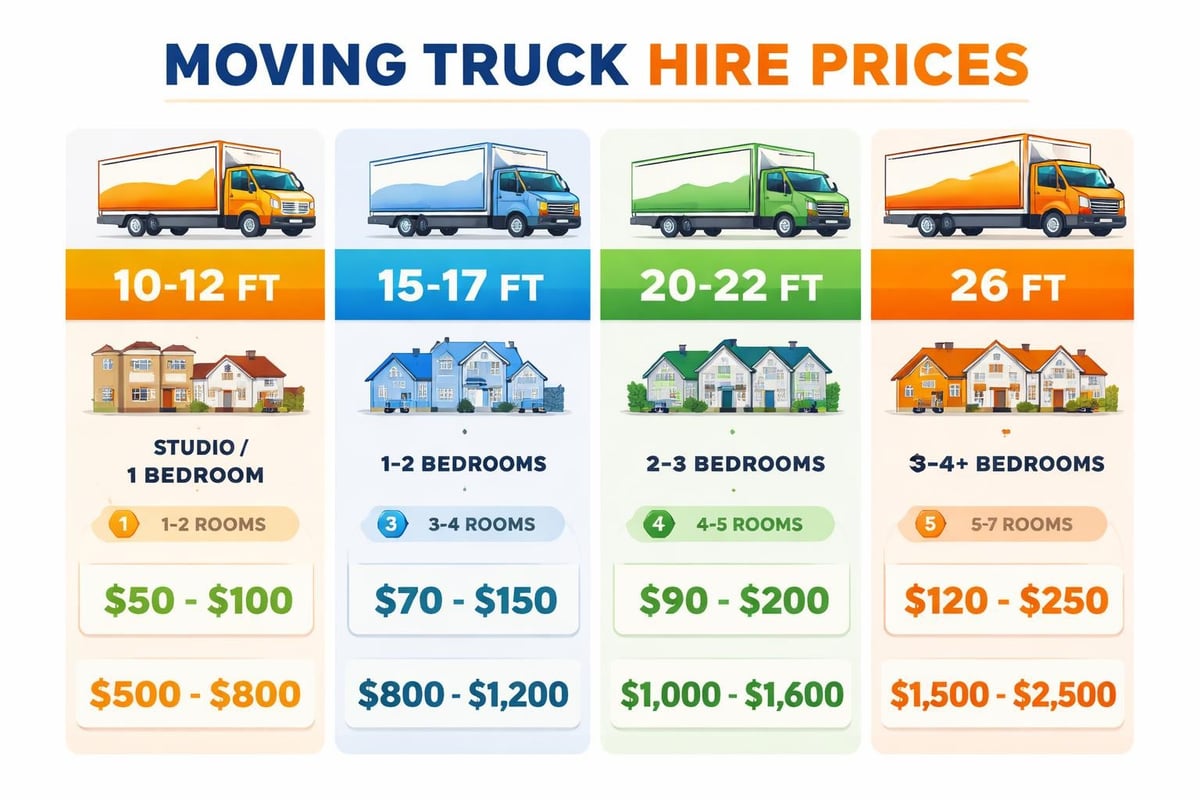
The size of the moving truck you select directly influences your rental cost. Smaller trucks (10-12 feet) suitable for studio apartments or one-bedroom homes cost significantly less than larger vehicles designed for four-bedroom houses.
| Truck Size | Typical Load | Daily Rate Range | Best For |
|---|---|---|---|
| 10-12 feet | 1-2 rooms | $20-$35 | Studio, dorm |
| 15-17 feet | 2-3 rooms | $30-$50 | 1-2 bedroom apartment |
| 20-22 feet | 3-4 rooms | $40-$70 | 2-3 bedroom home |
| 26 feet | 4+ rooms | $50-$100 | 3-4 bedroom home |
Selecting the right truck size represents a critical decision. Choosing too small means making multiple trips, while oversizing wastes money on unnecessary capacity.Understanding how truck size affects rental costshelps you balance efficiency with budget constraints.
Regional Variations in Moving Truck Hire Prices
Geographic location plays a substantial role in determining rental costs. Urban areas with high demand typically command premium prices compared to rural regions. For instance, renting a truck in major metropolitan areas likeNew YorkorCaliforniaoften costs 15-30% more than in smaller cities.
High-demand moving corridors also influence pricing:
- Summer months (May through September) see price increases of 20-40%
- Weekend rentals typically cost 10-25% more than weekday rates
- End-of-month periods experience surge pricing due to lease cycles
- Holiday weekends can double standard rental rates
Supply and demand dynamics affect availability as much as price. During peak moving season, you might find limited truck options, forcing you to accept higher rates or less convenient pickup locations. Booking well in advance often secures better moving truck hire prices and ensures vehicle availability.
One-Way vs. Round-Trip Pricing
One-way rentals for long-distance moves include drop-off fees that can add $200 to $1,000 to your total cost. These fees compensate rental companies for repositioning vehicles. Round-trip rentals eliminate drop-off charges but require you to return the truck to the original location, which may not be practical for permanent relocations.
Some rental companies offer promotional rates on specific routes where they need vehicles relocated. Monitoring these opportunities can yield substantial savings on moving truck hire prices forstate-to-state moves.
Hidden Costs and Additional Fees
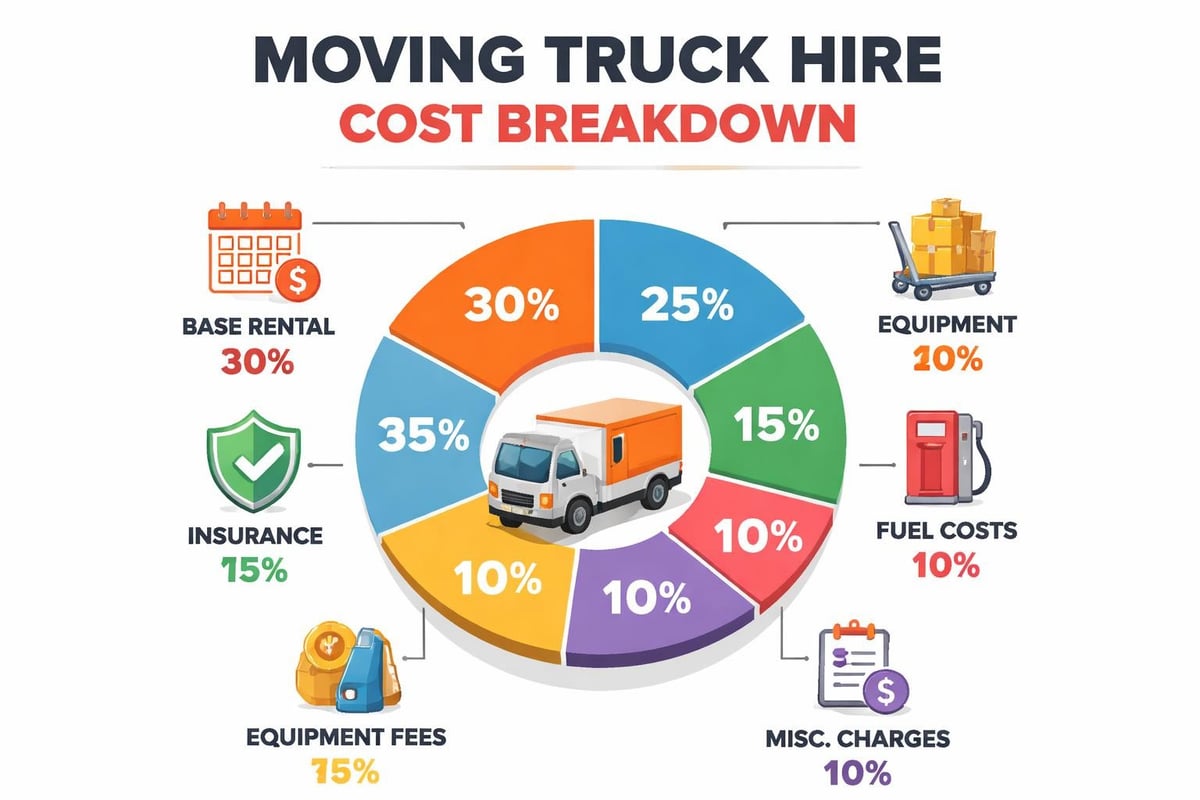
Beyond the base rental rate, numerous additional charges can significantly increase your final bill. Understanding these potential costs helps you budget accurately and avoid surprises.
Common additional fees include:
- Insurance coverage: $15-$40 per day for damage waiver protection
- Equipment rentals: Dollies ($10-$15), furniture pads ($10-$20), and hand trucks
- Environmental fees: $5-$15 per rental for disposal and sustainability programs
- Taxes: 7-12% depending on state and local tax rates
- Fuel charges: Most companies require you to return the truck with the same fuel level
- Late return penalties: $20-$50 per hour beyond your scheduled return time
- Cleaning fees: $50-$100 if the truck is returned excessively dirty
Real-world pricing data from user experiencesshows that additional fees can add 25-50% to the quoted base rate. Always request a complete breakdown of all potential charges before committing to a rental.
Comparing Major Rental Company Rates
Three major companies dominate the moving truck rental market, each with distinct pricing strategies and service models. Comparing their rates helps identify the best value for your specific needs.
National Brand Pricing Analysis
Budget Truck Rental typically offers the lowest base rates but charges higher per-mile fees for local moves. Their long-distance packages remain competitively priced, making them attractive for cross-country relocations.
Penske Truck Rental positions itself as a premium option with newer vehicles and comprehensive roadside assistance.Detailed analysis of Penske truck rental pricesreveals that their rates run 10-15% higher than competitors, but customers often appreciate the vehicle quality and customer service.
U-Haul maintains the largest fleet and most pickup locations, offering unmatched convenience. Their pricing falls in the middle range, with frequent promotional discounts that can make them the most economical choice during off-peak periods.
| Company | 10' Truck Local | 26' Truck Local | Cross-Country (2000 mi) |
|---|---|---|---|
| Budget | $19.95 + $0.99/mi | $39.95 + $0.99/mi | $1,800-$2,400 |
| Penske | $29.95 + $0.79/mi | $54.95 + $0.79/mi | $2,200-$2,800 |
| U-Haul | $24.95 + $0.89/mi | $44.95 + $0.89/mi | $1,900-$2,600 |
These rates represent typical 2026 pricing but vary by location and season. Always obtain personalized quotes for your specific move dates and route.
Money-Saving Strategies for Truck Rentals
Strategic planning can significantly reduce your moving truck hire prices without compromising service quality. Implementing these tactics helps maximize your moving budget.
Booking timing strategies:
- Reserve your truck 4-6 weeks in advance for better rates
- Choose mid-week and mid-month dates when demand drops
- Avoid summer months if your schedule permits flexibility
- Compare prices across multiple companies before committing
Discount opportunities to explore:
- AAA, AARP, and military membership discounts (10-15% savings)
- College student promotions during academic breaks
- Corporate partnership programs through your employer
- Loyalty program benefits for repeat customers
- Online booking discounts versus phone reservations
Moving during the off-season (October through April) typically yields the best moving truck hire prices.Budgeting tips and cost-saving strategiesemphasize flexibility with timing as the single most effective way to reduce rental expenses.
Insurance Considerations
Rental company insurance can double your daily costs, but declining coverage exposes you to significant financial risk. Before purchasing rental insurance, verify whether your auto insurance policy, credit card benefits, or homeowner's insurance provides moving truck coverage.
Most personal auto policies extend liability coverage to rental trucks, but collision coverage often excludes commercial vehicles over a certain weight. Contact your insurance agent to understand your existing protection and identify any gaps that warrant purchasing supplemental coverage.
Professional Moving Services vs. DIY Truck Rental
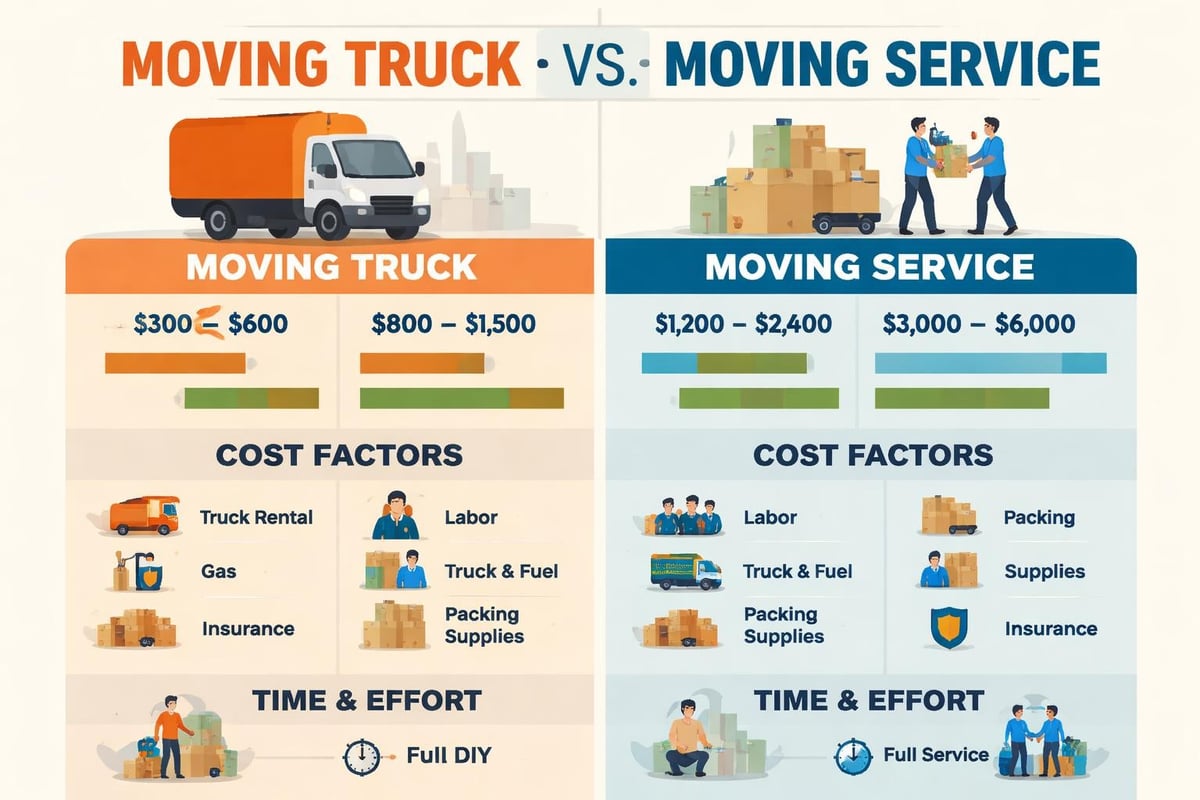
While this guide focuses on moving truck hire prices, comparing these costs against professional moving services provides valuable context. Full-service movers handle all aspects of your relocation, including packing, loading, transportation, and unloading.
For a typical three-bedroom home moving 1,000 miles, a DIY truck rental might cost $1,200-$1,800 including fuel, insurance, and equipment. Professionallong-distance moverstypically charge $3,500-$7,500 for the same move, but this includes labor, liability coverage, and convenience.
DIY truck rental advantages:
- Lower upfront costs for budget-conscious movers
- Complete control over packing and handling
- Flexible scheduling without coordination with movers
- No concerns about tipping or service quality variation
Professional moving service benefits:
- No physical labor required on your part
- Experienced handling reduces damage risk
- Comprehensive insurance coverage included
- Efficient loading maximizes space and safety
- Additional services like packing assistance available
The decision depends on your physical ability, available help, time constraints, and budget priorities. For local moves under 50 miles, DIY rentals offer substantial savings. For cross-country relocations, professional services often provide better value when you factor in hotel costs, meals, fuel, wear on your vehicle, and time away from work.
Estimating Fuel Costs for Your Move
Fuel represents a significant variable cost that many movers underestimate when calculating moving truck hire prices. Large moving trucks achieve only 8-12 miles per gallon, substantially less than personal vehicles.
Calculate expected fuel costs by determining your total mileage and dividing by the truck's fuel efficiency rating. With average diesel prices around $3.80 per gallon in 2026, a 1,000-mile move in a 26-foot truck averaging 10 MPG requires approximately 100 gallons, costing $380 in fuel alone.
Fuel Efficiency by Truck Size
Smaller trucks achieve better fuel economy but require multiple trips for larger homes, potentially negating the efficiency advantage. Right-sizing your truck selection balances capacity with fuel consumption.
- 10-12 foot trucks: 12-14 MPG
- 15-17 foot trucks: 10-12 MPG
- 20-22 foot trucks: 9-11 MPG
- 26 foot trucks: 8-10 MPG
Plan your route carefully to minimize unnecessary mileage. GPS systems designed for commercial vehicles help avoid low bridges, weight-restricted roads, and residential areas where large trucks face challenges. These routing considerations save both fuel and time.
Specialty Moving Situations and Pricing
Certain relocations require specialized equipment or services that affect moving truck hire prices. Understanding these unique scenarios helps you plan appropriately.
Military movesoften benefit from government reimbursement programs that cover truck rental costs. Service members should explore DITY (Do-It-Yourself) move allowances before booking rentals, as these programs may reimburse a percentage of estimated government moving costs.
Commercial relocationstypically require larger trucks and additional equipment like liftgates and loading ramps. Business moves also demand tight scheduling to minimize operational downtime, often necessitating premium rates for guaranteed truck availability.
Specialized item considerations:
- Piano and heavy furniture may require specialized dollies and straps
- Antique and valuable items benefit from climate-controlled vehicles
- Fragile inventory needs extra padding and securing equipment
- Electronics require static-free materials and careful positioning
For moves involvingantiquesorpianos, professional moving services often prove more cost-effective than attempting DIY transport, even when factoring in moving truck hire prices. The risk of damage to irreplaceable items outweighs rental savings.
Seasonal Trends in Moving Truck Hire Prices
Moving truck hire prices fluctuate throughout the year based on predictable demand patterns. Understanding these cycles enables strategic timing that can save hundreds of dollars.
Peak season characteristics (May-September):
- Rental rates increase 30-50% above off-season pricing
- Limited truck availability requires booking 6-8 weeks ahead
- One-way rental drop-off fees reach maximum levels
- Weekend reservations command premium surcharges
Off-season advantages (October-April):
- Base rental rates drop 20-40% compared to summer
- Greater truck availability and flexible pickup times
- Reduced one-way fees as companies reposition inventory
- More negotiating leverage for extended rental periods
College towns experience unique seasonal patterns with demand spikes during academic breaks.Detailed moving truck rental cost guidesemphasize avoiding these peak periods when possible, particularly in university-heavy regions.
Rental Duration and Multi-Day Moves
Most rental companies structure pricing to encourage quick turnarounds, with daily rates decreasing for longer rentals. However, extending your rental period still increases total costs even with discounted daily rates.
For local moves, complete your relocation within the initial rental period to avoid hourly late fees. Long-distance moves spanning multiple days include travel time in the base package, but verify exactly what your rental period covers before departing.
Multi-day rental considerations:
- Confirm where you can legally park the truck overnight
- Understand security responsibilities while the truck contains your belongings
- Factor in hotel costs for overnight stops on long journeys
- Plan driving distances within safe daily limits (500-600 miles maximum)
- Account for fatigue when estimating realistic travel times
Some renters attempt to save money by rushing through long-distance moves in single marathon driving sessions. This approach creates safety risks and often results in costly mistakes like traffic violations, accidents, or damage to belongings from hasty packing.
Accessory and Equipment Rental Costs
Beyond the truck itself, most moves require additional equipment that rental companies provide for extra fees. Budgeting for these accessories ensures you have necessary tools without last-minute surprises.
Standard equipment rental prices in 2026 include:
- Furniture dolly: $10-$12 per day
- Appliance dolly: $12-$15 per day
- Furniture pads (dozen): $10-$15 per rental
- Hand truck: $8-$10 per day
- Tie-down straps and rope: $5-$8 per rental
- Wardrobe boxes: $8-$12 each
Purchasing basic equipment like rope and padding from hardware stores sometimes costs less than renting, particularly if you can reuse or resell items after your move. However, specialized equipment like appliance dollies with strap systems justifies rental costs for single-use needs.
Some rental locations include basic equipment in premium packages. Compare total costs across different package tiers, as bundled offerings occasionally provide better value than basic rentals with individual accessory additions.
Regional Cost Differences Across the United States
Moving truck hire prices vary substantially across different regions and states due to local market conditions, competition levels, and operational costs.
Higher-cost regions:
- Northeast corridor (New York, Boston, Philadelphia)
- California coastal cities (Los Angeles, San Francisco, San Diego)
- Popular relocation destinations (Florida, Texas, Arizona)
Lower-cost regions:
- Midwest and Plains states
- Rural areas with lower population density
- Regions experiencing population outflows
Tax rates also affect final rental costs significantly. States without sales tax (Oregon, Montana, New Hampshire) offer built-in savings, while high-tax states like California (7.25% base rate plus local taxes) add substantial costs to quoted prices.
One-way rental availability and pricing reflect migration patterns. Routes from high-cost to lower-cost areas typically feature better rates and availability because rental companies need vehicles repositioned to high-demand markets. Conversely, moving from Texas to California costs more than the reverse direction due to net migration patterns.
Preparing for Unexpected Costs
Even with careful planning, moving often involves unexpected expenses that impact your budget. Building a contingency fund of 15-20% above estimated moving truck hire prices provides a cushion for these surprises.
Common unexpected costs:
- Additional days needed due to delays or complications
- Parking tickets in urban areas with strict truck restrictions
- Toll road fees on interstate routes
- Vehicle repairs if mechanical issues occur
- Extra fuel from route detours or inefficient packing
- Replacement costs for damaged rental equipment
Review your rental agreement thoroughly before signing. Understanding your responsibilities for damages, late returns, and equipment loss helps avoid disputes and unexpected charges. Take photos of the truck's condition during pickup and return to document pre-existing damage.
Contacting professional moversfor quotes provides a useful comparison point even if you ultimately choose DIY rental. Understanding the full-service cost helps you evaluate whether the savings from moving truck hire prices justify the physical labor and time investment required.
Insurance and Liability Protection Options
Rental truck insurance represents a significant component of total moving truck hire prices, yet many renters don't fully understand their coverage options.
Standard coverage types offered:
- Damage waiver: Releases you from financial responsibility for truck damage
- Supplemental liability: Provides additional coverage beyond state minimums
- Cargo protection: Covers your belongings during transport
- Personal accident: Medical coverage for driver and passengers
Basic rental agreements typically include minimum state-required liability coverage, but this protects others from damage you cause, not your belongings or the rental truck itself. Declining all supplemental insurance saves $25-$60 daily but exposes you to potentially catastrophic financial risk.
Before purchasing rental company insurance, verify coverage through these sources:
- Personal auto insurance policy extensions
- Credit card rental coverage benefits (often excludes trucks over certain sizes)
- Homeowner's or renter's insurance for belongings in transit
- Employer relocation benefits that include insurance
Understanding your existing coverage prevents paying for duplicate protection while ensuring adequate safety nets remain in place.
Understanding moving truck hire prices involves examining numerous factors from base rates and truck sizes to seasonal variations and hidden fees. Whether you choose a DIY rental or professional services depends on your budget, physical capability, and time constraints. For those seeking a stress-free alternative to truck rental complexities,US Prime Moversoffers comprehensive moving solutions across the United States, handling everything from local relocations to cross-country moves with transparent pricing and professional service. Contact their team today for a customized quote that eliminates the uncertainties of DIY moving.