
Moving house represents one of life's most significant transitions, whether you're relocating across town or across the country. For families planning long-distance or interstate moves, the process involves careful coordination, strategic planning, and often months of preparation. Understanding the key phases of moving house can transform what feels like an overwhelming experience into a manageable series of actionable steps. This guide breaks down the essential elements of planning and executing a successful relocation, with practical timelines, cost considerations, and expert strategies to help you navigate every stage of your move.
Planning Your Move: The Foundation for Success
The timeline for moving house begins much earlier than most people realize.Starting your preparation 8-12 weeks before your move date gives you adequate time to handle the numerous tasks that require attention. According toConsumerAffairs' comprehensive moving checklist, breaking down your move into weekly intervals prevents last-minute chaos and reduces stress significantly.
Creating Your Moving Timeline
A structured timeline serves as your roadmap through the relocation process. Here's how to organize your preparation:
8-12 Weeks Before Moving:
- Research and obtain quotes from licensed interstate moving companies
- Create a detailed inventory of belongings
- Start decluttering and decide what to sell, donate, or discard
- Begin gathering important documents and records
- Research your new community and neighborhood
4-6 Weeks Before Moving:
- Confirm your moving date and book your moving company
- Notify your landlord or list your current home for sale
- Start collecting packing materials if handling your own packing
- Schedule utility disconnections and connections
- Register children for new schools if applicable
2-3 Weeks Before Moving:
- Begin packing non-essential items
- Confirm travel arrangements
- Notify important parties of your address change
- Arrange for mail forwarding through USPS
- Plan meals using perishable food items
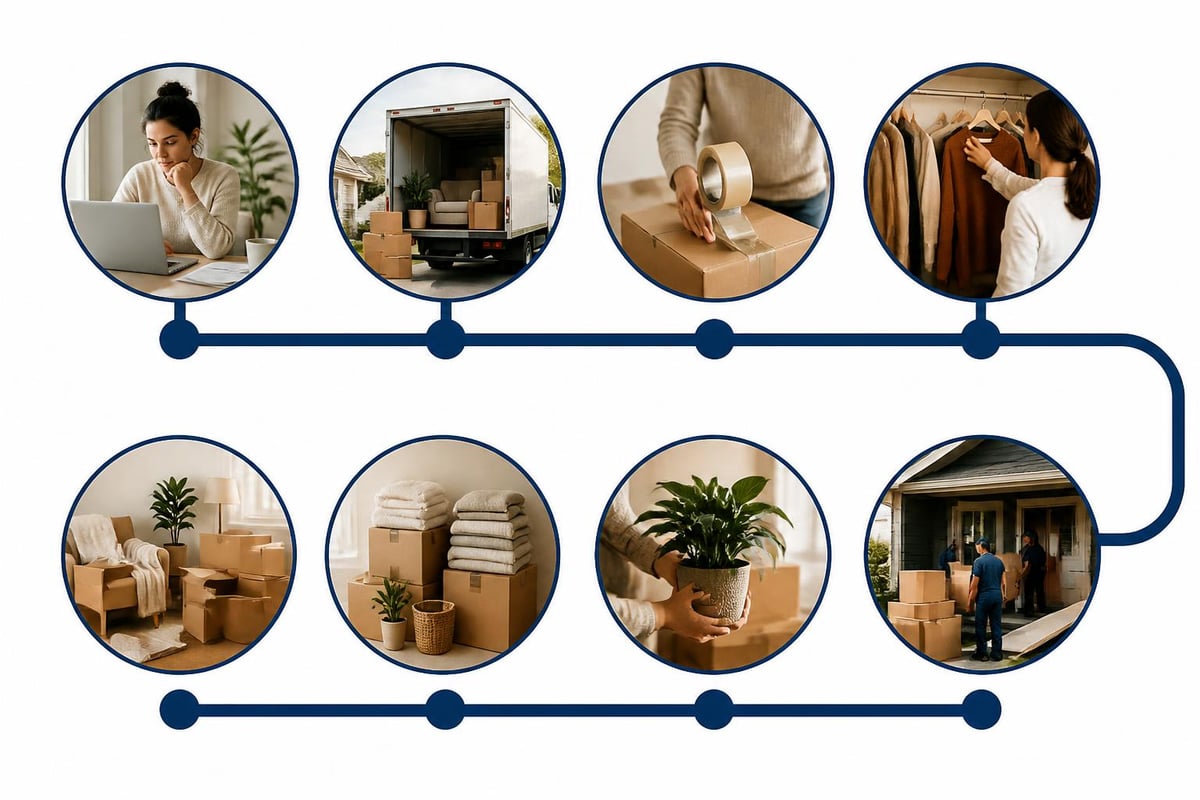
Understanding Moving Costs and Budget Planning
Long-distance moving costs vary significantly based on distance, volume, and services required. For a typical 3-bedroom household moving from New York to California, expect costs between $4,000 and $8,000 forlong distance moving services. Several factors influence your final price:
| Cost Factor | Impact on Price | Estimated Range |
|---|---|---|
| Distance | Primary driver | $1-$2 per mile |
| Volume/Weight | Major factor | $50-$100 per 100 lbs |
| Packing Services | Significant add-on | $500-$2,500 |
| Storage Needs | Variable | $100-$300/month |
| Specialty Items | Per item | $200-$1,000+ |
| Insurance Coverage | Recommended | 1-3% of declared value |
Building a realistic budget requires accounting for both obvious and hidden costs.Beyond the moving company fees, factor in travel expenses, temporary housing if needed, utility deposits, and the costs of replacing items you chose not to move. Setting aside an additional 10-15% as a contingency fund protects against unexpected expenses.
Decluttering and Organizing Before Moving House
One of the most valuable investments of time when moving house is thoroughly decluttering before you pack. Every item you move costs money in terms of weight and space, making this the perfect opportunity to simplify your life.
The Room-by-Room Approach
Start with the areas you use least frequently.Attics, basements, and guest rooms typically contain items you won't miss during the weeks leading up to your move. This approach builds momentum and decision-making skills before tackling more emotionally challenging spaces like family rooms or children's bedrooms.
Apply the six-month rule: if you haven't used something in the past six months and it doesn't hold significant sentimental value, seriously consider whether it deserves space in your new home.Research from Redfinshows that homeowners who declutter before moving house report higher satisfaction with their new spaces and lower unpacking stress.
Common categories that benefit from aggressive decluttering:
- Duplicate kitchen items and small appliances
- Outdated electronics and cables
- Clothing that no longer fits or suits your lifestyle
- Old magazines, papers, and expired documents
- Broken or incomplete games, toys, and craft supplies
- Excess furniture that won't fit your new floorplan
Selling, Donating, and Disposing Responsibly
Create three designated areas or mark items clearly as you declutter. Items in good condition can be sold through online marketplaces, garage sales, or consignment shops, potentially offsetting moving costs. Charitable donations provide tax deductions while supporting your community. For items that can't be sold or donated, research proper disposal methods, especially for electronics, chemicals, and large appliances.
Packing Strategies for Long-Distance Moves
Packing for a long-distance move requires different strategies than local relocations.Your belongings will spend days or weeks in transit, experiencing more handling and potential jostling. Professional packing techniques become essential for protecting your items across hundreds or thousands of miles.
Professional Packing vs. DIY
When moving house across state lines, many families find thatprofessional packing servicesoffer significant value despite the additional cost. Professional movers complete the job in one or two days, use commercial-grade materials, and take responsibility for items they pack. This option particularly makes sense for households with valuable antiques, extensive dishware collections, or limited time for preparation.
If you choose to pack yourself, invest in quality materials. Cheap boxes collapse under weight during long transports, and inadequate cushioning leads to breakage. Essential supplies include:
- New, sturdy boxes in multiple sizes
- Heavy-duty packing tape (at least 3 inches wide)
- Bubble wrap and packing paper
- Specialty boxes for dishes, wardrobes, and mirrors
- Furniture blankets and stretch wrap
- Labels and permanent markers
Room-by-Room Packing Timeline
Begin packing 3-4 weeks before your move date, starting with items you rarely use.TheWho What Wear guide to packing when movingoffers excellent advice for protecting clothing and maintaining organization throughout the process.

Week 1 of Packing:
- Out-of-season clothing and decorations
- Books and collectibles
- Artwork and decorative items
- Guest room contents
- Basement and attic storage
Week 2 of Packing:
- Most kitchen items (keep one set of dishes per person)
- Extra linens and towels
- Home office equipment (except daily-use items)
- Garage tools and equipment
- Children's toys (keep favorites accessible)
Week 3 of Packing:
- Remaining clothing (pack suitcases for first week)
- Remaining kitchen items
- Bathroom items (keep toiletries for final days)
- Final office and electronic equipment
Final Days:
- Pack an essentials box for each family member
- Prepare a first-night box with necessities
- Set aside important documents to carry personally
Labeling and Inventory Systems
Develop a clear labeling system that communicates both contents and destination room.Use color coding by room, numbered labels tied to a master inventory spreadsheet, or detailed written descriptions. For valuable items, photograph them before packing and note their box number in your inventory. This documentation proves invaluable both for organization during unpacking and for insurance purposes if damage occurs.
Managing Moving Day Logistics
The actual moving day represents the culmination of weeks of planning. When moving house across state lines, your belongings typically load one day, travel for several days, and arrive at your destination on a scheduled delivery window.
Pre-Move Day Preparation
Confirm all details with your moving company 48-72 hours before loading day.Verify the arrival time, review the inventory list, and clarify any last-minute questions about access, parking, or special handling requirements. Ensure someone age 18 or older will be present for the entire loading process to answer questions and sign documents.
Prepare your home for efficient loading by clearing pathways, protecting floors in both properties, and designating a staging area for boxes and furniture. If you're moving from an apartment or condo, reserve elevators and obtain any required certificates of insurance from your moving company.
What to Keep With You
Never pack irreplaceable items, important documents, or essential medications in the moving truck.Transport these personally regardless of whether you're driving or flying to your new location:
- Passports, birth certificates, and legal documents
- Financial records and insurance policies
- Prescription medications and medical records
- Jewelry and valuable small items
- Laptop computers and external hard drives
- Keys to your new home
- Checkbook and financial cards
Settling Into Your New Home
The Livingetc guide on what to unpack first recommends prioritizing essentials that make your space immediately functional.After the moving truck departs, resist the urge to tackle everything at once. Strategic unpacking reduces stress and helps your family adjust more smoothly.
First-Week Priorities
Focus on establishing basic functionality in key areas. Set up bedrooms first so everyone has a comfortable place to sleep. Unpack enough kitchen items to prepare simple meals. Establish one bathroom completely rather than partially unpacking multiple bathrooms.
Essential first-day tasks:
- Verify all boxes and furniture arrived
- Check for damage and photograph any issues
- Assemble beds and make them with fresh linens
- Unpack toiletries and set up bathroom essentials
- Locate and organize important documents
- Set up basic kitchen functionality
- Verify utilities are functioning properly
Administrative Tasks After Moving House
Moving house generates numerous administrative responsibilities that extend beyond physical unpacking. TheFidelity post-move checklistprovides detailed guidance on financial and legal tasks that require attention within your first few weeks.
| Task Category | Timeline | Priority |
|---|---|---|
| DMV registration and license | 30-60 days | High |
| Voter registration | ASAP | Medium |
| Insurance updates | Within 30 days | High |
| Bank and credit card addresses | Within 2 weeks | High |
| Healthcare provider transfers | Within 30 days | Medium |
| School enrollment completion | Before start date | High |
| Professional license updates | Varies by state | Medium |
Update your address with critical entities systematically.Create a checklist that includes your employer, health insurance provider, car insurance company, financial institutions, subscription services, and professional organizations. Many services offer online address changes, but some require written notification or phone verification for security.
Common Mistakes to Avoid When Moving House
Learning from others' experiences helps you sidestep costly errors.Livingetc's overview of moving mistakesidentifies several pitfalls that complicate relocations unnecessarily.
Underestimating Time Requirements
The most common error when moving house is assuming you have more time than you actually do.Packing takes longer than anticipated, especially when you're working around daily life responsibilities. Administrative tasks multiply unexpectedly, and decision fatigue slows progress as you determine what to keep, donate, or discard.
Buffer your timeline by starting earlier than feels necessary. If a task seems like it will take two hours, allocate three. This padding accommodates interruptions, complications, and the reality that moving-related tasks rarely proceed as quickly as planned.
Inadequate Research on Moving Companies
Not all moving companies offer the same service quality, licensing, or insurance coverage. For interstate moves specifically, verify that your chosen company holds proper USDOT registration and check their safety record through the Federal Motor Carrier Safety Administration database. Read recent reviews on multiple platforms, request detailed written estimates from at least three companies, and never pay large deposits or accept estimates without a physical or virtual home assessment.
Poor Communication
Failing to communicate clearly with your moving company creates problems on moving day.Provide accurate information about your home's layout, access challenges, parking restrictions, and inventory. Disclose specialty items like pianos, antiques, or gym equipment that require special handling. For households with unique needs, such asmilitary families managing PCS relocations, ensure your moving company understands specific timeline constraints and documentation requirements.
Special Considerations for Long-Distance Relocations

Moving house across state lines introduces complexities that don't exist in local moves. Your household goods spend extended time in transit, you're coordinating activities in two different states simultaneously, and you're often managing the move while hundreds of miles from your destination.
Flexible Delivery Windows
Unlike local moves that typically complete in one day, long-distance relocations operate on delivery windows.Your moving company provides an estimated arrival date with a window of several days. This flexibility accommodates factors like weather, traffic, and previous deliveries on the same route. Plan accordingly by arranging temporary housing or flexible hotel reservations if you can't access your new home until your belongings arrive.
Services offeringmoving and storage solutionsprovide valuable flexibility when your move-out and move-in dates don't align perfectly. This option prevents the stress and expense of rushing to close on a new home simply to avoid storage fees.
Managing the In-Between Period
The gap between leaving your old home and settling into your new one requires planning. Pack suitcases with 7-10 days of clothing and essentials. Arrange temporary housing if needed. Keep entertainment options accessible for children during travel and the waiting period. Maintain copies of important documents and have emergency funds readily available.
State-Specific Requirements
Each state maintains different requirements for new residents.Research your destination state's timeline for updating your driver's license, registering vehicles, and establishing residency. Some states offer reciprocity for professional licenses while others require new applications. Understanding these requirements before moving house prevents costly delays or violations.
Protecting Your Belongings During the Move
Insurance and valuation coverage represent critical but often misunderstood aspects of moving house. Basic carrier liability provides minimal protection, typically only $0.60 per pound per item. Under this standard coverage, a 50-pound television worth $1,500 receives only $30 if damaged or lost.
Understanding Your Coverage Options
Full-value protection offers comprehensive coverage where the moving company repairs, replaces, or provides cash settlement for damaged items.This costs more but provides actual protection for your belongings. For long-distance moves, typical full-value protection costs 1-2% of your declared shipment value.
Review your homeowner's or renter's insurance policy. Some policies extend coverage to belongings during moves, though this often includes deductibles and may not cover items packed by anyone other than professionals. Clarify coverage details with your insurance agent before moving day.
Special Items Requiring Extra Attention
Certain belongings demand specialized handling during interstate relocations. Pianos, antiques, artwork, and other high-value items often require custom crating, climate-controlled transportation, or specialized equipment. Inform your moving company about these items during the estimate process to ensure they have appropriate resources and expertise.
The Role of Professional Support
For many families, the question isn't whether to hire movers but rather which services provide the best value.Full-service moving includes packing, loading, transportation, unloading, and unpacking. Partial services let you handle some tasks yourself while professionals manage the heavy lifting and transportation.
Consider your circumstances honestly. Families with young children, those relocating for demanding jobs, or households with limited physical ability to pack and load often find full-service options worth the investment. The time savings, stress reduction, and professional expertise frequently outweigh the cost difference.
Thedetailed moving checklist from Moving Helpwalks through 92 essential steps in the moving process, demonstrating the complexity involved in successful relocations. Professional movers handle many of these steps as standard procedure, allowing you to focus on your family's transition and adjustment.
Moving house successfully requires early planning, strategic organization, and careful execution across multiple phases. Whether you're relocating within your state or across the country, the right preparation transforms a potentially overwhelming experience into a manageable transition. AtUS Prime Movers, our licensed and insured team specializes in long-distance residential relocations, offering transparent pricing and experienced support for families moving across state lines. Contact us today for a free quote and discover how our professional moving services can simplify your upcoming relocation.