
Texas continues to experience unprecedented population growth in 2026, with thousands of families and businesses relocating to the Lone Star State every month. Whether you're moving from another state or relocating within Texas, selecting the right moving company Texas residents trust requires careful research and planning. The decision impacts not only your budget but also the safety of your belongings and the overall stress level of your relocation experience.
Understanding Texas Moving Company Regulations
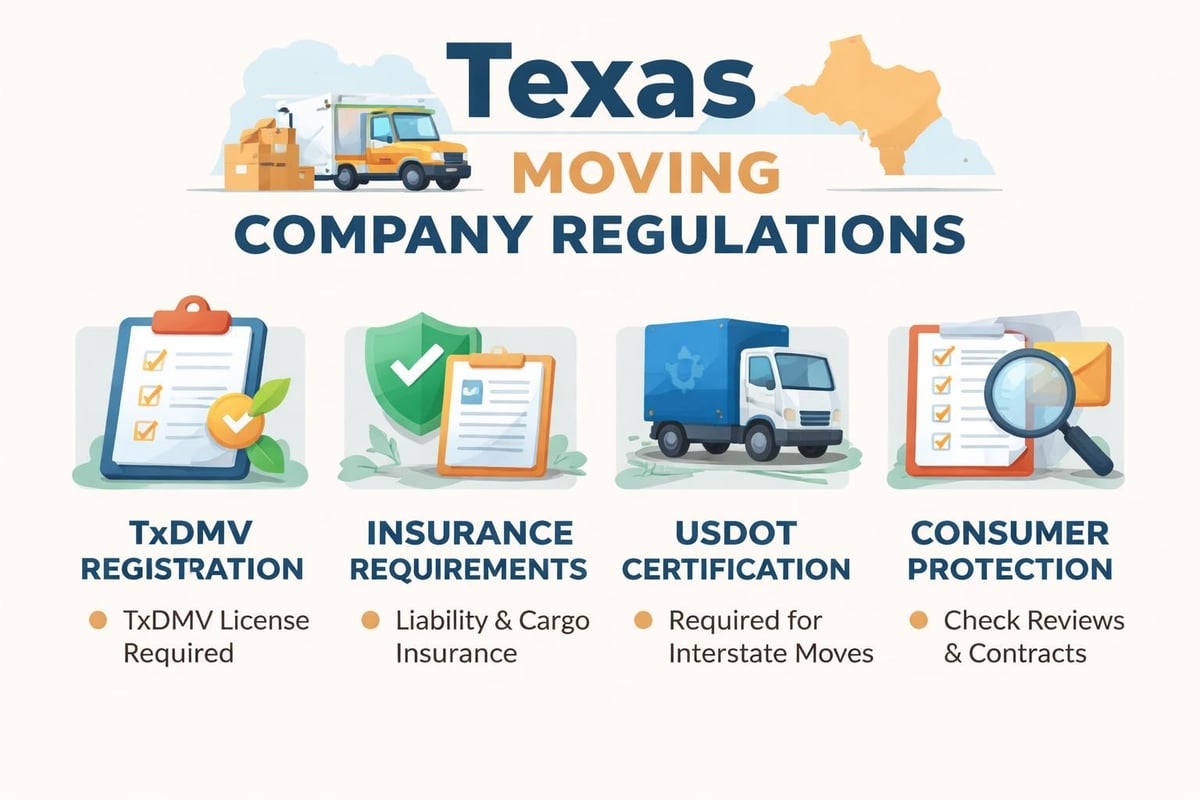
The Texas Department of Motor Vehicles oversees all moving companies operating within the state, ensuring consumer protection and industry standards. Every legitimate moving company Texas operates must hold valid state operating authority and comply with specific insurance requirements.
Licensing and Certification Requirements
Texas law requires moving companies to register with the TxDMV and maintain proper insurance coverage. Before hiring any mover, verify their credentials through theTexas DMV consumer protection resources, which provides a comprehensive checklist for consumers.
Key licensing requirements include:
- Valid Motor Carrier Certificate
- Cargo liability insurance
- Workers' compensation coverage
- USDOT number for interstate moves
- Clean compliance record
Companies offeringstate-to-state moving servicesmust also register with the Federal Motor Carrier Safety Administration. This dual registration ensures accountability at both state and federal levels.
Why Proper Licensing Matters
Unlicensed movers pose significant risks, including potential loss of belongings, liability issues, and lack of recourse if problems arise. According toindustry statistics on Texas moving companies, the state has thousands of registered movers, but quality varies significantly.
| Risk Factor | Licensed Company | Unlicensed Company |
|---|---|---|
| Insurance Protection | Full coverage | None guaranteed |
| Regulatory Oversight | TxDMV monitoring | No oversight |
| Complaint Resolution | Formal process | Limited options |
| Professional Standards | Required training | No requirements |
Services Offered by Texas Moving Companies
Professional movers in Texas provide comprehensive solutions beyond basic transportation. Understanding available services helps you plan effectively and budget appropriately for your relocation.
Local Moving Services
Local moves within Texas cities require different planning than long-distance relocations. A reputable moving company Texas locals recommend typically charges hourly rates for moves under 100 miles, with pricing varying by crew size and equipment needs.
Most companies provide:
- Loading and unloading
- Furniture disassembly and reassembly
- Basic liability coverage
- Moving equipment and trucks
- Short-term storage options
Long-Distance and Interstate Moving
For relocations between states or across significant Texas distances,long-distance moving servicesbecome essential. These moves involve detailed inventory management, precise timing coordination, and comprehensive insurance options.
Interstate moves to Texas from states like New Jersey, New York, or California require careful planning and experienced professionals who understand cross-country logistics. Companies specializing in these routes offer streamlined processes and predictable timelines.
Specialized Moving Solutions
Texas movers increasingly offer specialized services for unique items and situations:
- Commercial Relocations: Office moves require minimal business disruption and professional handling of equipment
- Military Moves: Service members benefit from dedicated military moving services with DOD compliance
- Specialty Items: Piano moving, antique handling, and artwork transportation demand expertise
- Climate-Controlled Storage: Essential for Texas's extreme summer temperatures
Commercial moving servicesaddress business-specific needs, including IT equipment relocation, secure document handling, and weekend scheduling to minimize operational impact.
Choosing the Right Moving Company in Texas
Selecting from hundreds of available movers requires systematic evaluation and comparison. The right moving company Texas families choose depends on specific needs, budget constraints, and service expectations.
Research and Verification Steps
Begin your search at least eight weeks before your move date. Peak moving season in Texas runs from May through September, when demand increases significantly and availability becomes limited.
Essential verification steps:
- Confirm TxDMV registration and insurance
- Read recent customer reviews on multiple platforms
- Request detailed written estimates from three companies
- Verify physical business addresses and contact information
- Check complaint history with the Better Business Bureau
- Confirm availability for your specific moving dates
TheTexas.gov moving resourcesprovide valuable information for new residents, including how to verify moving company licenses and understand your consumer rights.
Obtaining Accurate Quotes
Reputable movers conduct in-home assessments or detailed virtual surveys before providing binding estimates. Avoid companies offering quotes without seeing your belongings, as these estimates rarely reflect final costs.
| Quote Type | Description | Best For |
|---|---|---|
| Binding | Fixed price guaranteed | Budget certainty |
| Not-to-Exceed | Maximum price cap | Flexible inventories |
| Non-Binding | Estimated cost | Simple moves |
| Binding on Delivery | Based on actual weight | Long-distance moves |
Request itemized quotes detailing all charges, including packing materials, labor, transportation, insurance, and any additional fees. Understandingmoving statistics and trendshelps you recognize competitive pricing.

Popular Texas Relocation Destinations
Texas's diverse cities attract different demographics, each with unique moving considerations. Understanding regional differences helps you plan appropriately and select movers experienced with your destination.
Austin Moving Market
Austin's tech boom continues driving population growth in 2026. The city's competitive housing market and traffic congestion create specific moving challenges.Austin moversfamiliar with neighborhood parking restrictions and building access requirements prevent common moving day complications.
Austin's housing costs have increased substantially, making efficient moves that minimize time-based charges particularly valuable. Many buildings now require certificate of insurance from moving companies and advance reservation of freight elevators.
Houston Relocation Considerations
As Texas's largest city, Houston offers diverse neighborhoods spanning vast geographic areas. The city's humid climate makes climate-controlled storage essential for items sensitive to moisture and temperature fluctuations.
Houston moves often involve:
- Navigating complex highway systems
- Managing humidity-related packing considerations
- Coordinating with high-rise building management
- Planning around frequent afternoon thunderstorms
Dallas-Fort Worth Moving Dynamics
The DFW Metroplex's sprawling nature means moves can span significant distances even within the metropolitan area. Companies experienced with both urban high-rise relocations and suburban single-family moves offer the most comprehensive service.
San Antonio and Other Major Cities
San Antonio's military presence creates consistent demand forspecialized military moving services, while El Paso's border location generates unique international moving needs.
Packing and Preparation Strategies
Effective preparation significantly impacts moving costs and stress levels. Whether you choose full-service packing or handle it yourself, understanding best practices ensures belongings arrive safely.
Professional Packing Services
Professionalpacking and moving servicesoffer significant advantages beyond convenience:
- Time Savings: Professional crews pack entire homes in hours
- Proper Materials: Access to commercial-grade packing supplies
- Expert Techniques: Training in protecting fragile and valuable items
- Insurance Benefits: Enhanced coverage when professionals pack
- Reduced Stress: Eliminates the most time-consuming moving task
Full-service packing typically costs 15-20% of the total move price but proves worthwhile for busy families, large homes, or valuable collections.
DIY Packing Best Practices
For budget-conscious movers, self-packing reduces costs while maintaining control over the process. Start packing non-essential items six weeks before moving day.
Room-by-room packing sequence:
- Storage areas and seasonal items
- Decorative objects and artwork
- Books, media, and office supplies
- Kitchen items (except daily essentials)
- Bedrooms and bathrooms
- Daily-use kitchen items (final day)
Label boxes with contents and destination rooms. A moving company Texas professionals recommend can provide specialized boxes for wardrobes, dishes, and electronics.
Cost Factors and Budgeting
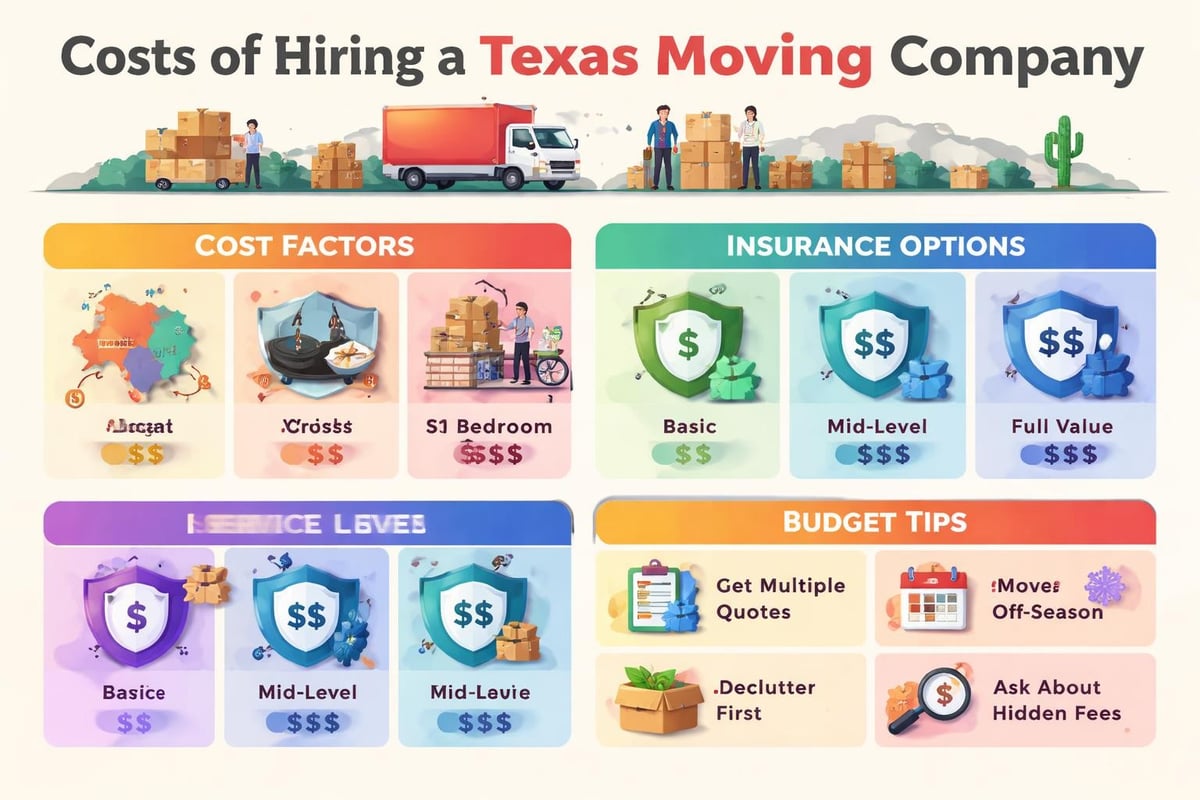
Understanding what influences moving costs helps you budget accurately and identify potential savings. Texas moving expenses vary significantly based on multiple factors.
Pricing Components
Distance-based factors:
- Mileage for long-distance moves
- Fuel surcharges
- Toll road costs
- Multiple-day transportation fees
Weight and volume considerations:
- Total shipment weight for interstate moves
- Cubic footage for local relocations
- Bulky item surcharges
- Heavy item handling fees
Service level selections:
- Full-service versus partial packing
- Standard versus white-glove service
- Basic versus comprehensive insurance
- Storage duration and facility type
| Move Size | Local (Hourly) | Long-Distance | Full Service Add-On |
|---|---|---|---|
| Studio/1BR | $300-600 | $1,500-3,000 | +$400-800 |
| 2-3BR | $600-1,200 | $3,000-6,000 | +$800-1,500 |
| 4BR+ | $1,200-2,000 | $6,000-12,000 | +$1,500-3,000 |
Money-Saving Strategies
Flexibility with moving dates creates savings opportunities. Mid-month, mid-week moves typically cost less than month-end weekend relocations. Moving during off-peak season (October through April) often yields 10-20% discounts.
Reducing shipment weight by selling or donating unwanted items before the move decreases costs for long-distance relocations charged by weight. Many Texas charities offer free pickup for furniture donations, helping you declutter while supporting local communities.
Storage Solutions and Timing
Many moves require temporary storage due to timing gaps between closing dates, lease overlaps, or home renovations. Understanding storage options prevents last-minute complications.
Short-Term Storage Options
Moving and storage servicesoffer convenient solutions when you need flexibility. Container storage allows movers to load your belongings once, store the container, then deliver when ready.
Storage types available:
- Warehouse storage with scheduled delivery
- Portable containers at your location
- Climate-controlled facilities for sensitive items
- Long-term storage for extended needs
Climate Control Considerations
Texas's extreme summer heat makes climate control essential for electronics, wooden furniture, artwork, photographs, and important documents. Non-climate-controlled storage risks warping, mold, and deterioration during humid months.
Factor storage costs into your moving budget, typically ranging from $50-200 monthly depending on space requirements and climate control needs.
Red Flags and Avoiding Moving Scams
Fraudulent movers operate in Texas, targeting unsuspecting consumers with low-ball estimates and high-pressure tactics. Recognizing warning signs protects your belongings and budget.
Common Scam Indicators
Immediate red flags include:
- Demanding large upfront deposits
- Providing estimates without inventory assessment
- Lacking physical business address
- Using rental trucks without company marking
- Refusing to provide written estimates
- Missing proper licensing and insurance
Legitimate companies never require more than a small deposit, typically 10-20% for long-distance moves. Cash-only operations signal potential problems.
Protection Strategies
Always obtain multiple written estimates and verify each company's credentials independently. Review contracts carefully before signing and understand your insurance coverage options.
Document your belongings with photographs before packing. Create detailed inventory lists including item conditions, which proves invaluable if damage occurs or disputes arise.
Insurance and Liability Coverage
Understanding moving insurance prevents unpleasant surprises if damage or loss occurs. Every moving company Texas operates must provide basic liability coverage, but this minimal protection rarely covers full replacement costs.
Coverage Options Explained
Basic Carrier Liability: Federally required coverage pays only $0.60 per pound per item. A damaged 50-pound television worth $1,000 yields just $30 compensation under basic coverage.
Full Value Protection: This comprehensive option costs extra but covers repair, replacement, or settlement at current market value. Deductibles typically apply, similar to homeowner's insurance.
Third-Party Insurance: Separate moving insurance policies from specialty insurers offer customizable coverage and competitive rates, often less expensive than carrier-provided full value protection.
| Coverage Type | Cost | Protection Level | Best For |
|---|---|---|---|
| Basic Liability | Included | Minimal ($0.60/lb) | Low-value items |
| Full Value | 1-2% of shipment value | Comprehensive | Most moves |
| Third-Party | Varies by value | Customizable | High-value items |
Document valuable items separately and consider maintaining homeowner's insurance during transit, as some policies cover belongings during moves.
Preparing for Moving Day
Successful moving days result from thorough preparation and clear communication with your moving company Texas team. Final preparations during the week before ensure smooth execution.
Final Week Checklist
Confirm all details with your moving company 48 hours before the scheduled date. Verify arrival time, crew size, and any special requirements or access restrictions.
Day-before preparations:
- Pack overnight bags with essentials
- Secure valuables and important documents
- Empty and defrost refrigerators
- Disconnect and prepare appliances
- Clear pathways for efficient loading
- Arrange parking for moving trucks
Moving Day Coordination
Conduct a walkthrough with the crew leader, identifying any items requiring special handling. Review the bill of lading and inventory sheets before signing, noting any pre-existing damage.
Stay available throughout the loading process to answer questions. Keep contact information accessible and maintain clear communication channels.
At destination, inspect furniture and boxes as they're unloaded. Note any damage on the delivery receipt before signing. This documentation proves essential for insurance claims.
Texas-Specific Moving Considerations
The Lone Star State presents unique challenges and requirements that experienced Texas movers navigate effectively. Understanding these factors prevents common complications.
Weather and Seasonal Factors
Texas weather extremes impact moving logistics year-round. Summer temperatures exceeding 100°F create safety concerns and material challenges. Heat-sensitive items require special handling and climate-controlled transportation.
Spring severe weather season brings thunderstorms and occasional tornadoes, potentially causing delays. Fall offers ideal conditions with moderate temperatures and lower precipitation.
Building and Community Regulations
Many Texas apartment complexes and condominiums impose strict moving requirements:
- Reserved elevator times
- Certificate of insurance requirements
- Moving deposit policies
- Restricted moving hours
- Required floor protection
- Parking reservation systems
Coordinate these requirements with your moving company weeks in advance. Failure to comply results in denied access, forcing expensive rescheduling.
Distance and Geographic Considerations
Texas's vast size means "local" moves sometimes span hundreds of miles. Understanding how moving companies define local versus long-distance affects pricing and services.
Interstate moves to Texas from other states require coordination across state lines, making experiencedTexas moversfamiliar with cross-country logistics essential for smooth relocations.
Selecting the right moving company determines whether your Texas relocation proves stressful or seamless. By verifying credentials, understanding available services, obtaining detailed estimates, and preparing thoroughly, you ensure a successful move.US Prime Moversbrings decades of experience to Texas relocations, offering comprehensive solutions from packing through final delivery. Contact our team today for a detailed consultation and discover how professional moving services transform your relocation experience.