
Choosing the right moving partner can make or break your relocation experience. Moving and relocation companies offer far more than simple truck rentals-they provide comprehensive services designed to reduce stress, protect your belongings, and streamline what is often cited as one of life's most challenging transitions. Understanding how these companies operate, what they offer, and how to select the best fit for your needs will help you make informed decisions during a time when clarity matters most.
Understanding What Moving and Relocation Companies Actually Do
Moving and relocation companies specialize in transporting household goods and personal belongings from one location to another. These businesses range from small local operators to national franchises with interstate authority.
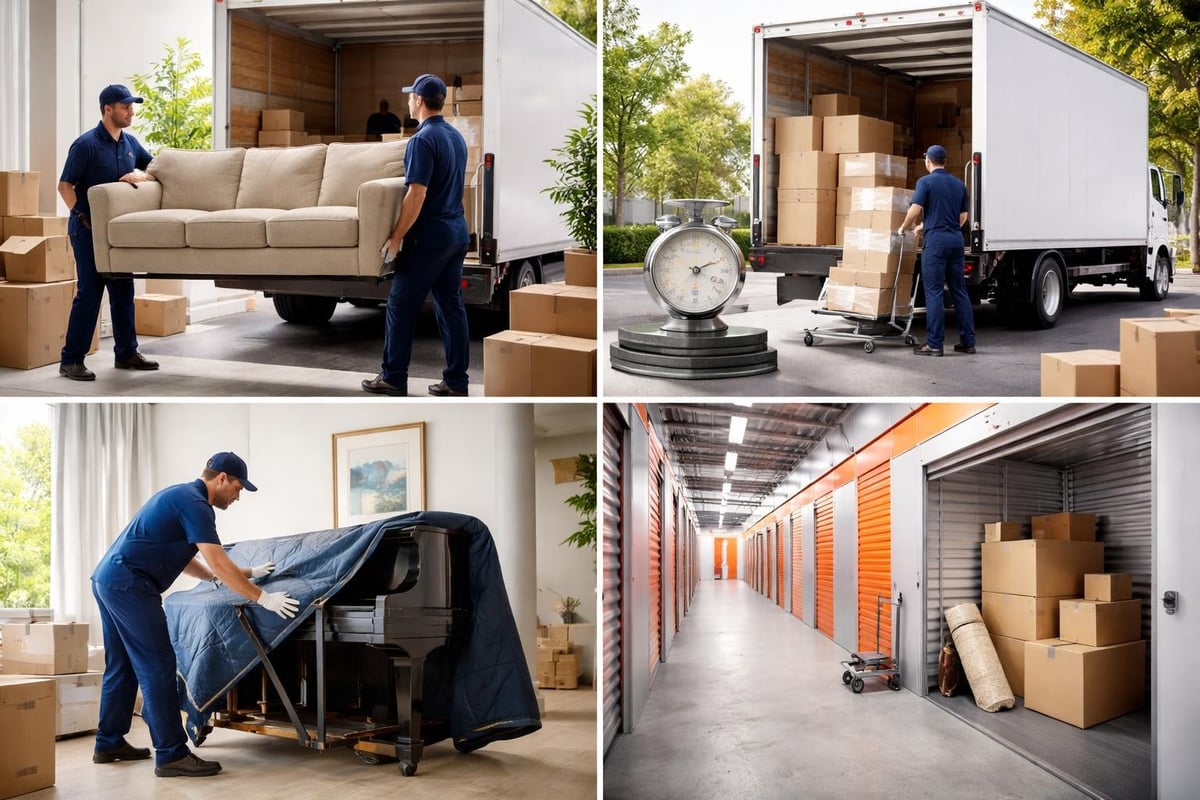
The core service involves loading your items onto a truck, transporting them to your new address, and unloading everything at the destination. However, most professional movers offer expanded services that address nearly every aspect of the relocation process.
Full-service moving and relocation companies typically provide:
- Professional packing and unpacking assistance
- Specialty item handling for pianos, antiques, and artwork
- Temporary or long-term storage solutions
- Disassembly and reassembly of furniture
- Vehicle transport coordination
- Custom crating for fragile valuables
According tomoving industry statistics, approximately 27 million Americans relocate each year, with professional movers handling a significant portion of these transitions. The demand continues to grow as remote work enables more families to pursuelong distance movingopportunities across state lines.
The Different Types of Moving Services
Not all moving and relocation companies offer identical services. Understanding the distinctions helps you identify providers equipped to handle your specific situation.
Local moverstypically handle moves within a 100-mile radius and charge by the hour.Interstate or long-distance moversmust hold FMCSA licensing and typically price based on weight and distance.International moverscoordinate overseas shipments and customs documentation.
Specialized categories include corporate relocation services, military moving contractors, and white-glove movers focused on high-value items. Each category requires different expertise, equipment, and regulatory compliance.
How to Evaluate Moving and Relocation Companies
Selecting a reputable mover requires more research than simply comparing prices. The Federal Motor Carrier Safety Administration (FMCSA) regulates interstate movers, and checking credentials should be your first step.
Essential Verification Steps
- Confirm licensing and registration through the FMCSA database using the company's US DOT number
- Review insurance coverage including released value protection and full replacement value options
- Check complaint records with the Better Business Bureau and state consumer protection agencies
- Read recent customer reviews focusing on patterns rather than isolated incidents
- Verify physical business addresses and avoid companies operating solely through web-based platforms
Themoving and storage industrygenerates over $18 billion annually, attracting both legitimate operators and fraudulent actors. Rogue movers often present red flags like requiring large cash deposits, lacking proper branding on trucks, or providing estimates without conducting home surveys.
| Red Flag | What It Indicates | Protective Action |
|---|---|---|
| No physical address | Possible fraud operation | Request in-person estimate |
| Large upfront deposit | Hostage situations common | Never pay more than 20% deposit |
| Unsigned paperwork | No contractual protection | Insist on written estimates |
| Rental truck used | Unlicensed operator | Verify DOT number on truck |
Getting Accurate Moving Estimates
Moving and relocation companies provide three types of estimates. Anon-binding estimaterepresents the mover's best guess but can increase if actual weight exceeds projections. Abinding estimateguarantees the total cost regardless of weight changes. Abinding not-to-exceed estimatesets a ceiling price-you pay the actual cost or the estimate, whichever is lower.
Request in-home surveys whenever possible. Virtual estimates conducted via video call have gained popularity since 2020, but they sometimes miss items that increase final costs. Professional estimators should inspect closets, garages, attics, and storage areas to calculate accurate cubic footage or weight.
For interstate moves, expect costs ranging from $2,500 to $7,500 for a typical three-bedroom household moving 1,000 miles. Additional services likepacking and unpackingadd approximately $500 to $1,800 depending on home size.
Timeline Considerations When Working With Moving Companies
Professional moving and relocation companies book quickly during peak season, which runs from May through September. Summer months see increased demand from families relocating before the school year begins.
Recommended Booking Timeline
- 8-12 weeks before move date: Begin researching companies and requesting estimates
- 6-8 weeks out: Finalize your selection and sign contracts
- 4 weeks out: Confirm dates and coordinate packing services if needed
- 2 weeks out: Begin personal packing of items you'll transport yourself
- 1 week out: Complete final walkthrough and confirm inventory
- Moving day: Conduct thorough inventory check before truck departure
Last-minute bookings during peak season often result in limited availability or premium pricing. According toconsumer moving data, customers who book at least six weeks in advance save an average of 15-20% compared to those making arrangements within two weeks of their move date.

Cost Factors That Impact Your Moving Budget
Understanding how moving and relocation companies calculate pricing helps you budget accurately and avoid surprise charges. Interstate movers base quotes on several key factors that directly influence your final bill.
Primary cost determinants include:
- Total weight or cubic footage of shipment
- Distance between origin and destination
- Accessibility at both locations (stairs, elevators, parking)
- Time of year and day of week
- Packing services and materials
- Special handling requirements
- Insurance and valuation coverage
A cross-country move fromNew YorktoCaliforniafor a 2,000-square-foot home typically weighs 7,000-9,000 pounds and costs between $5,000 and $8,500. Adding professional packing increases this by $800-$2,000.
Hidden Fees to Watch For
Reputable moving and relocation companies disclose all potential charges upfront, but some fees only apply under specific circumstances. Long carry fees apply when movers must transport items more than 75 feet from the truck to your door. Elevator fees, shuttle fees (when large trucks cannot access narrow streets), and storage-in-transit charges can add hundreds to your bill.
Review the tariff document provided with your estimate. This legally binding document outlines all charges, payment terms, and the company's liability limits.State-to-state moversmust provide this documentation before accepting deposits.
Services That Make Relocation Easier
The best moving and relocation companies offer comprehensive support beyond basic transportation. These additional services significantly reduce the physical and mental burden of relocating, especially for long-distance moves.
Packing and Crating Services
Professional packers use industry-grade materials and proven techniques to protect your belongings during transport. They typically complete a full household pack in one to two days, depending on volume.
Standard packing includes:
- Custom-sized boxes for different item types
- Bubble wrap, packing paper, and foam inserts
- Wardrobe boxes for hanging clothes
- Mattress bags and furniture padding
- Labeling and inventory documentation
Custom crating serves items requiring extra protection-grandfather clocks, glass tabletops, mirrors, artwork, and chandeliers. Movers build wooden crates on-site, sized precisely to each item's dimensions.
Storage Solutions
Moving and relocation companies often operate warehouse facilities or partner with storage providers. This becomes essential when your move-out date precedes your move-in availability or when downsizing requires temporary storage while you sort belongings.
Two storage models exist:
Warehouse storagekeeps your items in the company's facility, typically palletized or in vault containers. You usually cannot access stored goods without scheduling appointments and paying handling fees.
Portable storage containersdelivered to your home let you pack at your own pace. The company stores the sealed container until you're ready for delivery. This option provides flexibility but may cost more than traditional warehouse storage.
Climate-controlled facilities protect temperature-sensitive items like wood furniture, electronics, musical instruments, and important documents. Themoving and storage marketcontinues expanding as Americans increasingly require flexible storage options during complex relocations.
Specialty Moving Services Worth Considering
Moving and relocation companies that handle specialty items employ trained crews with specific equipment and expertise. These services command premium pricing but provide essential protection for valuable or difficult-to-move possessions.
Piano and Instrument Moving
Pianos require specialized moving techniques due to their weight, awkward dimensions, and internal mechanisms sensitive to movement and temperature changes. Professionalpiano moversuse custom dollies, ramps, and padding systems designed specifically for these instruments.
Grand pianos must be partially disassembled, with legs removed and the lid secured. Upright pianos move vertically on specialized dollies. Expect to pay $200-$600 for local piano moves and $700-$2,000 for interstate transport, depending on piano type and accessibility.
Antique and Fine Art Handling
High-value antiques, sculptures, paintings, and collectibles need white-glove service from moving and relocation companies with fine art experience. These specialists assess each item, determine appropriate packing methods, and sometimes climate-control the entire shipment.
Services include appraisal coordination, custom crating, climate-controlled transport, and installation at the destination. Museums and galleries use these same techniques for their collections.

Questions to Ask Before Hiring Movers
Thorough questioning helps you identify professional moving and relocation companies and avoid problematic operators. Schedule consultations with at least three companies to compare not just pricing but communication quality and professionalism.
Critical Questions Every Customer Should Ask
What is your US DOT number and state license information?Legitimate interstate movers readily provide this information.
Document all answers. Professional companies welcome detailed questions and provide transparent, verifiable information. Evasive responses or pressure to sign immediately indicate you should continue your search.
Understanding Your Rights and Protections
Federal regulations protect consumers using interstate moving and relocation companies. The FMCSA requires movers to provide specific documents and abide by established rules governing estimates, payments, and delivery windows.
Your rights include:
- Receiving a copy of "Your Rights and Responsibilities When You Move"
- Getting written estimates and tariff information before move day
- Inspecting the bill of lading before signing
- Refusing delivery until all charges are clearly explained
- Filing claims for damaged or lost items
The bill of lading serves as your receipt and contract. Never sign blank forms or documents with spaces left to be filled in later. Review the inventory list carefully, noting any pre-existing damage to furniture or boxes before the truck leaves.
For interstate moves, companies must deliver within the agreed timeframe specified in your contract. If they fail to meet the delivery window, you may be entitled to compensation depending on your contract terms. However, industry data frommoving statistics sourcesshows that weather, equipment breakdowns, and road closures sometimes cause unavoidable delays.
Filing and Resolving Claims
Even excellent moving and relocation companies occasionally damage items during transport. Understanding the claims process before problems arise helps you respond effectively if damage occurs.
| Claim Type | When to File | Required Documentation | Average Resolution Time |
|---|---|---|---|
| Visible damage | At delivery | Photos, inventory sheet, repair estimates | 30-60 days |
| Concealed damage | Within 9 months | Unpacking photos, item receipts, written description | 60-90 days |
| Lost items | Within 9 months | Original inventory, purchase documentation | 60-120 days |
| Delayed delivery | Immediately | Contract delivery window, actual delivery date | 30-45 days |
Most companies require written notice within specific timeframes. Submit claims in writing via certified mail to create a paper trail. Include photos, receipts for damaged items, and repair estimates from qualified professionals.
Preparing for a Successful Move
Your preparation significantly impacts how smoothly moving and relocation companies can execute your relocation. Taking specific steps before moving day reduces the risk of delays, damage, or unexpected costs.
One Month Before Moving Day
Start decluttering and deciding what moves with you versus what gets donated, sold, or discarded. Professional movers charge based on weight and volume-reducing your shipment size by 1,000 pounds can save $200-$400 on interstate moves.
Create a detailed inventory of belongings, photographing valuable items from multiple angles. This documentation proves essential if you need to file damage claims later. Organize important documents, jewelry, and irreplaceable items to transport personally rather than loading onto the moving truck.
Coordinate utility disconnections at your current home and connections at your new address. Schedule these for appropriate dates, ensuring you have water, electricity, and internet when needed at both locations.
Two Weeks Before Moving Day
Confirm details with your moving company. Verify the pickup date, delivery window, payment requirements, and any specific instructions for your locations. Discuss parking availability and building access if moving to or from apartments or condos.
If using professional packing services, separate items you'll pack yourself and clearly communicate this division to avoid double-handling. Begin packing non-essential items in rooms you use infrequently-guest bedrooms, storage areas, seasonal decorations.
Purchase supplies for items you'll transport personally: small boxes for valuables, cushioned mailers for fragile items, and suitcases for essentials needed immediately upon arrival.
Moving Day Priorities
Be present when movers arrive unless you've designated someone with written authorization to act on your behalf. Walk through your home with the crew leader, pointing out items requiring special care or disassembly.
Read all paperwork before signing. The inventory list should describe each item's condition-note disagreements immediately. Count boxes as they're loaded and compare against the inventory.
Keep your copy of the bill of lading, inventory, and contract documents accessible throughout the move. You'll need these at delivery for verification and payment.
Industry Trends Shaping Moving Services
The moving industry continues evolving as technology, demographic shifts, and economic factors reshape how moving and relocation companies operate. Understanding these trends helps you identify forward-thinking companies offering enhanced services.
Technology Integration
Leading movers now offer GPS tracking systems that let customers monitor truck locations in real-time during transit. Video estimate tools enable accurate quotes without in-person surveys. Digital inventory management apps replace paper forms, reducing errors and improving documentation.
Online booking platforms streamline the reservation process, while automated communication systems provide move status updates via text or email. These innovations improve transparency and reduce customer anxiety during relocation.
Sustainability Initiatives
Environmental awareness drives demand for eco-friendly moving practices. Progressive moving and relocation companies use recyclable or reusable packing materials, biodiesel trucks, and optimized routing to reduce fuel consumption.
Some providers offer rental of plastic moving bins as alternatives to cardboard boxes. These stack efficiently, protect contents better than cardboard, and eliminate waste. After your move, the company retrieves bins for sanitization and reuse.
Flexible Service Models
The traditional all-or-nothing approach to moving services has given way to customizable packages. Customers now select exactly which services they need-perhaps full packing for the kitchen but self-packing for bedrooms, or loading assistance without long-distance transport.
Hybrid models combining portable containers with professional driving services appeal to budget-conscious customers willing to handle packing but wanting professional transport. This flexibility responds tochanging consumer preferencesdocumented in recent industry research.
Regional Considerations for Interstate Relocations
Moving and relocation companies navigate different regulations, weather patterns, and logistical challenges depending on your origin and destination states. These regional factors influence timing, costs, and planning requirements.
Climate and Seasonal Challenges
Winter moves to or from northern states require weather contingency planning. Snow, ice, and extreme cold can delay pickups or deliveries by several days. Summer moves to southern states mean protecting temperature-sensitive items from extreme heat during loading and unloading.
Hurricane season along the Gulf Coast and Atlantic seaboard (June through November) creates potential delays for moves involvingFloridaorTexasdestinations. Build buffer time into your schedule and maintain flexible move dates when possible.
High-Demand Routes
Certain interstate corridors see higher moving volume, affecting availability and sometimes pricing. Popular routes include New York to Florida, California to Texas, and moves involving major metropolitan areas.
Moving and relocation companies often offer lower rates for routes where they need to reposition trucks. If your destination matches their backhaul needs, you might negotiate better pricing. Ask about potential discounts for flexible scheduling.
State-Specific Regulations
Some states impose additional licensing requirements or regulations on moving companies beyond federal FMCSA standards. California, Texas, Florida, and New York maintain particularly stringent oversight systems with state-level registration requirements.
When moving to or from these states, verify that your chosen company holds appropriate state authority in addition to interstate licensing. This dual compliance ensures protection under both federal and state consumer protection laws.
The Military Moving Experience
Military relocationsfollow unique procedures distinct from civilian moves. Moving and relocation companies serving military families must understand Defense Personal Property System (DPP) requirements, weight allowances, and documentation procedures.
Active-duty service members receive government-funded relocations for Permanent Change of Station (PCS) orders. The military arranges transportation through contracted moving companies, though service members can opt for personally procured moves (PPM) and receive reimbursement based on the government's transportation cost.
What Makes Military Moves Different
The government sets strict weight allowances based on rank and dependent status. Exceeding these limits results in personal financial responsibility for excess weight. Professional military movers understand these constraints and help families stay within allowances.
Documentation requirements exceed civilian standards. Military movers complete detailed inventories, use specific forms, and follow prescribed packing standards to meet government contract obligations. They also understand common challenges like short-notice relocations and deployment-related scheduling complications.
Time-sensitive deadlines, temporary storage needs, and complex coordination between military transportation offices and moving companies require experienced providers familiar with this specialized sector. Companies serving military families typically dedicate specific teams to these relocations.
Selecting the right moving partner requires careful research, clear communication, and realistic expectations about timelines and costs. The best moving and relocation companies combine regulatory compliance, comprehensive insurance, trained crews, and transparent pricing to deliver stress-free relocations across any distance. Whether you're planning a cross-country move or relocating to a neighboring state, working with experienced professionals protects your belongings and your peace of mind.US Prime Moversspecializes in long-distance and interstate relocations with the licensing, expertise, and customer-focused service that turns complicated moves into smooth transitions. Request your free quote today to discover how our family-owned team can make your next relocation the easiest one yet.