
Relocating your entire household across state lines represents one of the most significant logistical challenges you'll face as a homeowner or renter. Choosing the right household moving company can transform what might be a stressful ordeal into a smooth, professionally managed transition. With the moving industry generating billions in revenue annually and serving millions of American families, understanding how to select, vet, and work with professional movers has never been more important. This comprehensive guide walks you through everything you need to know about household moving companies in 2026, from licensing requirements and cost expectations to red flags that signal potential scams.
Understanding What a Household Moving Company Does
A household moving company specializes in transporting residential belongings from one location to another, whether across town or across the country. These professionals handle everything from packing your possessions to loading them onto trucks, transporting them safely, and delivering them to your new home.
The scope of services typically includes:
- Physical loading and unloading of household goods
- Transportation using specialized moving trucks
- Basic liability coverage for your belongings
- Coordination of move dates and logistics
- Disassembly and reassembly of furniture when needed
Professional household movers distinguish themselves from rental truck operations by providing trained crews, proper equipment, and insurance coverage. When you hire along distance moving company, you're paying for expertise, efficiency, and peace of mind that your belongings will arrive safely.
Full-Service vs. Basic Moving Options
The household moving industry offers various service levels to match different budgets and needs. Full-service movers handle every aspect of your relocation, including packing materials, wrapping fragile items, loading, transport, unloading, and unpacking at your destination.
Basic moving services typically cover transportation and loading only. You'll pack your own boxes and handle preparation work yourself, which reduces costs but increases your personal workload significantly.

Licensing and Regulation Requirements
Every legitimate household moving company operating across state lines must hold proper federal and state licensing. The Federal Motor Carrier Safety Administration (FMCSA) requires interstate movers to register and obtain a USDOT number, which you can verify online.
State regulations add another layer of consumer protection. For example,California requires household moversto maintain specific licensing through the Bureau of Household Goods and Services, whileWashington Stateenforces its own permit requirements through the Utilities and Transportation Commission.
| License Type | Issued By | Requirement |
|---|---|---|
| USDOT Number | FMCSA | All interstate household movers |
| State License | State Agency | Varies by state of operation |
| Insurance Certificate | Insurance Provider | Minimum liability coverage |
| Business License | Local Government | General business operation |
Before hiring any household moving company, verify their USDOT number and check their safety record. This simple step protects you from unlicensed operators who may lack proper insurance or accountability.
Insurance and Liability Coverage
Professional movers must provide basic liability coverage, but this standard protection typically covers only 60 cents per pound per item. For a 50-pound television worth $1,000, you'd receive just $30 in compensation if it's damaged.
Full-value protection offers more comprehensive coverage where the mover repairs, replaces, or provides cash settlement for damaged items. This additional insurance costs more but provides genuine financial protection for your household goods during transit.
Cost Factors for Household Moving Services
Understanding how household moving companies calculate prices helps you budget accurately and compare quotes effectively. Most interstate movers base their estimates on distance, weight, service level, and timing.
Primary cost factors include:
- Total weight of household goods (usually measured in pounds)
- Distance between origin and destination (measured in miles)
- Additional services requested (packing, storage, specialty items)
- Moving date and season (summer costs 20-30% more than winter)
- Access challenges (stairs, long carries, elevators)
For a typical three-bedroom household moving 1,000 miles, expect costs between $4,500 and $8,500 depending on service level. Aprofessional packing serviceadds approximately $800 to $2,000 to your total, but it saves significant time and ensures proper protection for fragile items.
Getting Accurate Estimates
Reputable household moving companies offer free in-home estimates or detailed virtual surveys. During these assessments, estimators inventory your belongings, note any special requirements, and provide written quotes.
Binding estimates guarantee a fixed priceregardless of actual weight, while non-binding estimates provide approximate costs that adjust based on final weight. Binding-not-to-exceed estimates offer the best consumer protection by capping costs at the estimated amount even if weight exceeds projections.
Never accept estimates over the phone without a detailed inventory. Lowball quotes often lead to surprise charges on moving day, a common tactic inmoving scamsthat prey on unprepared consumers.

Timeline for Planning Your Household Move
Professional household moving companies recommend booking 6-8 weeks before your desired move date, though summer relocations may require 10-12 weeks advance notice. This timeline ensures availability and allows proper preparation.
8 Weeks Before Moving Day
- Research and contact at least three licensed household moving companies
- Schedule in-home or virtual estimates
- Request and verify USDOT numbers and licensing
- Check online reviews and Better Business Bureau ratings
- Compare written estimates and service inclusions
Start decluttering now. Every item you eliminate reduces weight and lowers costs. Host garage sales, donate usable goods, and dispose of items you no longer need.
6 Weeks Before Moving Day
- Select your household moving company and sign the contract
- Confirm move dates, pickup windows, and delivery schedules
- Purchase additional insurance if desired
- Begin gathering packing supplies if self-packing
- Notify utilities, post office, and service providers of your move
Create a detailed inventory of valuable items with photos. This documentation proves invaluable if you need to file insurance claims later. For specialty items like pianos or antiques, discuss handling procedures with yourmoving coordinator.
2 Weeks Before Moving Day
Pack non-essential items, label boxes clearly by room and contents, and set aside essentials you'll need immediately at your new home. Confirm final details with your household moving company, including exact addresses, contact numbers, and any access restrictions.
| Timeline | Tasks | Priority |
|---|---|---|
| 8 weeks out | Book movers, get estimates | High |
| 6 weeks out | Finalize contracts, declutter | High |
| 4 weeks out | Begin packing, notify services | Medium |
| 2 weeks out | Finish packing, confirm details | High |
| 1 week out | Pack essentials box, clean | Medium |
Red Flags When Selecting a Household Moving Company
Protecting yourself from fraudulent movers requires vigilance during the selection process. Certain warning signs indicate companies you should avoid entirely.
Immediate disqualifiers include:
- Requests for large cash deposits before moving day
- No physical business address or local presence
- Refusal to provide USDOT number or licensing information
- Blank or incomplete moving contracts
- Rental trucks without company branding
A legitimate household moving company provides detailed written estimates, maintains proper licensing, and operates from an established business location. According toconsumer protection guidelines, professional movers should never demand full payment before delivery.
Verifying Credentials and Reputation
Check your potential household moving company's complaint history through the Better Business Bureau and FMCSA's online database. A few complaints among thousands of moves may be acceptable, but patterns of unresolved disputes signal serious problems.
Read recent reviews on multiple platforms, paying attention to how companies respond to negative feedback. Professional movers address concerns constructively rather than ignoring or attacking complainants.
Specialty Items and Additional Services
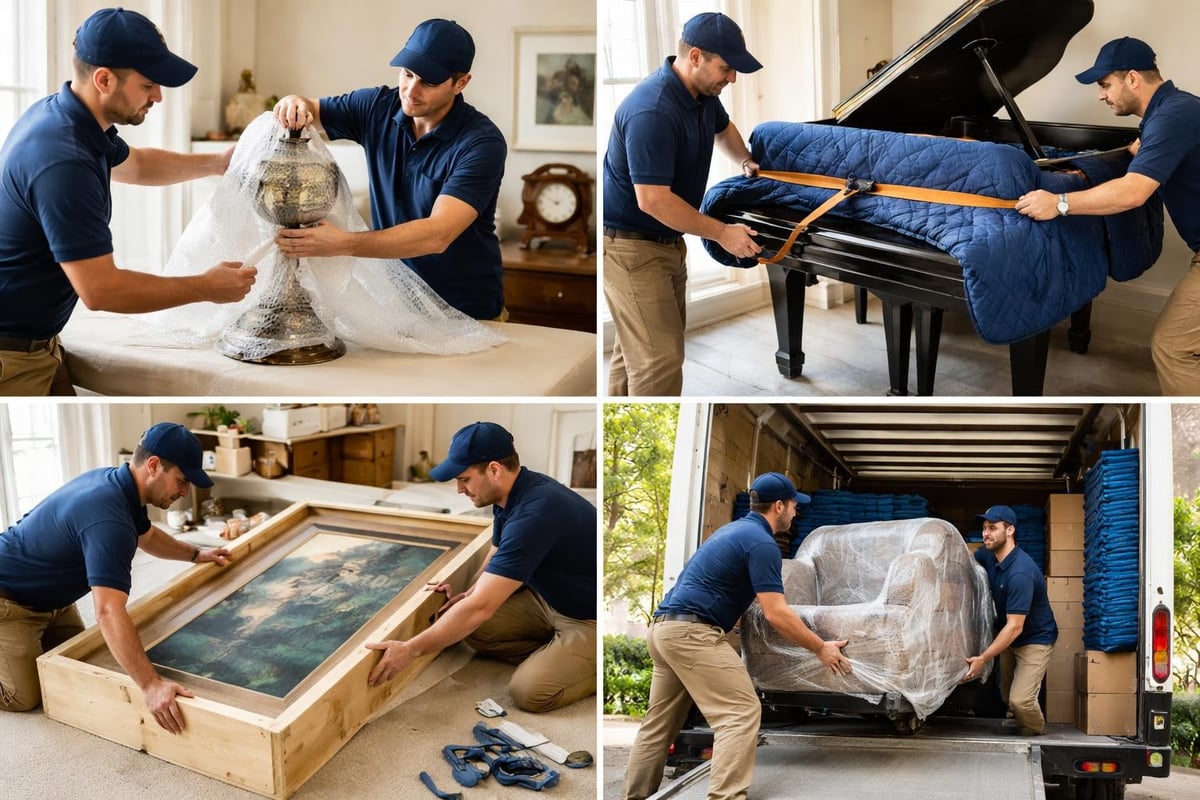
Standard household moving services cover typical furniture and boxed belongings, but certain items require specialized handling. Pianos, antiques, artwork, and fragile collectibles need additional expertise and equipment.
When you have valuable or delicate possessions, verify that your household moving company employs trained specialists.Piano moving, for instance, requires specific equipment like skid boards, padding, and climate-controlled trucks to protect these sensitive instruments during transport.
Items typically requiring specialty handling:
- Grand pianos and upright pianos
- Antique furniture and heirlooms
- Fine art and sculptures
- Gun safes and heavy machinery
- Pool tables and exercise equipment
Discuss these items during your estimate appointment. Professional household movers assess access points, measure doorways, and plan safe removal strategies for oversized or delicate possessions.
Storage Solutions During Transition
Sometimes your move-out and move-in dates don't align perfectly. Many household moving companies offerstorage servicesthat keep your belongings secure in climate-controlled facilities until you're ready for delivery.
Short-term storage (30 days or less) typically costs $150-$300 monthly for a standard household, while long-term arrangements may offer discounted rates. Ensure storage facilities maintain proper climate control, security systems, and pest prevention measures.
Preparing for Moving Day
The days immediately before and during your move determine how smoothly everything proceeds. Proper preparation minimizes delays and prevents last-minute complications.
Clear pathways throughout your home before the household moving company arrives. Remove obstacles from hallways, staircases, and doorways to facilitate safe, efficient loading. Protect floors with cardboard or moving blankets if you're concerned about potential damage from heavy equipment.
What to Expect on Loading Day
Professional movers typically arrive with a crew of 2-4 workers depending on your home's size. The crew chief will review the inventory, confirm the destination address, and address any last-minute questions before work begins.
Loading a three-bedroom household generally takes 4-6 hours. Larger homes or those with difficult access may require additional time. Your household moving company should provide realistic timeframes during the estimate process.
During loading, the crew will:
- Protect furniture with pads and shrink wrap
- Disassemble beds, tables, and other large pieces
- Load heavy items first, lighter boxes last
- Create an inventory list for insurance purposes
- Secure everything properly to prevent shifting during transit
Stay available to answer questions, but avoid micromanaging professional movers. They follow proven loading techniques that maximize truck space and protect your belongings.
Interstate Regulations and Requirements
Long-distance household moves crossing state lines fall under federal jurisdiction, creating specific regulatory requirements. Your household moving company must provide a copy of "Your Rights and Responsibilities When You Move," a federally mandated booklet explaining consumer protections.
Interstate movers cannot hold your belongings hostage for payment beyond the binding estimate or 110% of a non-binding estimate. If disputes arise, you have the right to file complaints with the FMCSA and pursue binding arbitration.
Different states maintain varying regulations for household movers.Arizona requires specific permits and compliancewith both federal and state consumer protection laws, while other states defer primarily to federal oversight.
Delivery Windows and Scheduling
Unlike local moves with same-day delivery, long-distance relocations involve transit time and scheduling windows. Your household moving company will provide an estimated delivery range, typically spanning several days.
For a 2,000-mile move, expect delivery within 7-14 business days after loading. Factors affecting delivery timing include route efficiency, other shipments on the same truck, and weather conditions.
| Distance | Typical Delivery Window | Expedited Option |
|---|---|---|
| Under 500 miles | 1-3 business days | Next day available |
| 500-1,500 miles | 3-7 business days | 2-3 days possible |
| 1,500-2,500 miles | 7-14 business days | 5-7 days possible |
| Over 2,500 miles | 10-21 business days | 7-10 days possible |
Questions to Ask Before Hiring
Arming yourself with the right questions helps you evaluate household moving companies effectively and avoid costly mistakes.
Essential questions include:
- What is your USDOT number and how long have you been licensed?
- Do you handle my move directly or broker it to another company?
- What insurance options do you offer beyond basic liability?
- How do you handle claims if items are damaged during transit?
- What payment methods do you accept and when is payment due?
- Are there any additional fees not included in this estimate?
Pay particular attention to question two. Some companies act as brokers, contracting your move to third-party carriers. While not inherently problematic, this arrangement can complicate communication and accountability.
Understanding Binding Agreements
Read your contract thoroughly before signing. Your household moving company should explain all terms, payment schedules, and cancellation policies clearly. Never sign blank or incomplete documents, and ensure you receive a complete copy for your records.
The contract should specify exact services included, delivery windows, pricing terms, and dispute resolution procedures. Ambiguous language or missing details indicate potential problems ahead.
Working With Military-Focused Moving Services
Military families face unique challenges during PCS relocations, including tight timelines, government weight allowances, and frequent moves. Some household moving companies specialize inmilitary relocations, understanding the specific requirements and paperwork involved.
These specialized movers coordinate directly with military transportation offices, manage weight certifications, and accommodate rapid deployment schedules. They're familiar with the Defense Personal Property System and can help service members maximize their weight allowances effectively.
For military moves, verify that your household moving company participates in the government's moving program and understands branch-specific requirements. Proper documentation and adherence to military protocols prevent payment delays and approval issues.
Regional Considerations Across the United States
The household moving industry varies somewhat by region, with different pricing structures, peak seasons, and regulatory environments. Understanding these regional factors helps you plan more effectively.
Regional moving patterns in 2026:
- Northeast to Southeast: High demand route with competitive pricing
- California to Texas: Heavy volume creates scheduling challenges in summer
- Midwest to coastal cities: Typically more affordable than reverse direction
- Florida seasonal fluctuations: Snowbird migrations create winter price spikes
Population shifts continue influencing thehousehold goods moving industry, with sustained growth in Sun Belt states and ongoing demand from major metropolitan areas. These trends affect both availability and pricing throughout the year.
Technology and Modern Moving Services
Today's household moving companies leverage technology to improve customer experience and operational efficiency. GPS tracking allows real-time shipment monitoring, while digital inventory systems create detailed records of your belongings.
Virtual estimates conducted via smartphone video eliminate the need for in-home visits while still providing accurate assessments. These remote surveys work well for straightforward moves, though complex situations with numerous specialty items still benefit from physical inspections.
Many movers now offer customer portals where you track your shipment, manage documents, and communicate with coordinators. These digital tools provide transparency and reduce the anxiety associated with long-distance relocations.
Payment Methods and Financial Protection
Reputable household moving companies accept multiple payment methods including credit cards, which offer additional consumer protections through chargeback rights. Avoid companies demanding cash-only payments or large upfront deposits before services begin.
Typical payment structures require a deposit (usually 10-20% of the total cost) upon booking, with the remainder due upon delivery. Some companies offer financing options for qualified customers, spreading payments over several months.
Sustainability and Eco-Friendly Moving
Environmental consciousness increasingly influences consumer choices in the household moving industry. Many companies now offer sustainable practices including reusable plastic bins instead of cardboard boxes, fuel-efficient trucks, and recycling programs for packing materials.
If environmental impact concerns you, ask potential household moving companies about their sustainability initiatives. Some movers carbon-offset their fleet emissions or partner with environmental organizations to reduce their ecological footprint.
Using professional movers instead of making multiple trips in personal vehicles often reduces overall fuel consumption and emissions. Efficient packing maximizes truck space, minimizing the number of vehicles required for your relocation.
Managing Stress During Your Household Move
Even with professional household movers handling logistics, relocating creates significant stress for most families. Maintaining perspective and implementing coping strategies protects your mental health throughout the process.
Stress management techniques include:
- Creating detailed checklists to maintain control and organization
- Designating an essentials box with items needed immediately
- Scheduling breaks and maintaining normal routines when possible
- Involving children in age-appropriate packing and planning tasks
- Accepting that minor issues are normal and usually resolvable
Remember that your household moving company wants successful relocations. Professional movers handle thousands of moves annually and possess the experience to navigate unexpected challenges effectively. Trust their expertise while staying engaged in the process.
Selecting the right household moving company transforms a potentially overwhelming experience into a manageable, even positive life transition. By understanding licensing requirements, asking informed questions, and preparing thoroughly, you set yourself up for relocation success. Whether you're moving across the country for a new job or relocating your family to a different state, working with licensed, experienced professionals protects your belongings and your peace of mind.US Prime Moversspecializes in long-distance household relocations across all 50 states, offering transparent pricing, comprehensive insurance options, and the personalized service that comes from a family-owned business committed to making your move as smooth as possible.